The Mighty Mughal Fortress of India's Golden Triangle
A fortress of power and grandeur
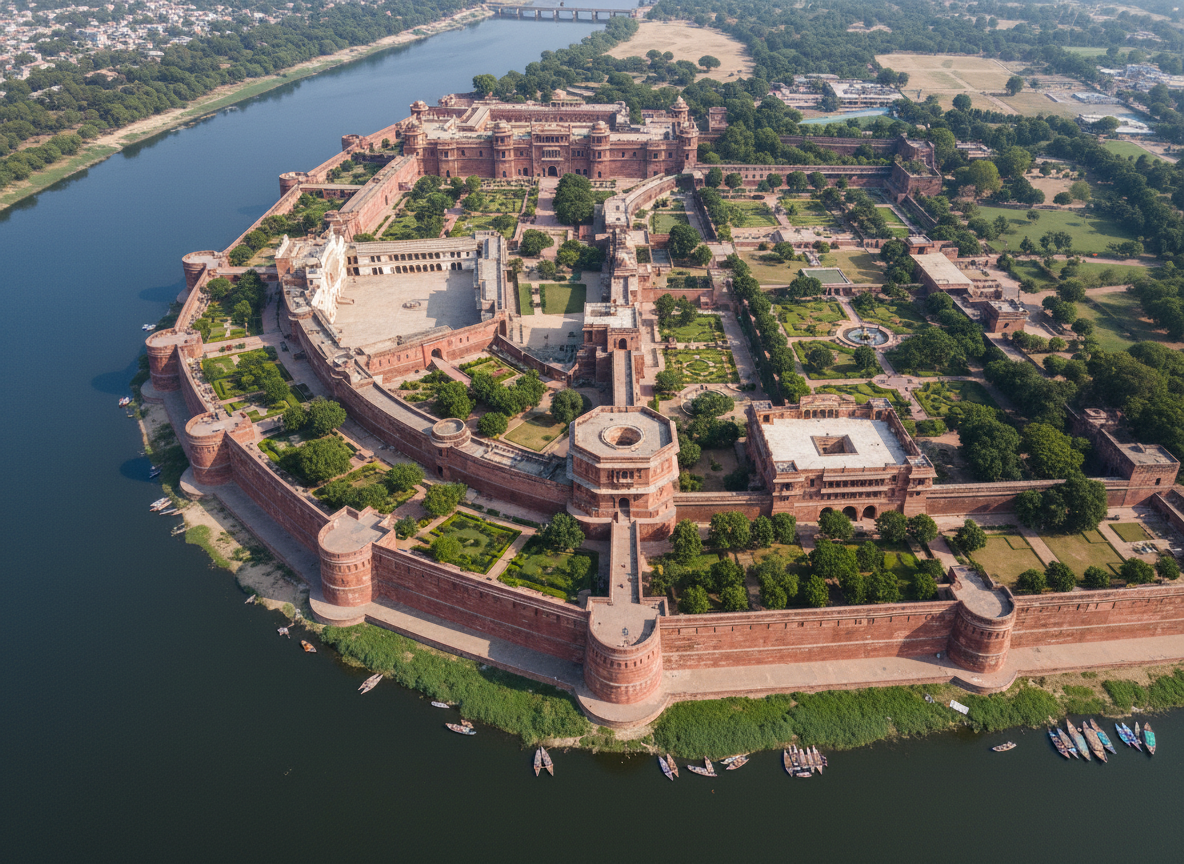
Agra Fort is a historical fort in the city of Agra in India. It was the main residence of the emperors of the Mughal Dynasty until 1638, when the capital was shifted from Agra to Delhi. Before capture by the British, the last Indian rulers to have occupied it were the Marathas. The fort is also known as the Red Fort of Agra due to its massive red sandstone walls that rise 21 metres high and stretch 2.5 kilometres in circumference.
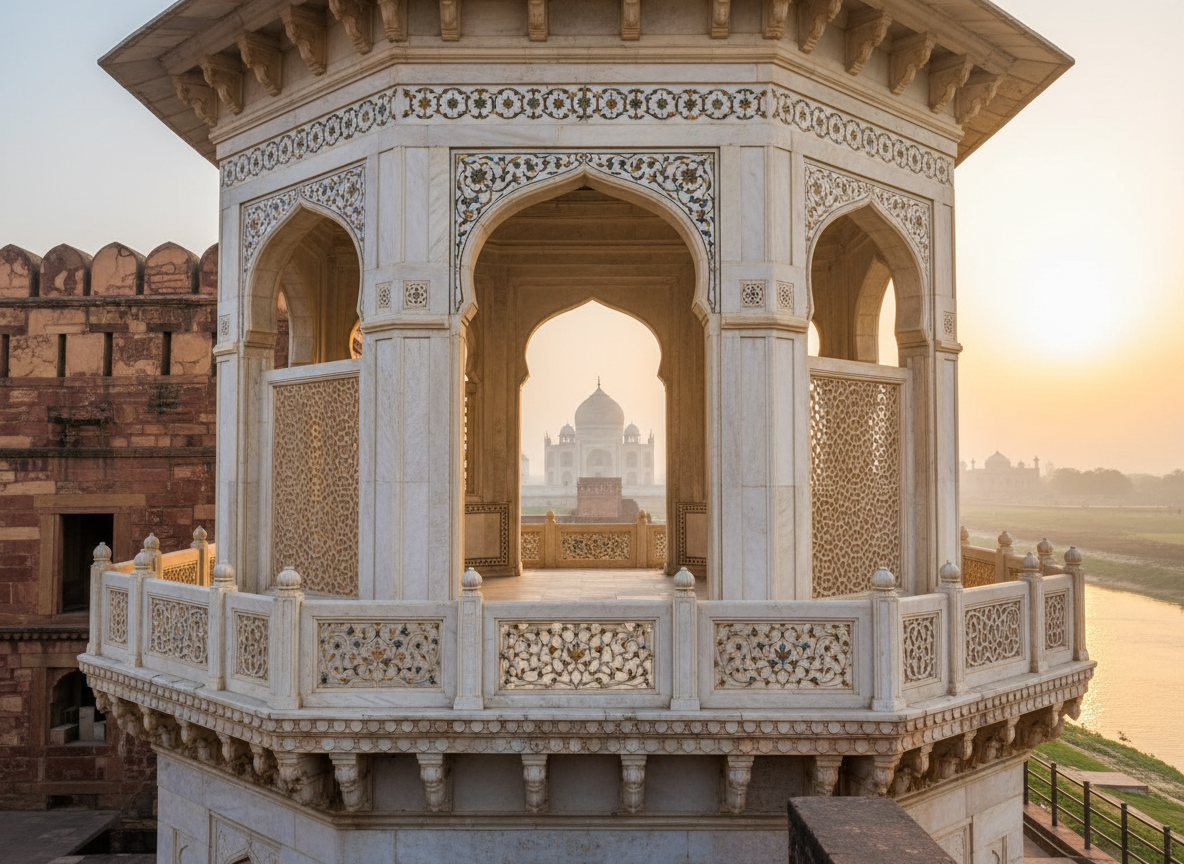
Built by Emperor Akbar in 1565, the fort is a masterpiece of Mughal military architecture that evolved over generations. While Akbar built the imposing red sandstone structures, his grandson Shah Jahan transformed many areas with exquisite white marble palaces. The fort encompasses within its walls the most beautiful of Mughal palaces — including the Jahangir Palace, Khas Mahal, Sheesh Mahal, and the iconic Musamman Burj from where Shah Jahan gazed at the Taj Mahal during his imprisonment.
PLAN YOUR VISIT
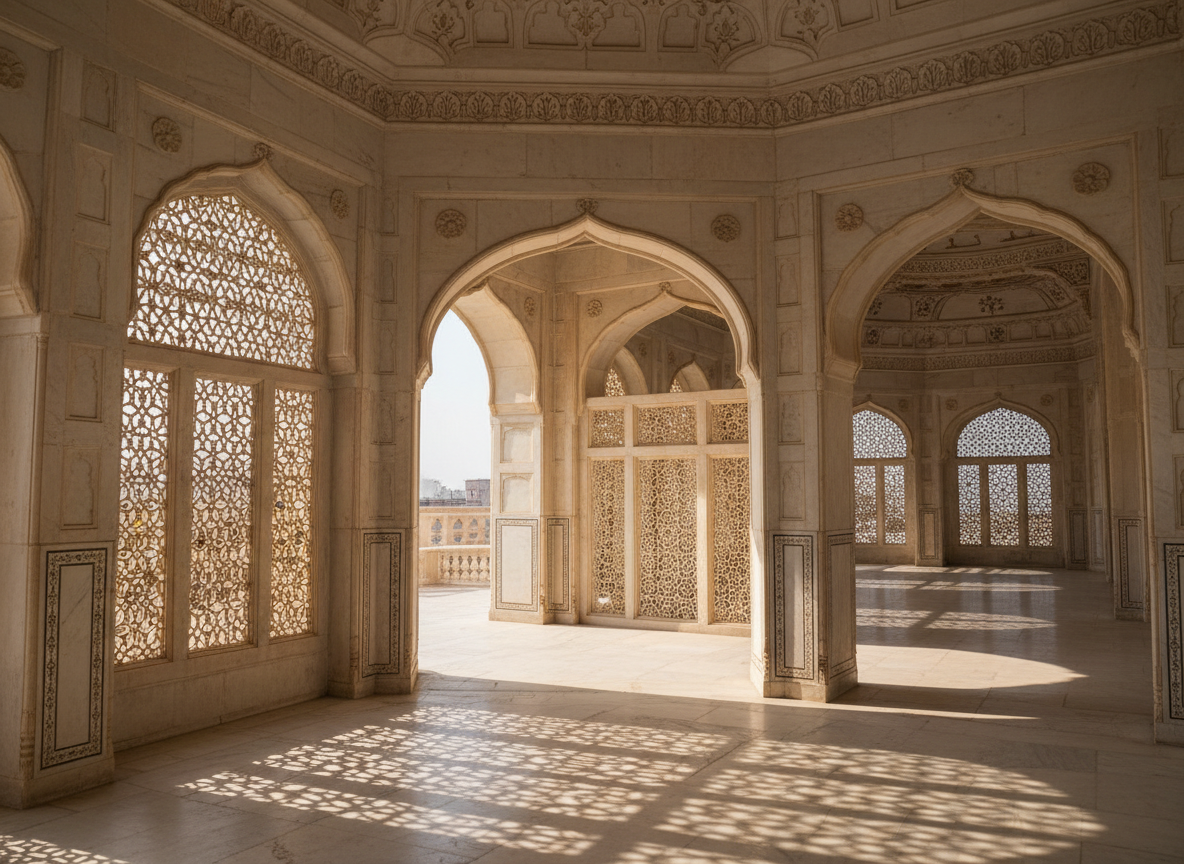
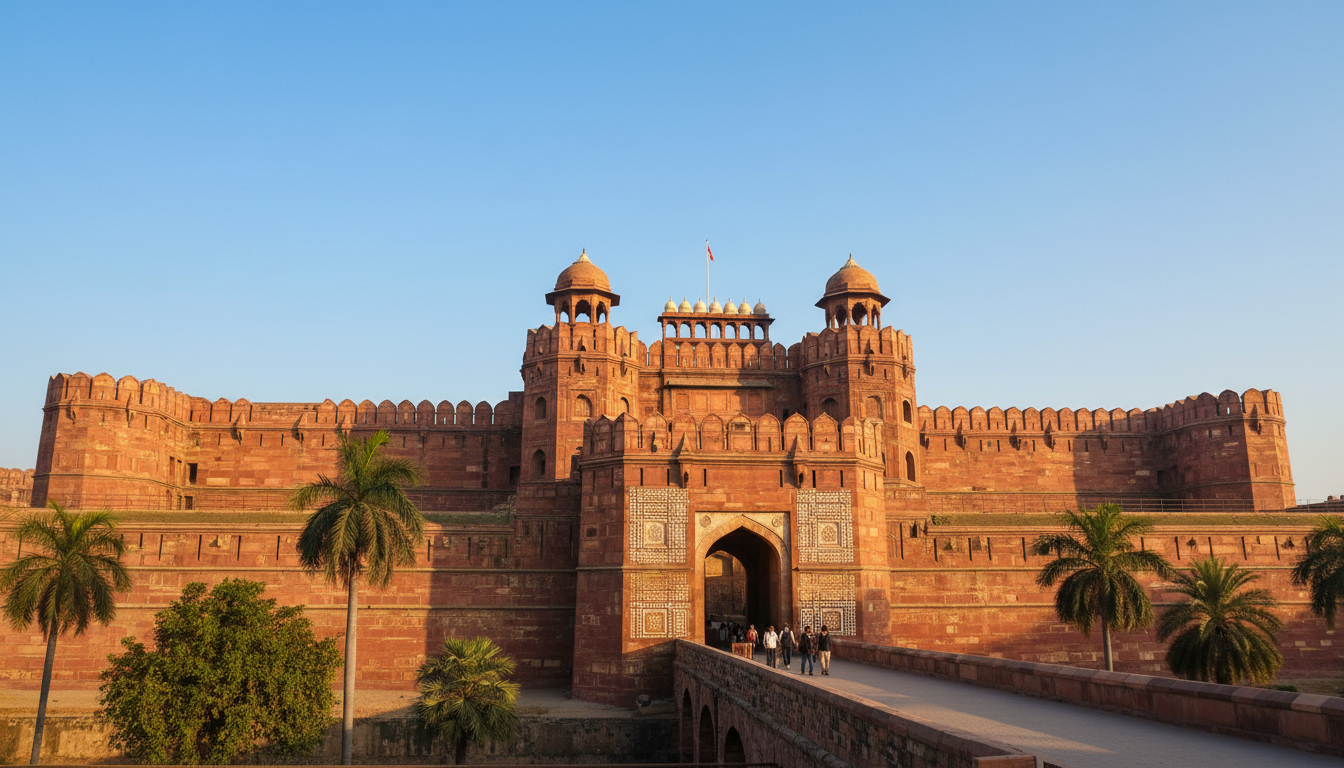
Agra Fort is a stunning example of Mughal military architecture, blending elements of Islamic, Persian, and Hindu design. The massive fortress spans 94 acres and is enclosed by double castellated walls of red sandstone, with a 9-metre wide and 10-metre deep moat between them. The fort has four gates, though only the Amar Singh Gate is open to visitors today. Inside, the fort houses an impressive collection of palaces, audience halls, mosques, and gardens that reflect the evolution of Mughal architectural style from Akbar to Shah Jahan.
For nearly a century, Agra Fort served as the seat of the mighty Mughal Empire. Three generations of emperors — Akbar, Jahangir, and Shah Jahan — ruled from within these walls, shaping the destiny of the Indian subcontinent. The fort witnessed coronations, court intrigues, and legendary love stories. Most poignantly, it was here that Shah Jahan spent his final eight years imprisoned by his son Aurangzeb, gazing at the Taj Mahal — the monument he built for his beloved wife — from the Musamman Burj. Today, Agra Fort attracts over 2 million visitors annually.
Our success path
From its construction in 1565 to its recognition as a UNESCO World Heritage Site, Agra Fort has stood as a testament to Mughal power and architectural brilliance for over four centuries.
Explore & experience
Visit the iconic octagonal tower where Shah Jahan spent his final years gazing at the Taj Mahal. The marble balcony offers one of the most romantic and poignant views of the Taj Mahal across the Yamuna River.
Explore the largest palace inside the fort, built by Akbar for his son Jahangir. This magnificent structure blends Hindu and Islamic architectural elements with intricately carved brackets, pillars, and stone screens.
Marvel at the Sheesh Mahal, or Palace of Mirrors, with its walls and ceilings adorned with thousands of tiny mirrors and glass pieces. When candlelight reflects off the surfaces, the room sparkles like a jewel box.
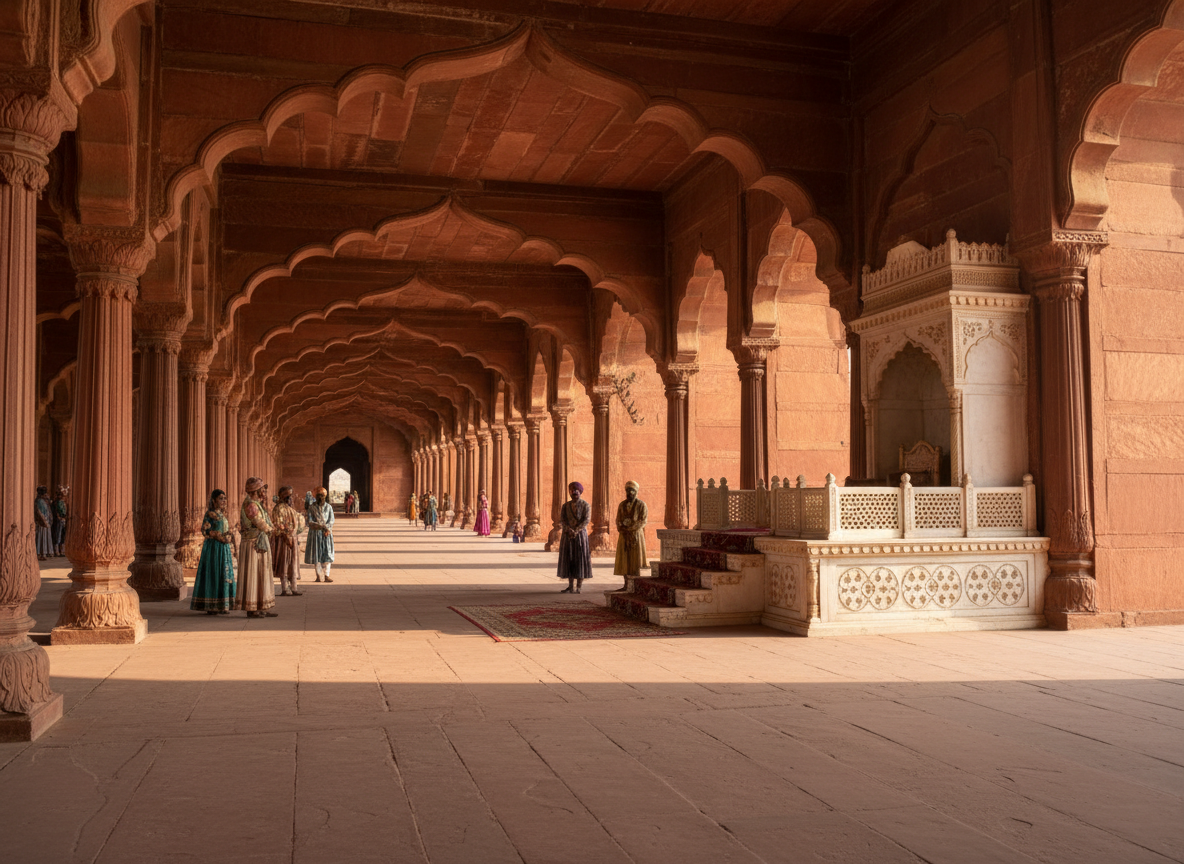
Visit the Hall of Private Audience (Diwan-i-Khas) with its white marble pavilion and the Hall of Public Audience (Diwan-i-Am) where the emperor held court. Both halls showcase the grandeur of Mughal imperial governance.
Discover the Nagina Masjid (Gem Mosque), a private mosque built by Shah Jahan entirely in white marble for the ladies of the royal court. Its serene beauty and delicate marble work make it a hidden gem within the fort.
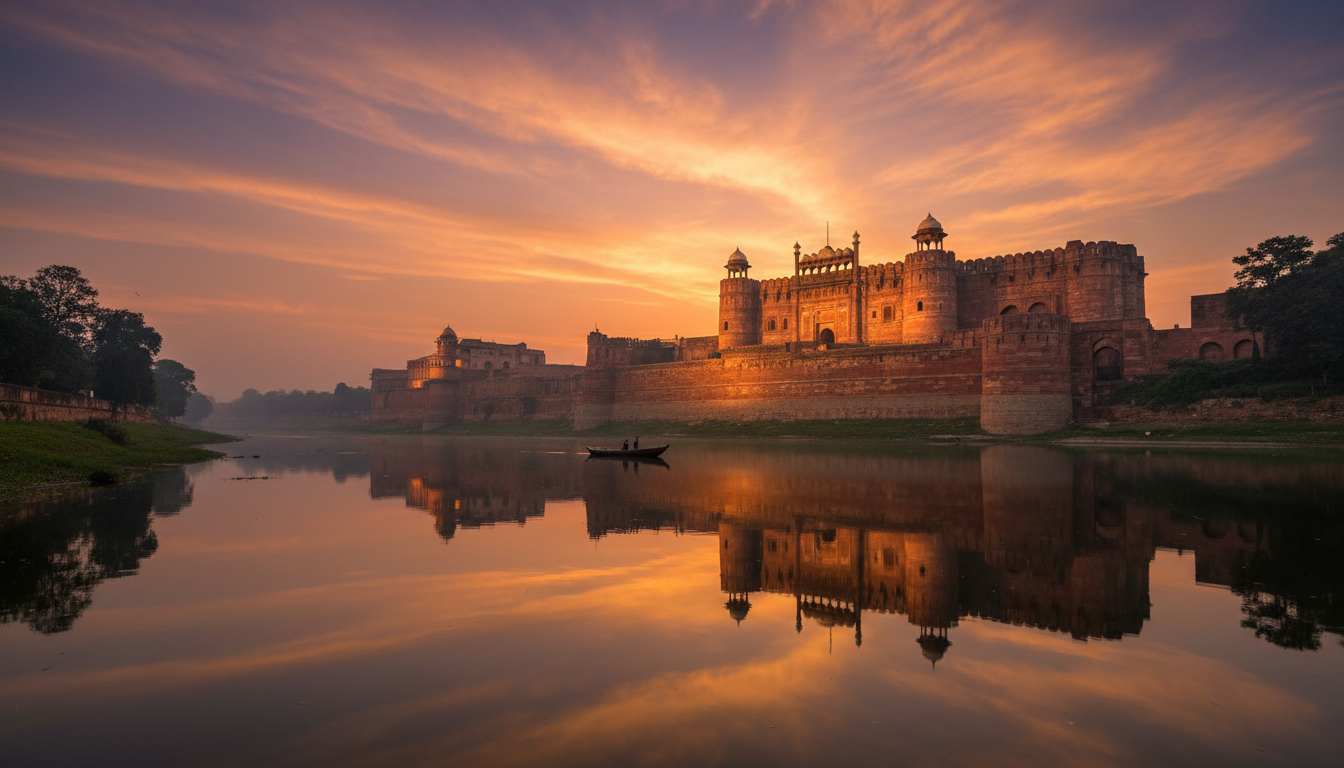
Capture stunning sunset views from the fort's ramparts overlooking the Yamuna River and the Taj Mahal in the distance. The golden hour light on the red sandstone walls creates spectacular photography opportunities.
Plan your trip
Capture the beauty