The Majestic Hilltop Fortress of Rajasthan
A fortress of royal grandeur
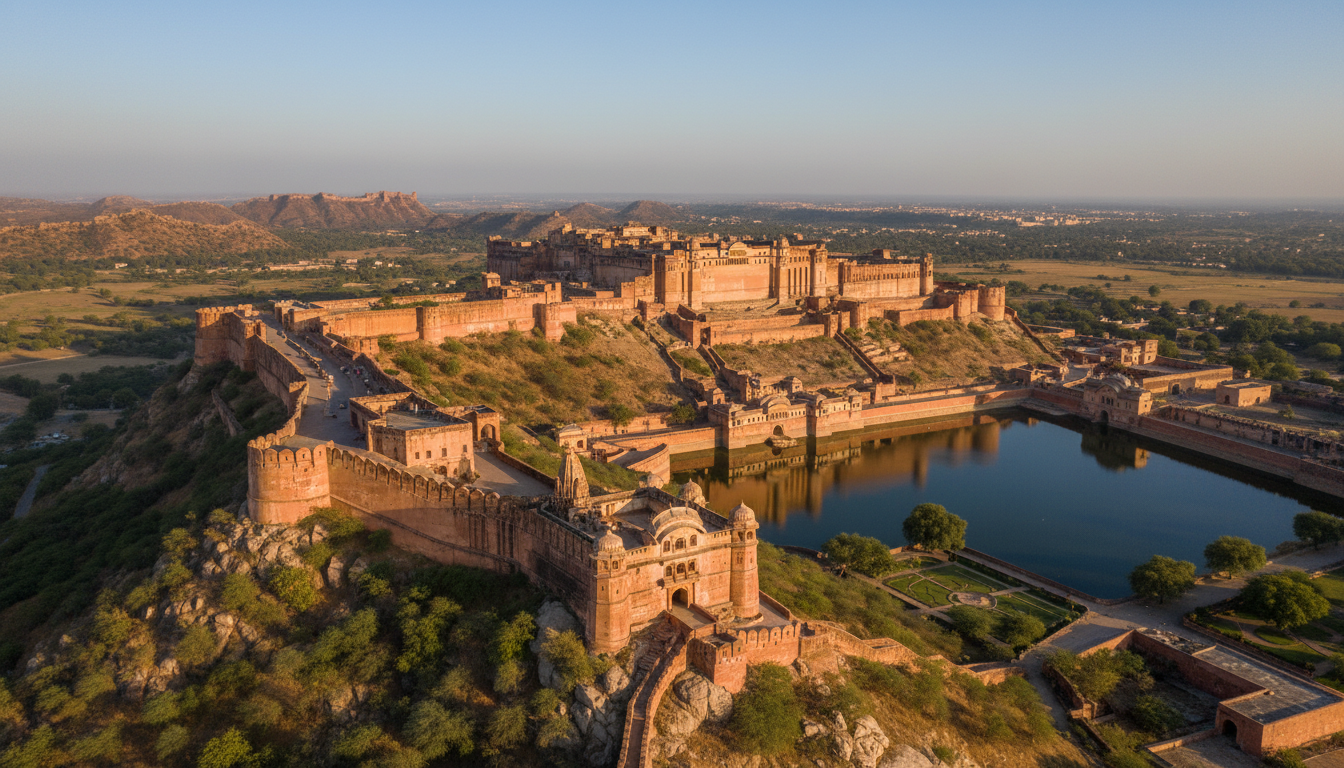
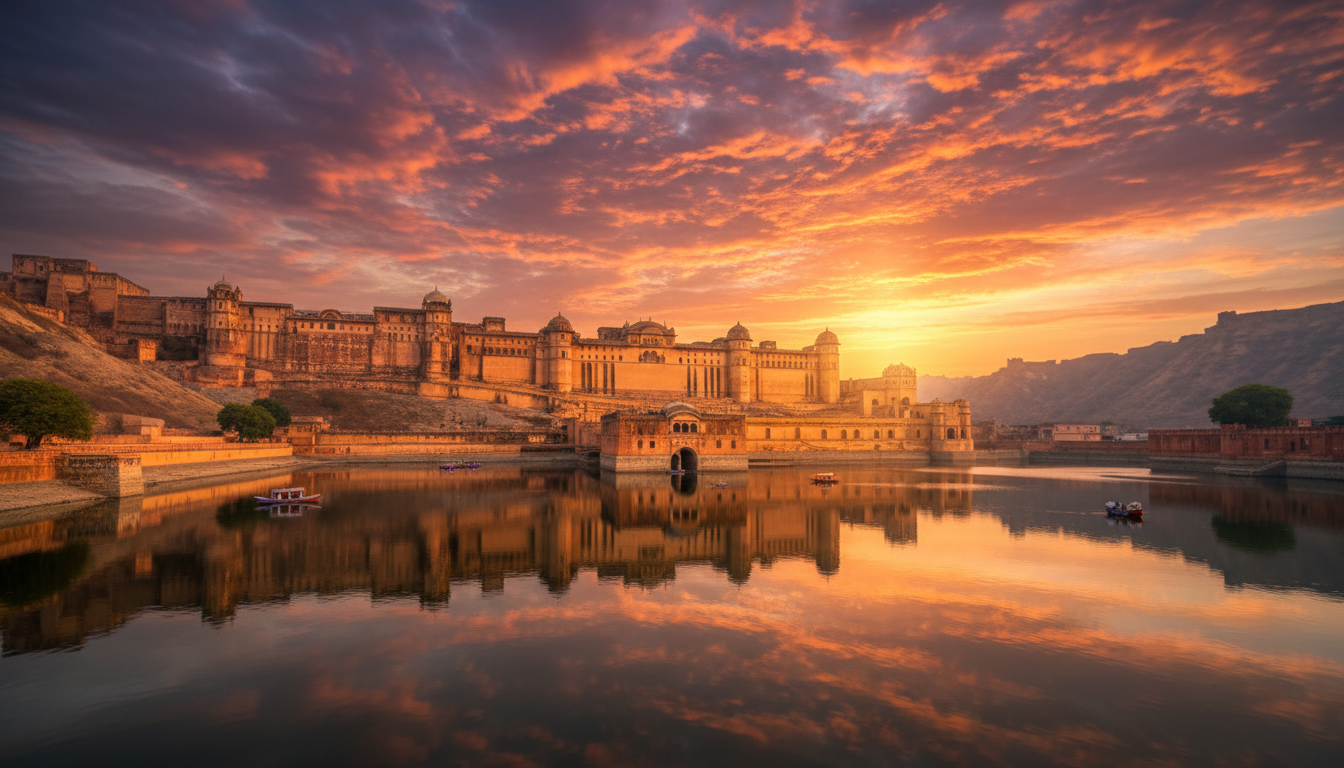
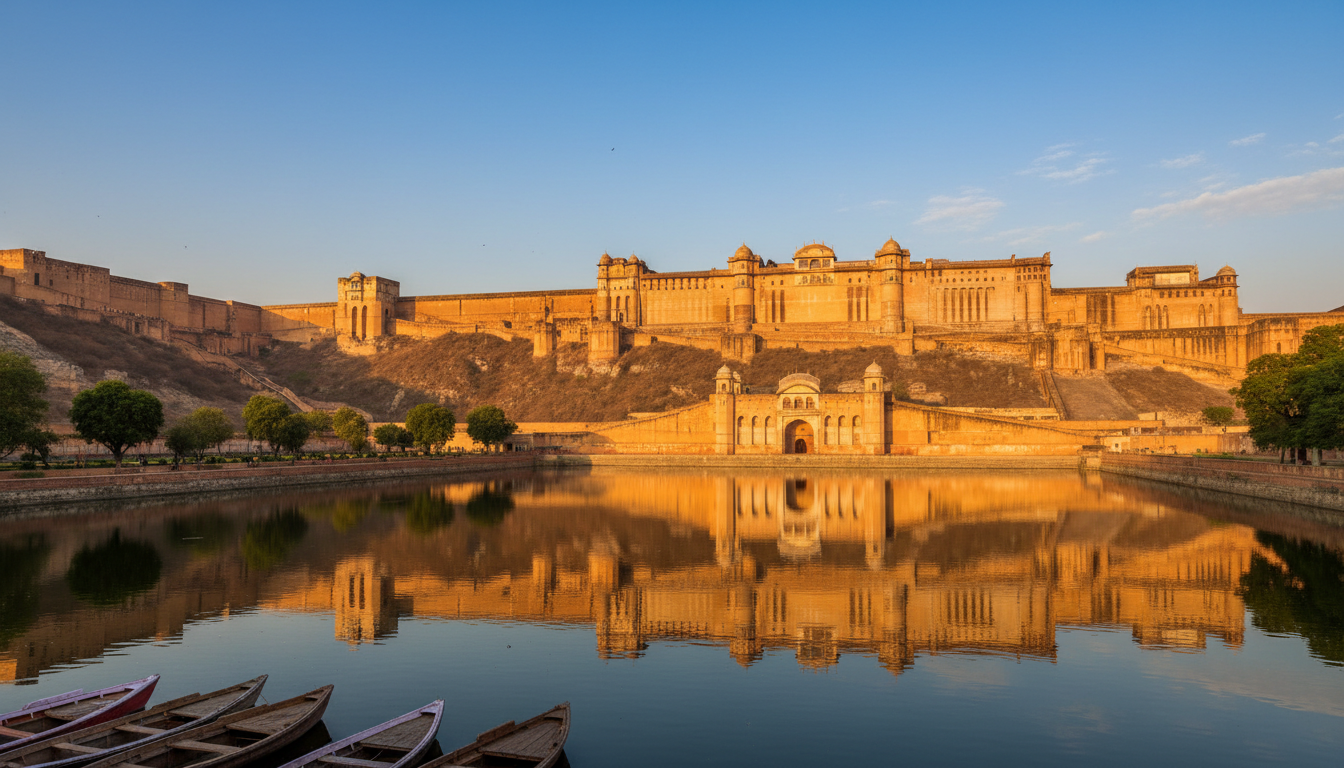
The Amber Fort, also known as Amer Fort, is a magnificent fort located in Amer, a town 11 kilometres from Jaipur in the Indian state of Rajasthan. Built from pale yellow and pink sandstone and white marble, it is perched high on a hill overlooking the serene Maota Lake. The fort was originally built by Raja Man Singh I in 1592 and later expanded by his successors over a period of 150 years, making it a stunning blend of Hindu Rajput and Mughal architectural styles.
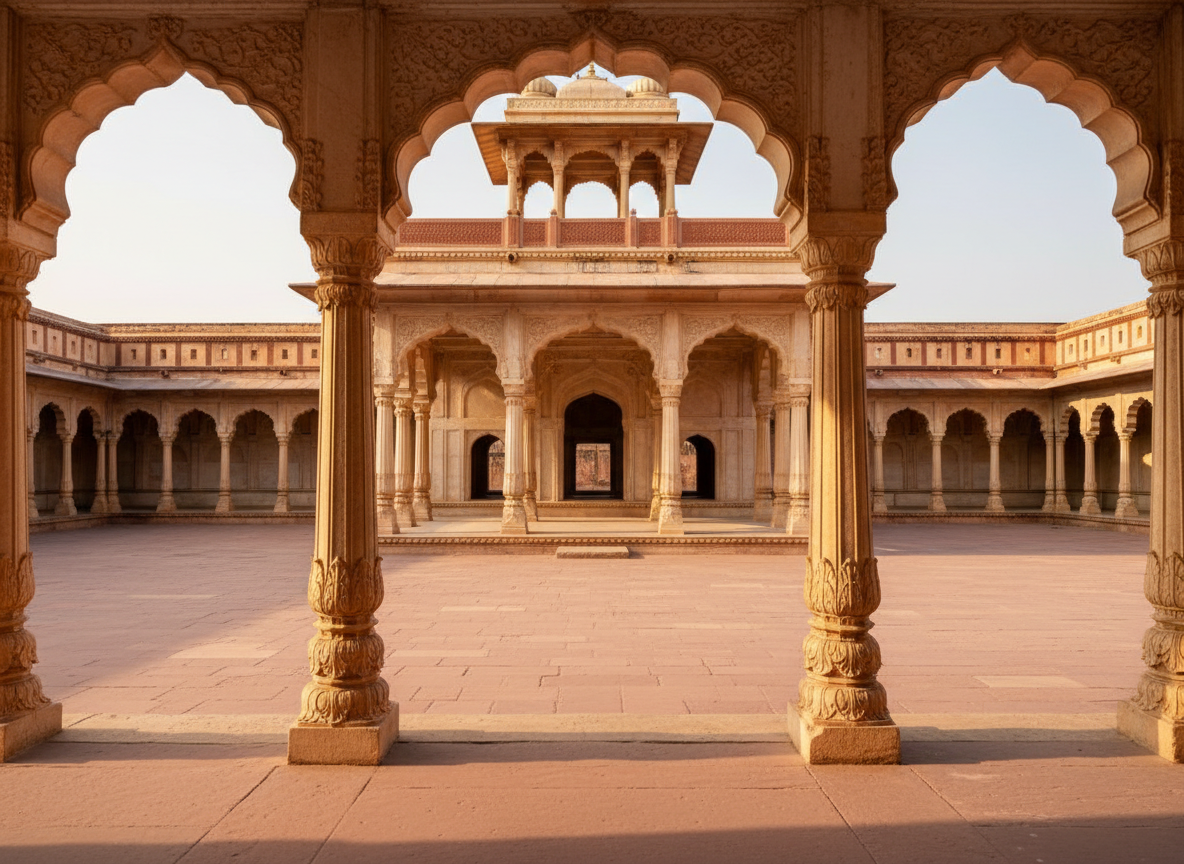
The Amber Fort is the principal tourist attraction in Jaipur and was declared a UNESCO World Heritage Site in 2013 as part of the "Hill Forts of Rajasthan" group. The fort complex is divided into four main sections, each with its own courtyard — the Jaleb Chowk, the Diwan-i-Aam, the Diwan-i-Khas, and the Zenana (women's quarters). Its artistic style blends both Hindu and Mughal elements of architecture, with the use of red sandstone and marble creating a visually stunning contrast against the rugged Aravalli hills.
PLAN YOUR VISIT
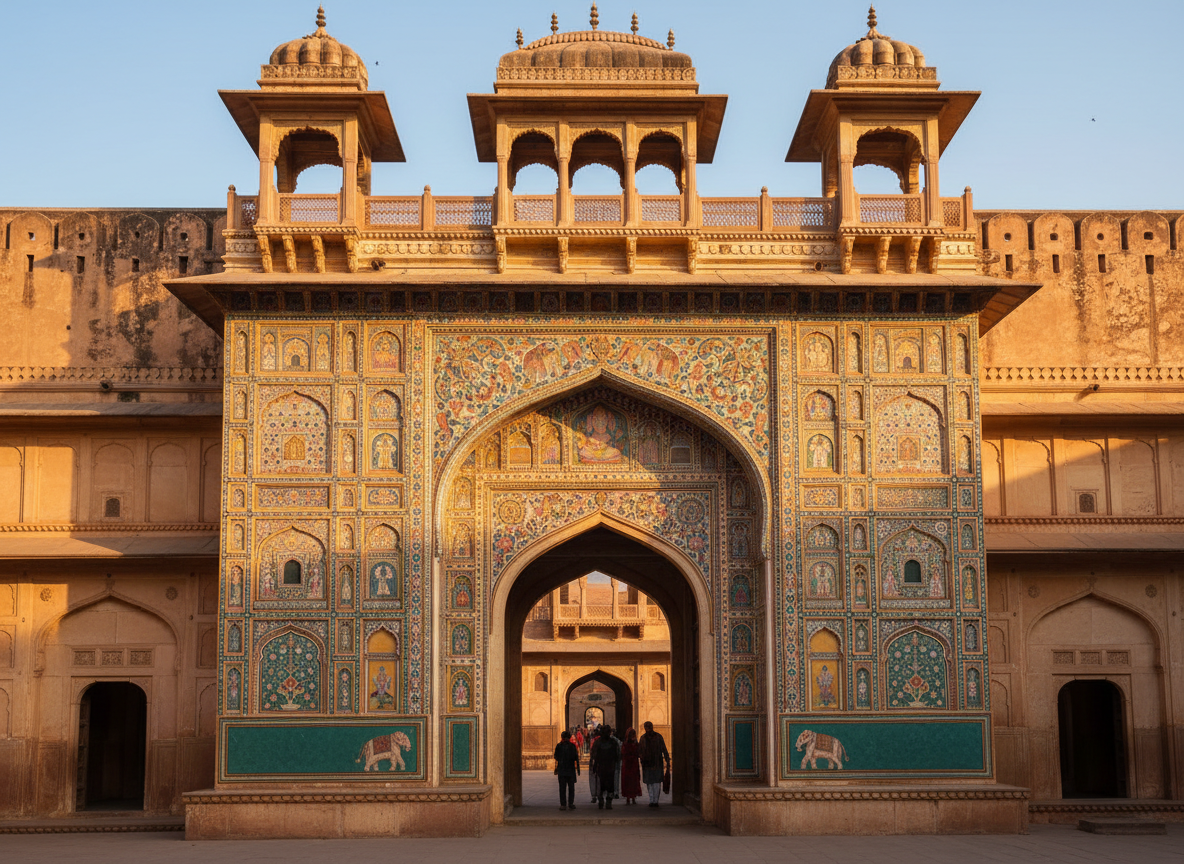
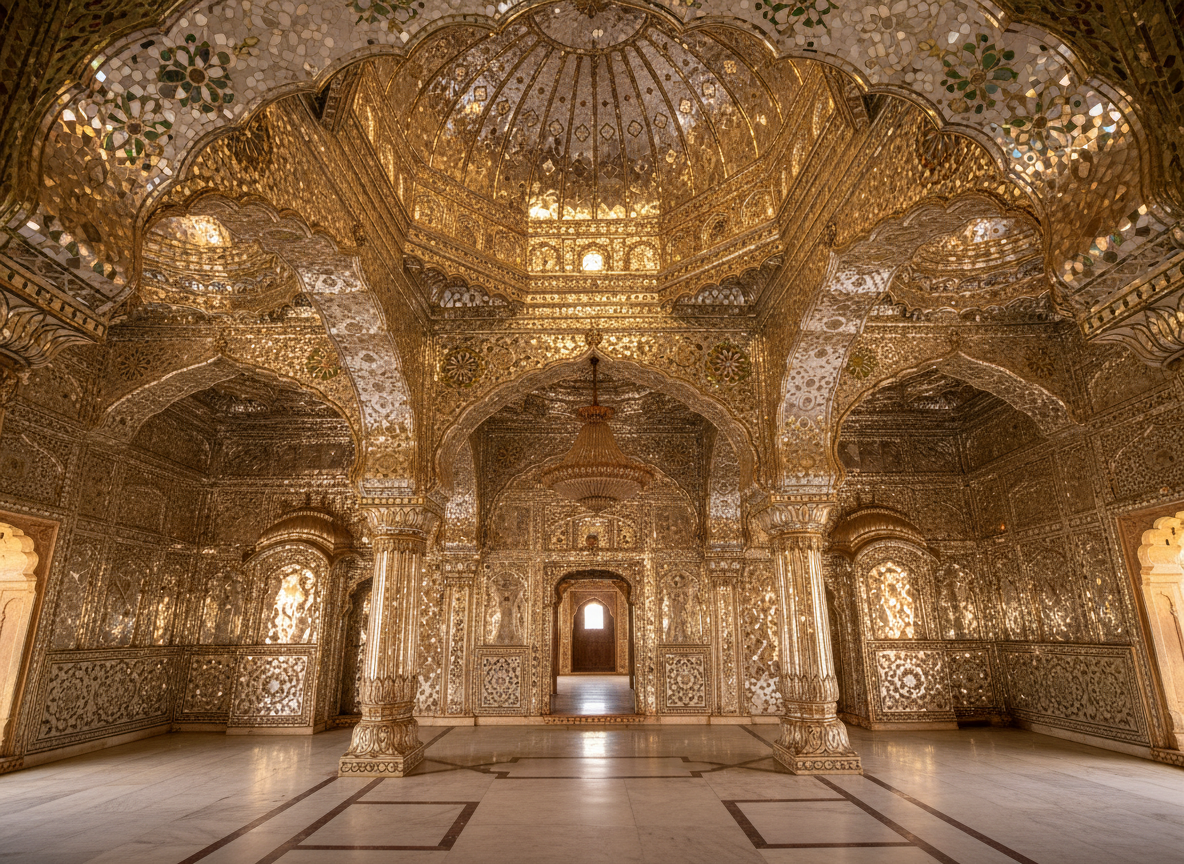
The Amber Fort is a masterpiece that seamlessly blends Hindu Rajput and Islamic Mughal architectural styles. The fort complex sprawls across a vast hilltop area with four levels, each with its own courtyard. The exterior is constructed from rugged red sandstone, while the interiors feature exquisite white marble adorned with intricate mirror work, precious stones, and delicate frescoes. The Sheesh Mahal (Mirror Palace) is the crown jewel — its walls and ceilings are covered with thousands of tiny mirrors that reflect candlelight to create a starlit sky effect, making it one of the most beautiful rooms in the world.
For over 400 years, the Amber Fort served as the seat of the Kachwaha Rajput clan who ruled the Amber kingdom. Raja Man Singh I, one of the nine jewels (Navratnas) of Emperor Akbar's court, began its construction in 1592. The fort witnessed the rise of one of Rajasthan's most powerful dynasties, whose alliance with the Mughal Empire brought immense wealth and cultural exchange. In 1727, Maharaja Sawai Jai Singh II moved the capital to the newly founded city of Jaipur, but the Amber Fort remained a symbol of Rajput pride. Today, it attracts over 5,000 visitors daily and is Jaipur's most visited monument.
Our success path
From its construction in 1592 to its recognition as a UNESCO World Heritage Site, the Amber Fort has stood as a testament to Rajput valour and architectural brilliance for over four centuries.
Explore & experience
Marvel at the breathtaking Sheesh Mahal, where thousands of tiny mirrors and coloured glass pieces cover the walls and ceiling. When lit by just a single candle, the entire room sparkles like a starlit sky — one of the most magical experiences in all of India.
Experience the royal way of entering the Amber Fort — on the back of a decorated elephant that carries you up the cobblestone path to the Jaleb Chowk. This iconic ride recreates the grand processions of the Rajput kings and offers stunning views of Maota Lake.
Admire the stunning Ganesh Pol, the ornate gateway that leads to the private palaces of the maharajas. This three-storey structure is adorned with beautiful frescoes, mosaic tiles, and lattice screens. Above the gate lies the Suhag Mandir, where royal ladies watched ceremonies.
Experience the spectacular evening Sound and Light show that brings the history of the Amber Fort to life. The show narrates the fort's rich history through dramatic lighting effects and powerful narration, illuminating the massive walls and courtyards in a magical display of colours.
Walk through the secret underground passage connecting Amber Fort to the imposing Jaigarh Fort on the hill above. Jaigarh houses the world's largest cannon on wheels — the Jaivana Cannon — and offers panoramic views of the Aravalli hills and the entire Amber complex.
Stroll around the beautiful Maota Lake at the base of the fort, which served as the primary water source for the Amber Palace. The Kesar Kyari Bagh (Saffron Garden) on the lake's island features a stunning star-shaped garden that was once planted with saffron flowers.
Plan your trip
Capture the beauty