CITY PALACE

The Royal Heart of Jaipur's Pink City

Jaipur, Rajasthan Royal Heritage Site Golden Triangle Landmark

A palace of royal grandeur

Discover The
City Palace

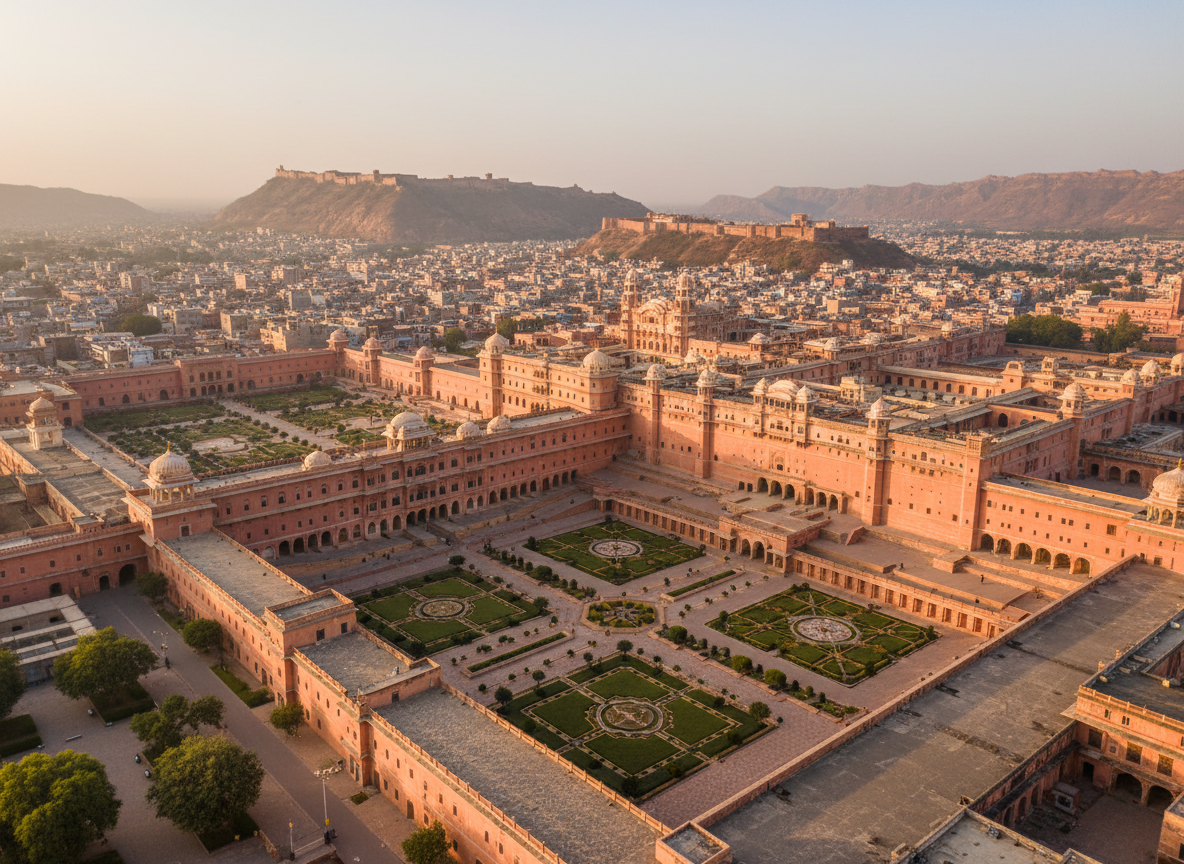
The City Palace is a magnificent palace complex situated in the heart of Jaipur, the capital of Rajasthan, India. Built by Maharaja Sawai Jai Singh II in 1729 when he moved his capital from Amber to Jaipur, the palace is a remarkable fusion of Rajput, Mughal, and European architectural styles. The complex occupies nearly one-seventh of the old walled city and includes the Chandra Mahal, Mubarak Mahal, and several courtyards, gardens, and buildings.

The City Palace remains a living testament to the rich cultural heritage of Rajasthan. Part of the palace is still the residence of the former royal family of Jaipur, while the rest has been converted into a museum showcasing an exquisite collection of royal costumes, armoury, manuscripts, paintings, and photographs that chronicle the history of the Kachwaha Rajput dynasty.

PLAN YOUR VISIT
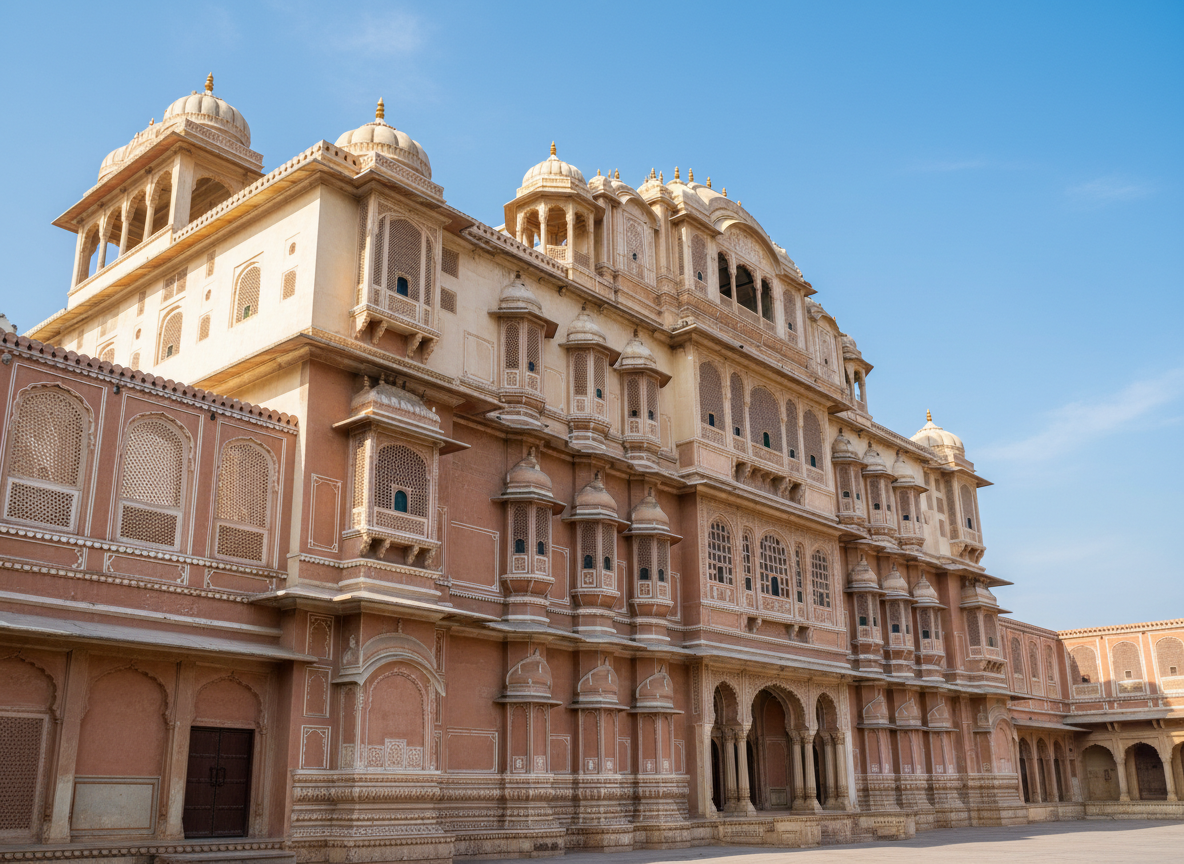
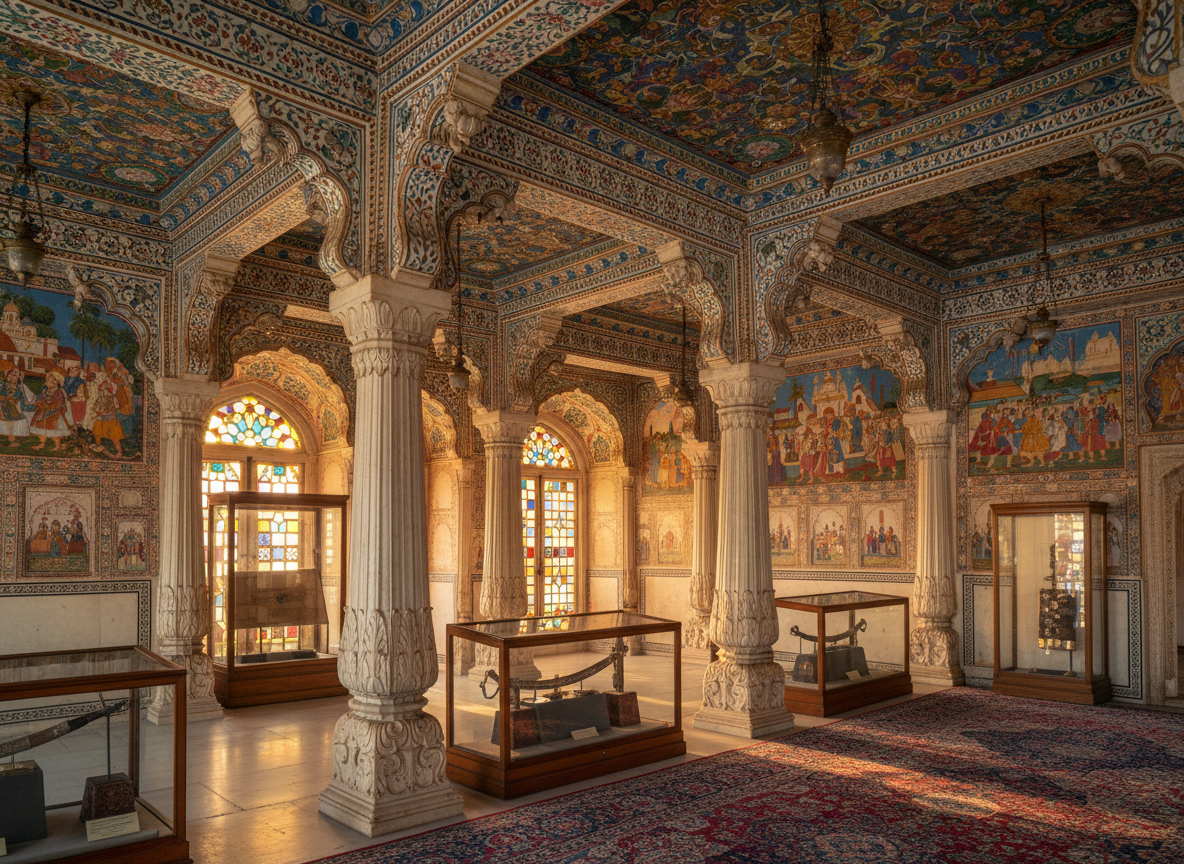
Chandra Mahal at City Palace Jaipur
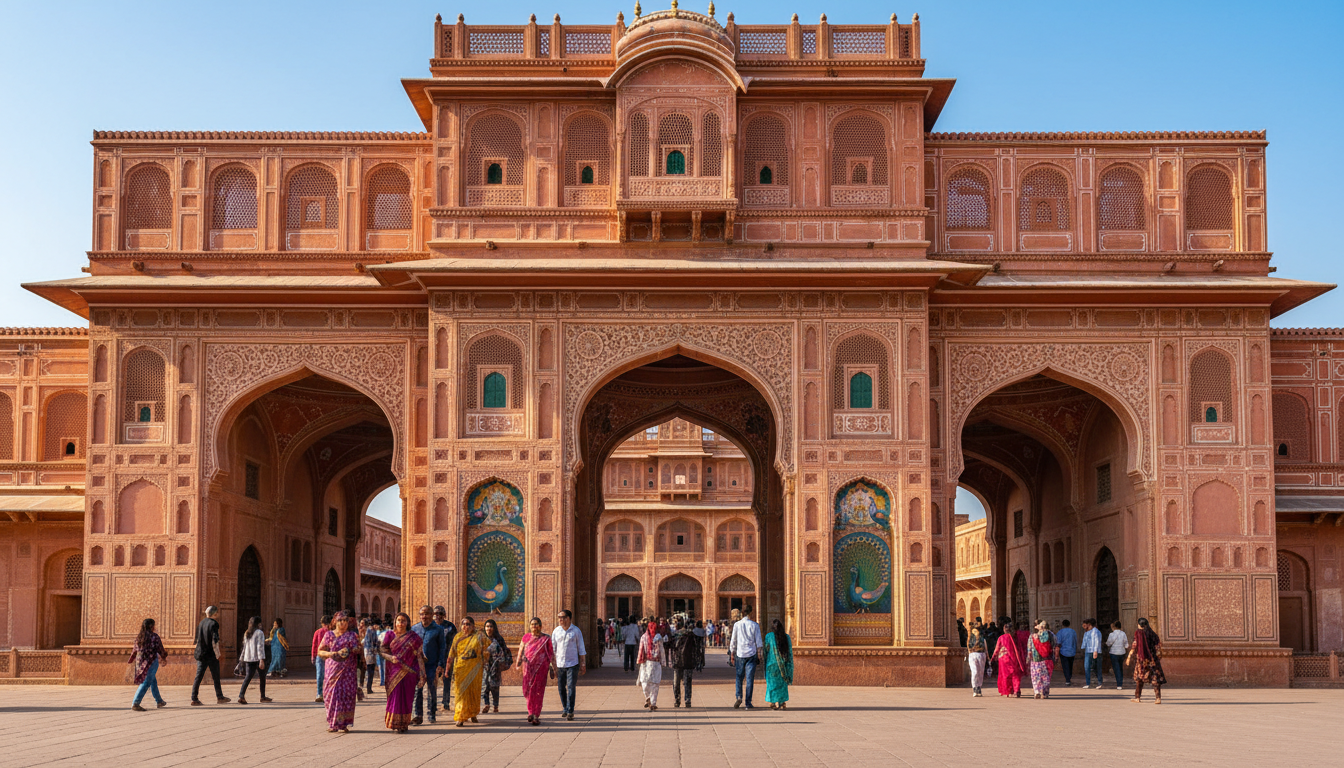
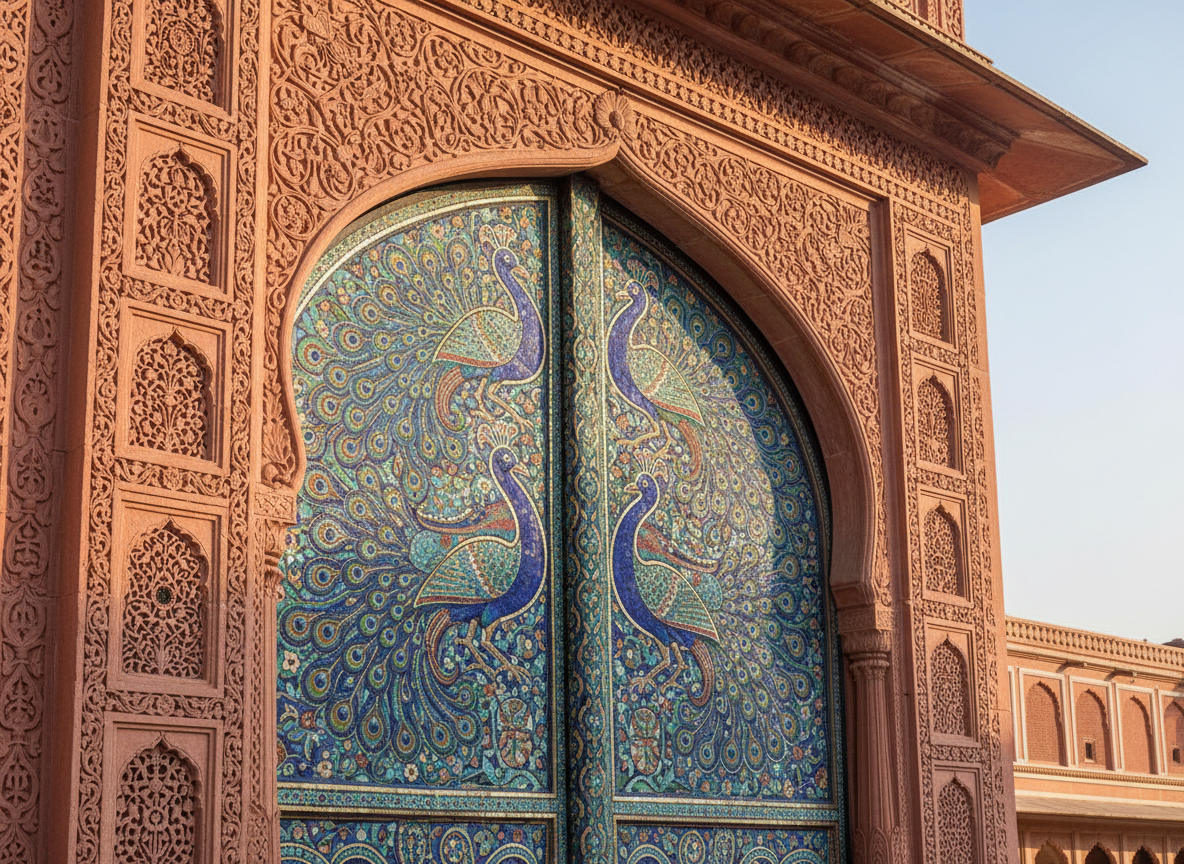
Peacock Gate detail at City Palace Jaipur
Aerial view of the City Palace complex

RAJPUT & MUGHAL ARCHITECTURE

The City Palace is a masterful blend of Rajput, Mughal, and European architectural styles. The complex spans nearly one-seventh of the old walled city of Jaipur and includes the seven-storied Chandra Mahal, the Mubarak Mahal (Welcome Palace), the Diwan-i-Khas (Hall of Private Audience), and the Diwan-i-Am (Hall of Public Audience). The palace features ornate carved pillars, intricate jali screens, stunning frescoes, and the famous four decorative gates representing the four seasons — the Peacock Gate, Lotus Gate, Green Gate, and Rose Gate.

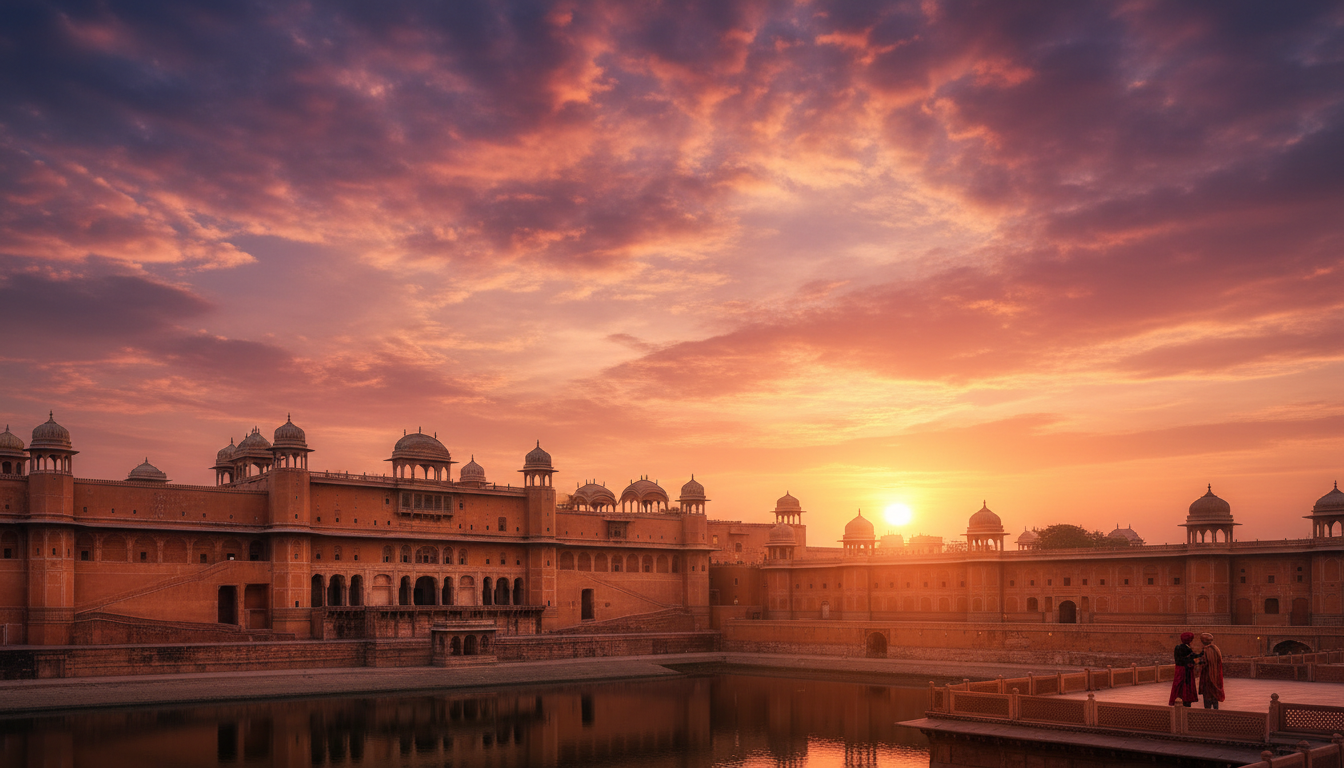
City Palace at sunset

SEAT OF THE KACHWAHA DYNASTY

The City Palace has been the seat of the Kachwaha Rajput rulers of Jaipur since its founding in 1729 by Maharaja Sawai Jai Singh II — the visionary astronomer-king who also designed the city of Jaipur on principles of Vastu Shastra and ancient Hindu architecture. The palace witnessed the reign of successive Maharajas who expanded and embellished the complex over three centuries. Today, the current Maharaja of Jaipur still resides in the Chandra Mahal, making it one of the few palaces in India that is still a royal residence.

Our success path

History of the
City Palace

From its founding in 1729 to its transformation into a world-renowned museum, the City Palace has stood as a symbol of Rajput royalty and architectural brilliance for nearly three centuries.

City Palace founded in 1729

1729

Maharaja Sawai Jai Singh II begins construction of the City Palace as part of his grand plan to build a new capital city — Jaipur. The palace is designed by Bengali architect Vidyadhar Bhattacharya, blending Rajput and Mughal architectural styles.

Chandra Mahal completed in 1732

1732

The Chandra Mahal (Moon Palace), the seven-storied tower at the heart of the complex, is completed. Each floor is exquisitely decorated with mirrors, paintings, and floral motifs. The top floor, Mukut Mandir, offers panoramic views of the city.

Mubarak Mahal added in late 19th century

1890

Maharaja Madho Singh II commissions the construction of the Mubarak Mahal (Welcome Palace) in a blend of Islamic, Rajput, and European architectural styles. Originally built as a reception centre for visiting dignitaries, it now houses the textile and costume museum.

City Palace museum established in 1959

1959

Maharaja Sawai Man Singh II converts a significant portion of the City Palace into a museum, opening it to the public. The Maharaja Sawai Man Singh II Museum showcases royal costumes, armoury, paintings, manuscripts, and rare astronomical instruments.

City Palace today - major tourist attraction

2026

The City Palace remains one of Jaipur's most visited landmarks, attracting millions of tourists annually. As part of the Golden Triangle circuit, it continues to showcase the grandeur of Rajput heritage and serves as a living connection to India's royal past.

Explore & experience

Things To Do At
The City Palace

01

Peacock Gate Photography

Capture the stunning Peacock Gate (Leheriya Gate), one of four ornate gates representing the four seasons. Its intricate blue and green peacock mosaics make it the most photographed spot in the entire palace complex.

02

Museum Exploration

Explore the Maharaja Sawai Man Singh II Museum housed within the palace. Marvel at the exquisite collection of royal costumes, ancient weapons, rare manuscripts, miniature paintings, and the famous oversized silver urns (Gangajalis).

03

Chandra Mahal Tour

Take a guided Royal Grandeur tour of the Chandra Mahal — the seven-storied palace where the royal family still resides. Each floor features unique décor: Sukh Niwas (Hall of Rest), Rang Mandir (Temple of Colour), and the rooftop Mukut Mandir.

04

Hawa Mahal Visit

Just a short walk from the City Palace, the iconic Hawa Mahal (Palace of Winds) with its 953 small windows was designed so royal women could observe street life without being seen. A must-visit companion to the City Palace.

05

Rajasthani Craft Shopping

Explore the vibrant Johari Bazaar and Bapu Bazaar near the City Palace for traditional Rajasthani handicrafts — block-printed textiles, blue pottery, lac bangles, gemstones, and miniature paintings that make perfect souvenirs.

06

Rajasthani Cuisine

Savour authentic Rajasthani cuisine near the City Palace — from the famous Dal Baati Churma and Laal Maas (spicy red meat curry) to Ghewar sweets and Masala Chai. Try rooftop restaurants for dining with a view of the palace.

Plan your trip

Visitor
Information

Opening Hours

  • 9:30 AM to 5:00 PM (Daily)
  • Last entry: 4:30 PM
  • Museum closes at 5:00 PM sharp
  • Royal Grandeur Tour: 10 AM - 5 PM
  • Open all days of the week

Entry Fees (2026)

  • Indian Citizens: ₹200
  • Foreign Tourists: ₹700
  • Students (Indian): ₹100
  • Royal Grandeur Tour: ₹2,500
  • Camera: ₹200 (additional)

Best Time to Visit

  • October - March: Best weather (15-25°C)
  • Morning: Less crowded, better light
  • Avoid: April-June (extreme heat 40°C+)
  • Monsoon: July-Sept (lush but humid)
  • Festivals: Diwali & Teej for celebrations

How to Reach

  • From Delhi: 280 km (5-6 hrs by road)
  • By Train: Shatabdi Express (4.5 hrs)
  • From Agra: 240 km (4-5 hrs by road)
  • Nearest Airport: Jaipur International Airport
  • Local: Auto/rickshaw to Jaleb Chowk Gate

Book Your City Palace Tour & Experience The Royal Heritage Of Rajasthan With Expert Local Guides

BOOK YOUR TOUR NOW