HAWA MAHAL

The Palace of Winds in the Pink City

Jaipur, Rajasthan Iconic Rajput Landmark 953 Jharokha Windows

A breeze through royal history

Discover The
Hawa Mahal

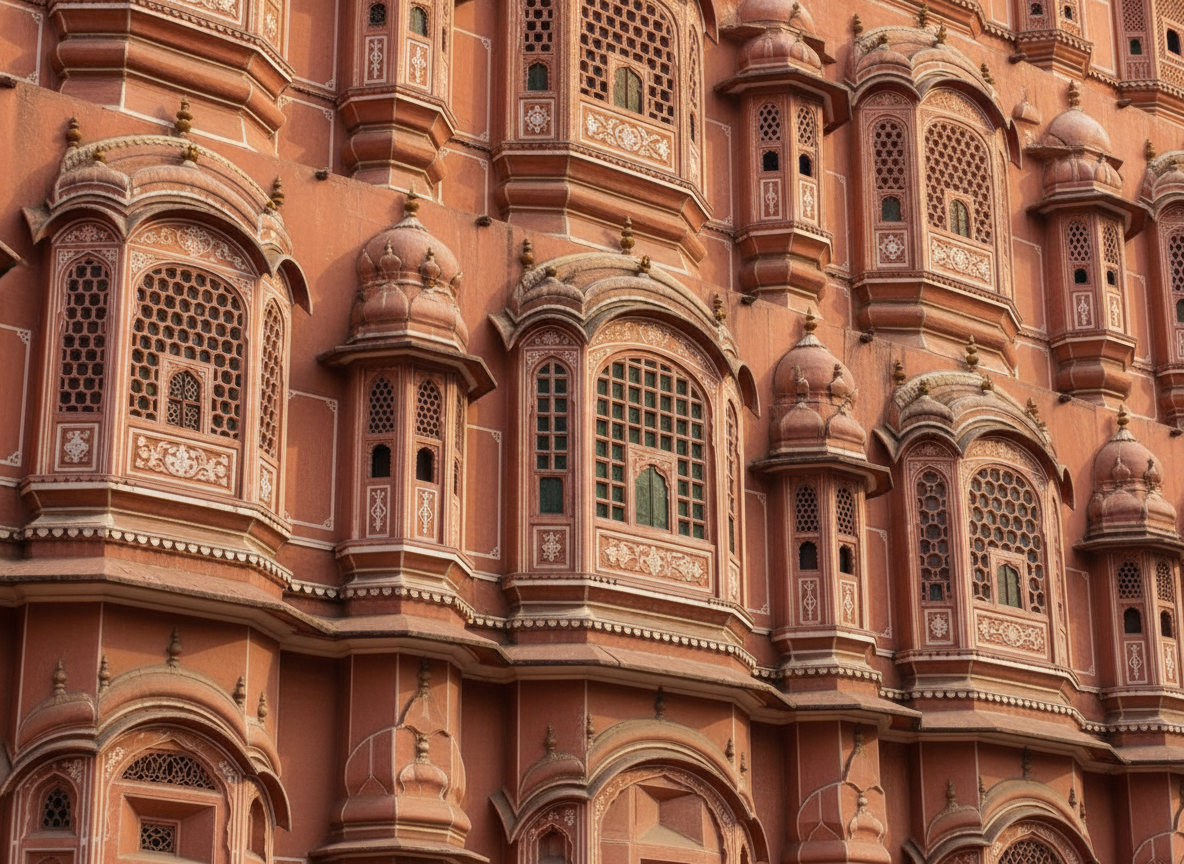
The Hawa Mahal, or "Palace of Winds," is a stunning palace in Jaipur, India, built from red and pink sandstone. Constructed in 1799 by Maharaja Sawai Pratap Singh, the grandson of Maharaja Sawai Jai Singh (the founder of Jaipur), it was designed by the architect Lal Chand Ustad in the form of the crown of Lord Krishna, the Hindu god. The palace features an extraordinary facade with 953 small windows, called jharokhas, decorated with intricate latticework.

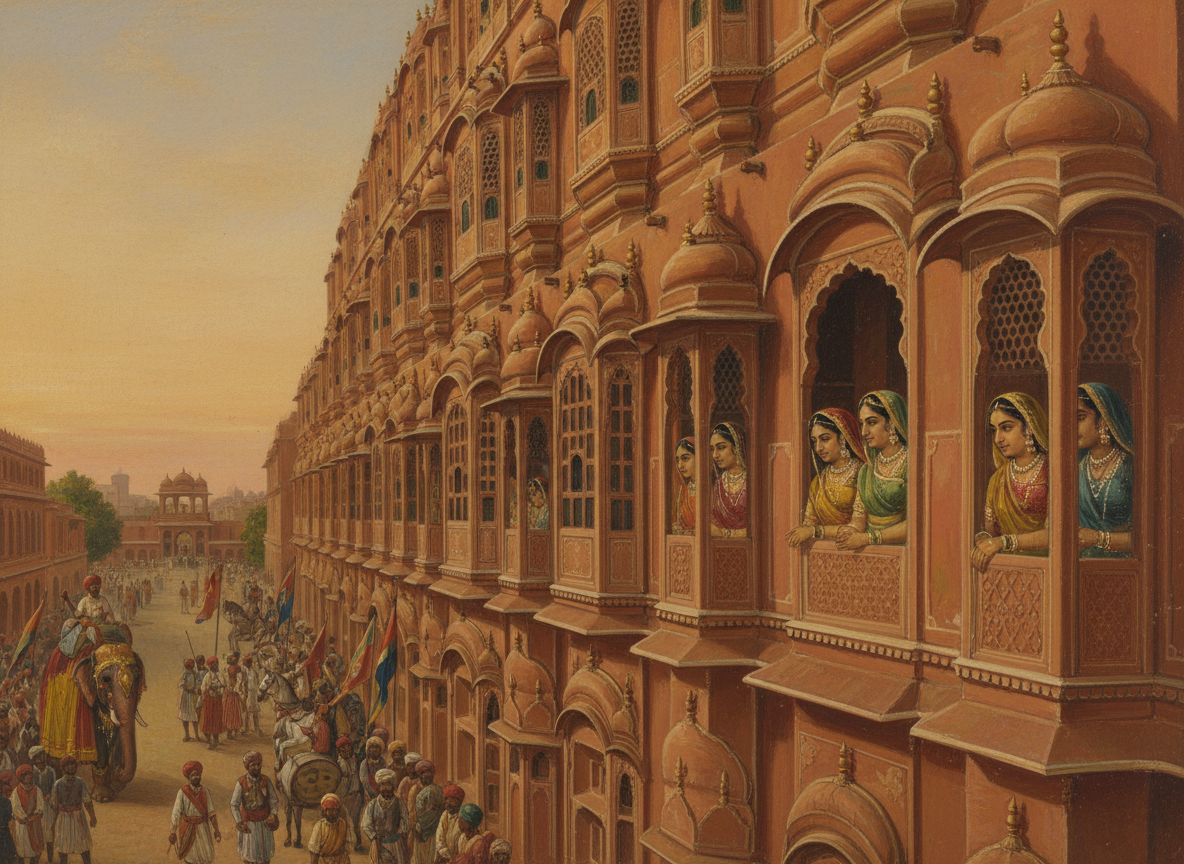
The original purpose of the Hawa Mahal was to allow the royal women of the Rajput household to observe everyday life and royal processions on the street below without being seen, in accordance with the strict rules of purdah (the practice of preventing women from being seen by men). The unique five-storey exterior resembles a honeycomb of a beehive, and the Venturi effect created by the lattice windows allows cool air to pass through, making the entire structure a natural air conditioner — hence its poetic name, "Palace of Winds."

PLAN YOUR VISIT
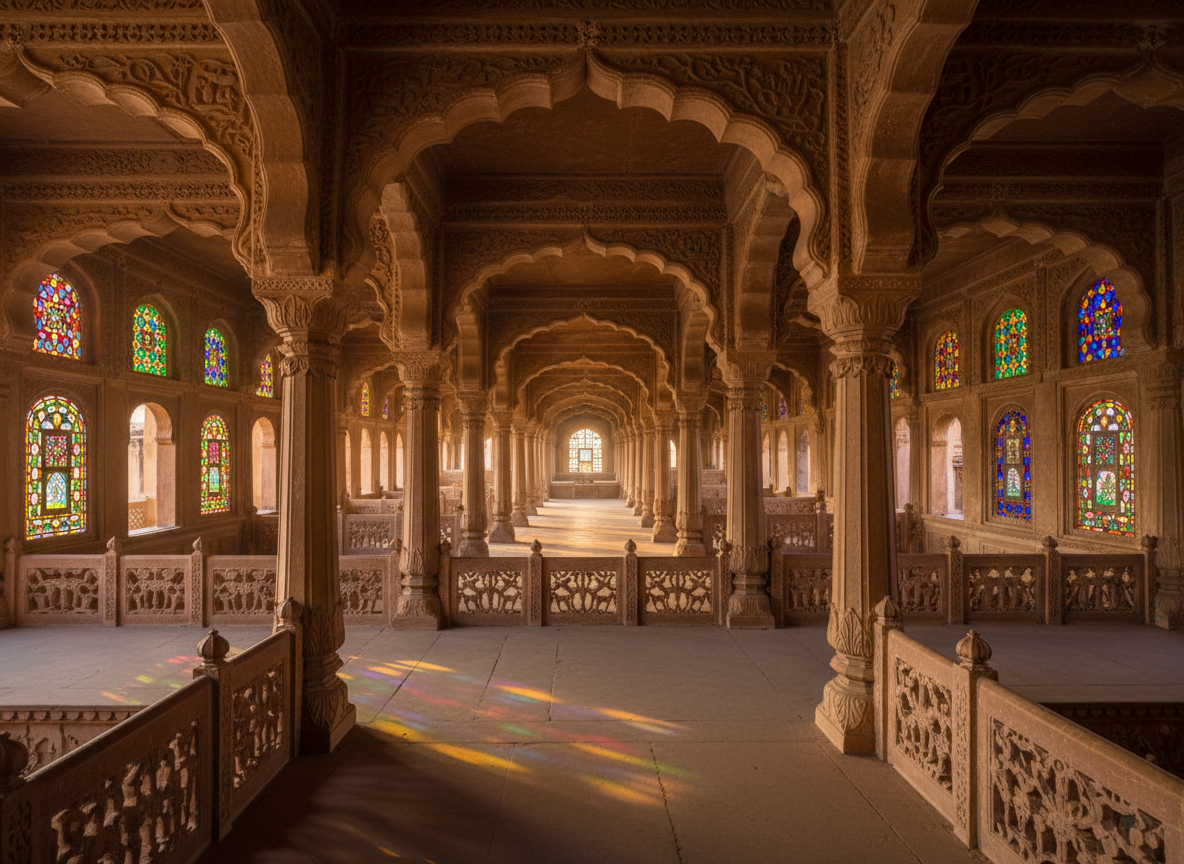
Interior corridors and arched windows of Hawa Mahal
Intricate honeycomb lattice windows (jharokhas) of Hawa Mahal
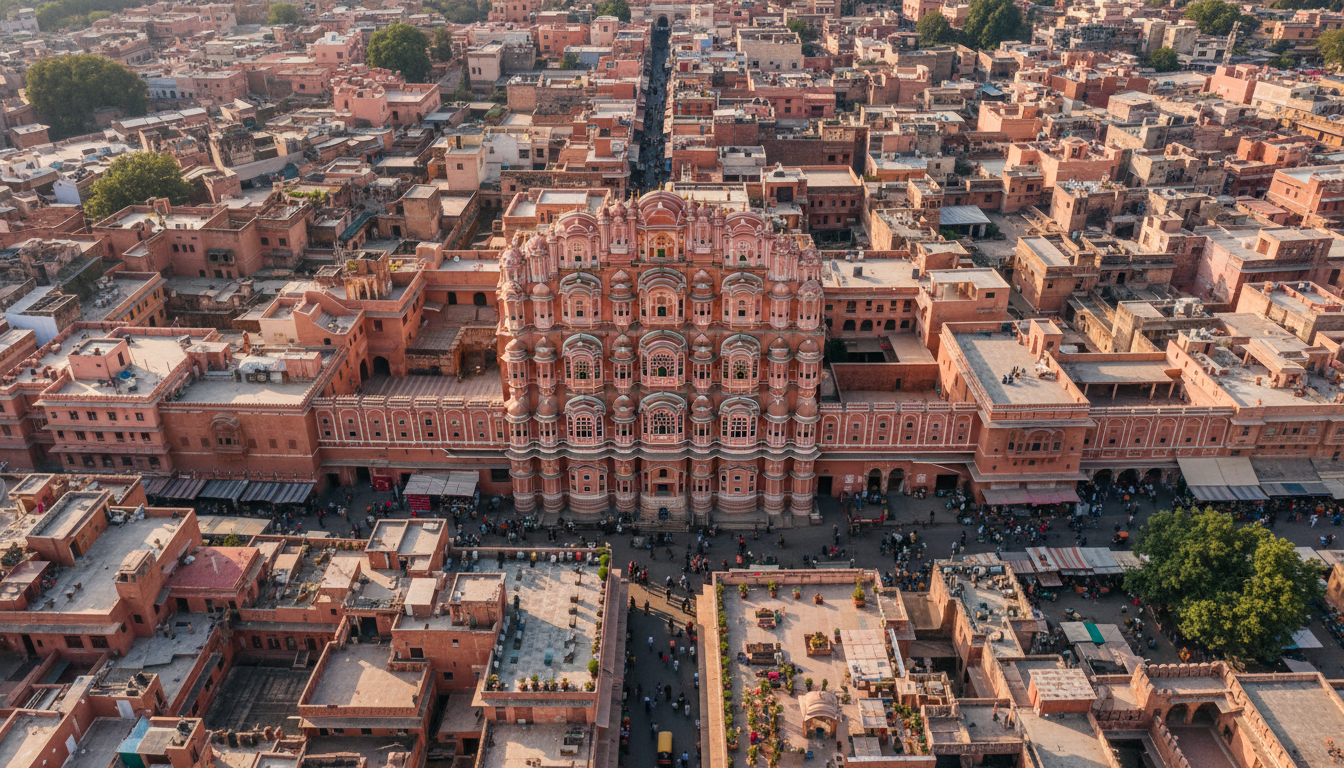
Aerial view of the Hawa Mahal and Pink City

RAJPUT ARCHITECTURE

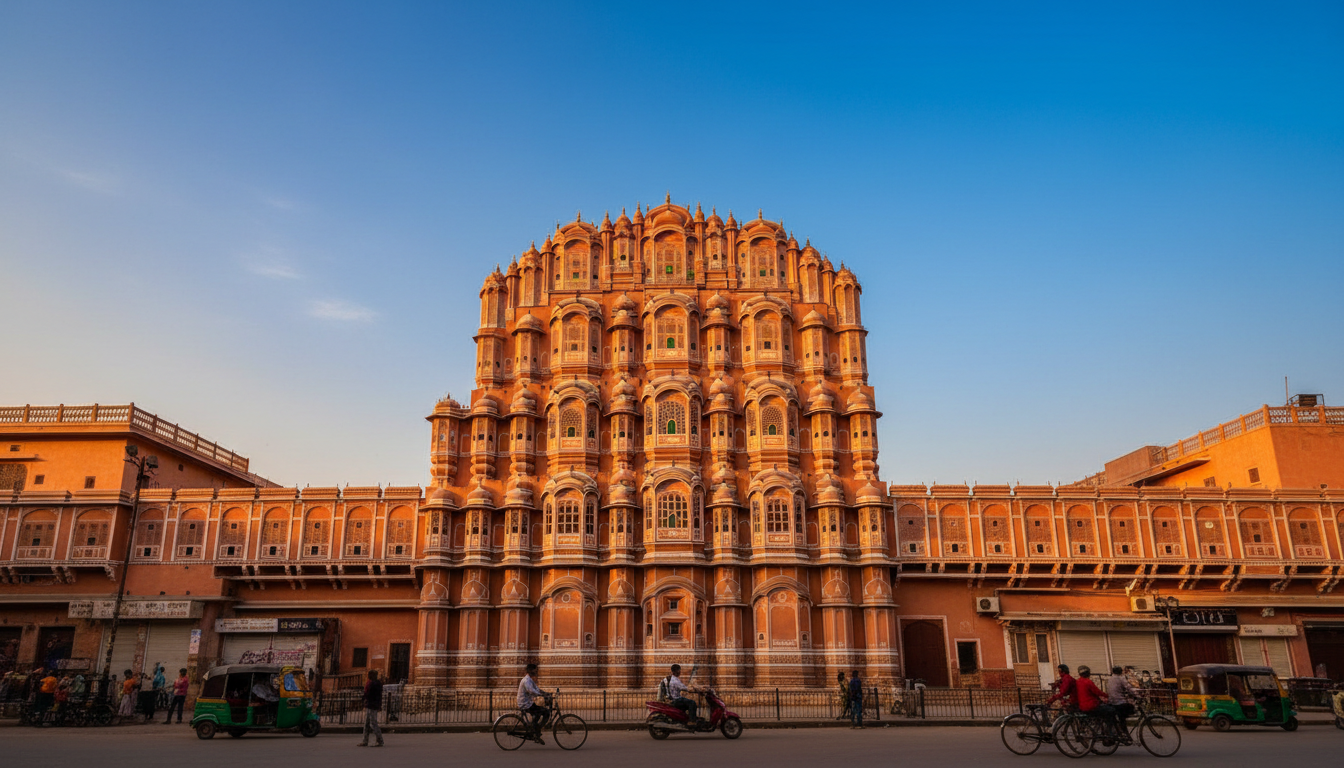
The Hawa Mahal is a masterpiece of Rajput architecture, blending Hindu Rajput and Islamic Mughal design elements. The five-storey pyramidal structure stands at an impressive 15 metres (50 feet) high, yet its front facade is only the width of a single room — making it one of the thinnest buildings in the world. The 953 small windows (jharokhas) are adorned with intricate latticework, miniature balconies, arched roofs, and delicate floral motifs carved from pink sandstone. The top three floors are only one room wide, while the first two floors have courtyards at the back.

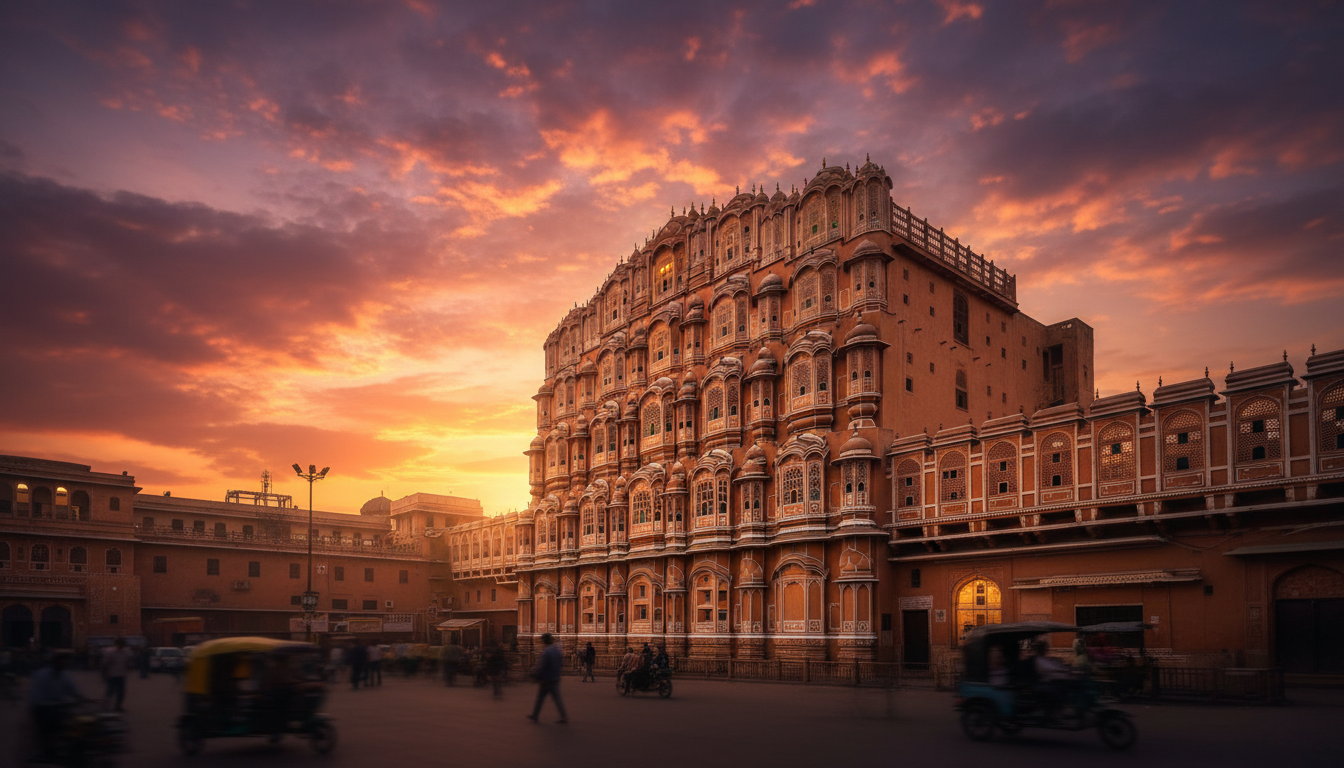
Hawa Mahal at sunset

THE PALACE OF WINDS

The Hawa Mahal earned its poetic name from the ingenious ventilation system created by its 953 jharokha windows. The Venturi effect of the lattice design channels cool breezes through the palace, providing natural air conditioning even during Jaipur's scorching summers when temperatures exceed 45°C. This allowed the royal women of the Rajput court to observe street festivals, processions, and daily life without being seen — maintaining the strict purdah system while enjoying the comfort of cool winds. Today, it remains Jaipur's most photographed landmark and an enduring symbol of the Pink City.

Our success path

History of the
Hawa Mahal

From its construction in 1799 to its status as Jaipur's most iconic landmark, the Hawa Mahal has stood as a testament to Rajput ingenuity and architectural brilliance for over two centuries.

Hawa Mahal construction in 1799

1799

Maharaja Sawai Pratap Singh commissions the construction of the Hawa Mahal. Inspired by the unique structure of the Khetri Mahal in Jhunjhunu, the architect Lal Chand Ustad designs the palace in the shape of Lord Krishna's crown. The palace is built as an extension to the Royal City Palace complex.

Hawa Mahal lattice windows detail

1876

Maharaja Ram Singh II orders the entire city of Jaipur to be painted pink to welcome the Prince of Wales (later King Edward VII). The Hawa Mahal, already built from pink sandstone, becomes the centrepiece of the newly christened "Pink City." This tradition of maintaining the pink colour continues to this day by law.

Hawa Mahal interior restoration

1956

After India's independence and the merger of princely states, the Hawa Mahal comes under the control of the Rajasthan government's Department of Archaeology and Museums. Major restoration efforts begin to preserve the delicate sandstone facade and intricate latticework from the effects of weathering and pollution.

Hawa Mahal renovation in 2006

2006

A major renovation of the Hawa Mahal is undertaken at a cost of ₹4.568 million, funded by the Unit Trust of India. The restoration preserves the original pink sandstone facade and repairs centuries of wear. The palace is fitted with modern lighting to illuminate its stunning facade at night.

Jaipur UNESCO World Heritage City 2019

2019

The walled city of Jaipur, with the Hawa Mahal as its crown jewel, is inscribed as a UNESCO World Heritage Site. The citation recognises Jaipur's unique urban planning and architectural heritage. Today, the Hawa Mahal attracts millions of visitors annually and remains the most photographed landmark in Rajasthan.

Explore & experience

Things To Do At
The Hawa Mahal

01

Photography Paradise

Capture the iconic honeycomb facade from the street below, or climb to the upper floors for panoramic views of Jaipur's Pink City. The best shots come during golden hour when the pink sandstone glows warmly in the setting sun.

02

Climb to the Top Floor

Ascend all five storeys of the Hawa Mahal via its narrow ramp-like passages (there are no stairs). From the top floor, enjoy breathtaking 360-degree views of Jantar Mantar, City Palace, and the bustling Johari Bazaar below.

03

City Palace Complex

The Hawa Mahal is part of the larger City Palace complex. Walk through to explore the magnificent Chandra Mahal, Mubarak Mahal, and the Diwan-i-Khas. The palace museum houses an impressive collection of royal costumes, manuscripts, and armoury.

04

Jantar Mantar Observatory

Just a short walk from Hawa Mahal, the UNESCO-listed Jantar Mantar is the world's largest stone astronomical observatory. Built by Maharaja Sawai Jai Singh II in 1734, it features 19 massive astronomical instruments including the world's largest sundial.

05

Johari Bazaar Shopping

Step outside the Hawa Mahal into the vibrant Johari Bazaar — Jaipur's famous jewellery market. Browse exquisite Kundan and Meenakari jewellery, precious gemstones, traditional Rajasthani textiles, block-printed fabrics, and beautiful lac bangles.

06

Rajasthani Food Trail

Savour Jaipur's legendary Rajasthani cuisine — from the famous Dal Baati Churma and Laal Maas (spicy red meat curry) to Ghewar (traditional sweet), Pyaaz Kachori, and refreshing Lassi from the iconic Lassiwala near Hawa Mahal.

Plan your trip

Visitor
Information

Opening Hours

  • 9:00 AM to 4:30 PM (all days)
  • Best time: Early morning for fewer crowds
  • Last entry: 30 min before closing
  • Photography allowed inside
  • Open all 7 days

Entry Fees (2026)

  • Indian Citizens: ₹50
  • Foreign Tourists: ₹200
  • Students (Indian): ₹10
  • Composite Ticket: ₹300 (covers 7 monuments)
  • Children (below 7): Free

Best Time to Visit

  • October - March: Best weather (10-25°C)
  • Morning: Best light for facade photos
  • Avoid: April-June (extreme heat 45°C+)
  • Monsoon: July-Sept (green but humid)
  • Festivals: Diwali & Teej for celebrations

How to Reach

  • From Delhi: 280 km (5-6 hrs by road)
  • By Train: Jaipur Junction (5 km away)
  • From Agra: 240 km (4-5 hrs by road)
  • Nearest Airport: Jaipur International (13 km)
  • Local: Auto/rickshaw to Badi Choupad

Book Your Hawa Mahal Tour & Explore The Magnificent Palace Of Winds With Expert Local Guides

BOOK YOUR TOUR NOW