QUTUB MINAR

The Towering Pride of Delhi's Golden Triangle

Mehrauli, New Delhi UNESCO World Heritage Site Tallest Brick Minaret in the World

A monument to victory and faith

Discover The
Qutub Minar

The Qutub Minar is a soaring 73-metre tall minaret built of red sandstone and marble, located in the Mehrauli area of South Delhi. It was begun by Qutb-ud-din Aibak in 1193 to celebrate the victory of Muhammad Ghori over the Rajput king Prithviraj Chauhan, and later completed by his successor Iltutmish. The tower is adorned with intricate carvings and verses from the Quran, and stands as the tallest brick minaret in the world.

The Qutub Minar complex is a remarkable ensemble of medieval structures and ruins, including India's first mosque — the Quwwat-ul-Islam Mosque, the mysterious rust-free Iron Pillar dating back to the 4th century, and the ornate Alai Darwaza gateway. Together, they form one of the most significant archaeological sites in India and a proud symbol of Indo-Islamic architecture.

PLAN YOUR VISIT
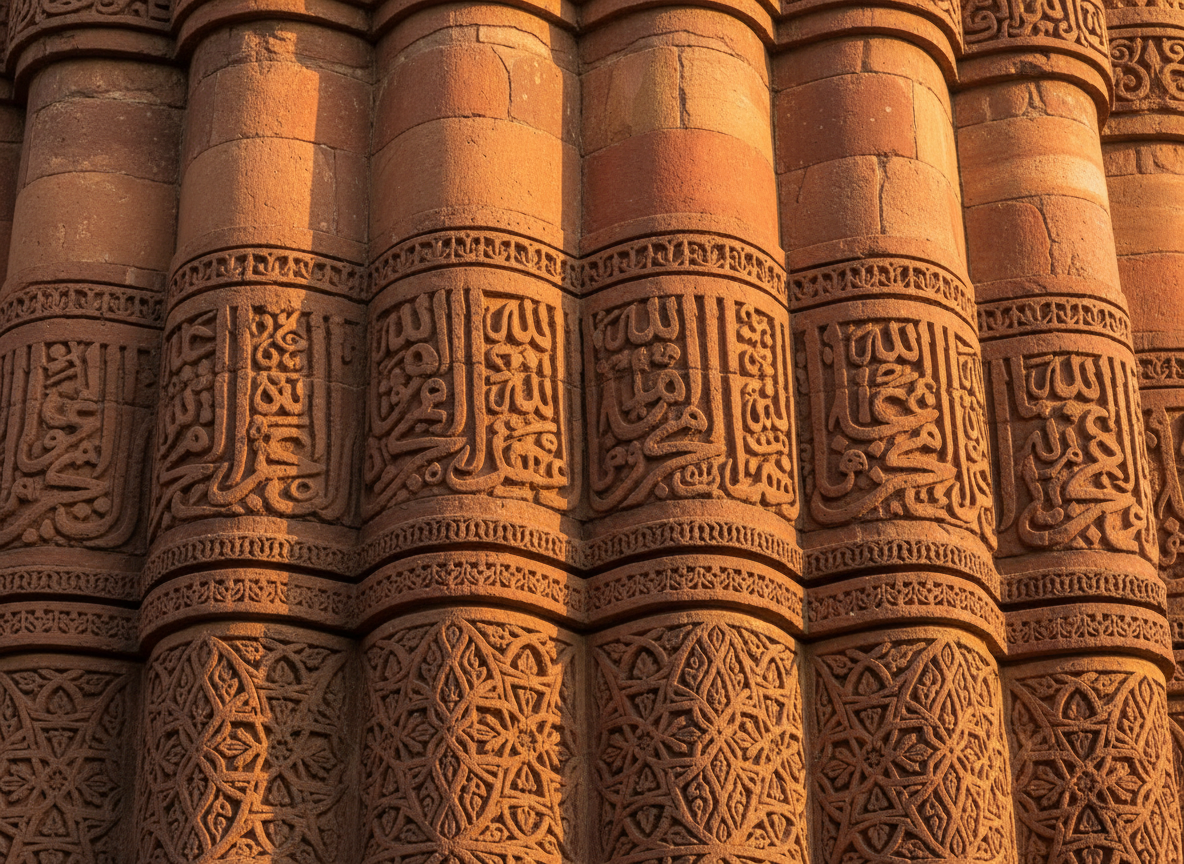
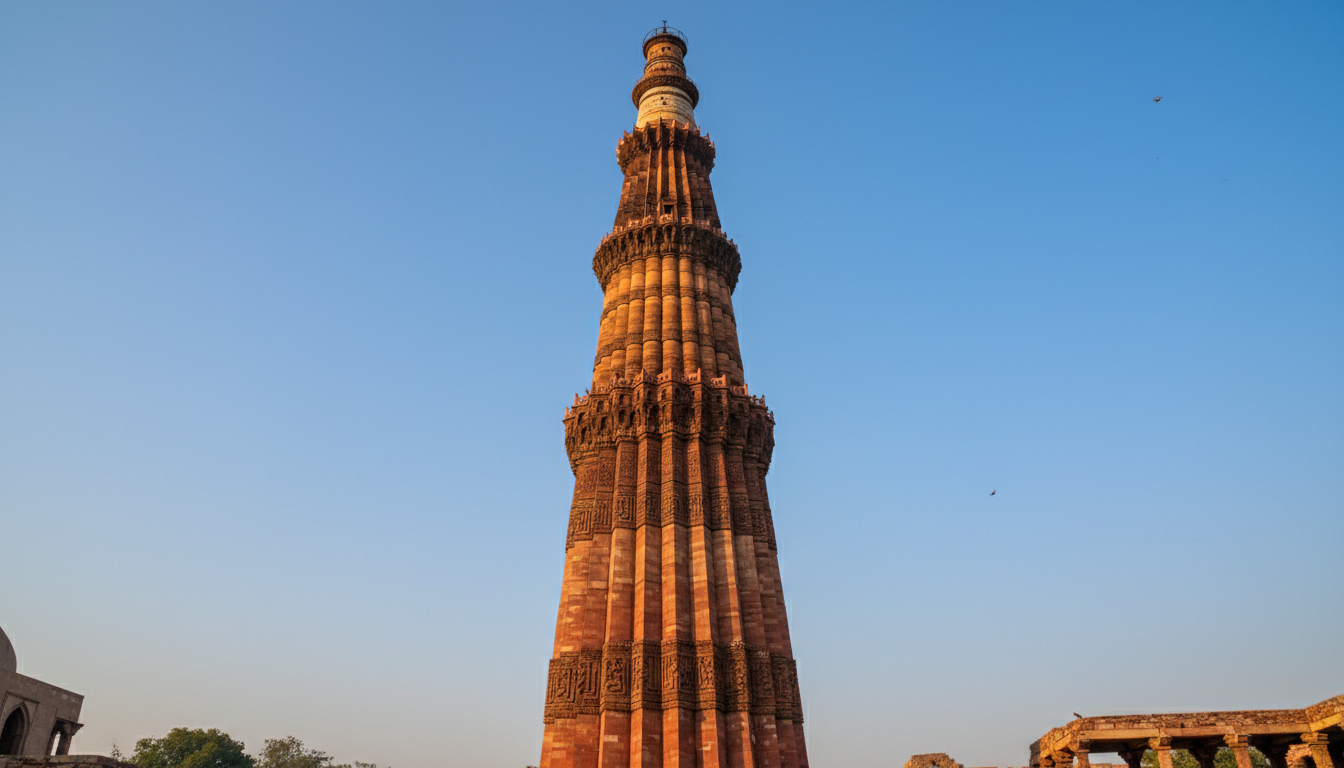
Intricate carved Arabic inscriptions and geometric patterns on Qutub Minar
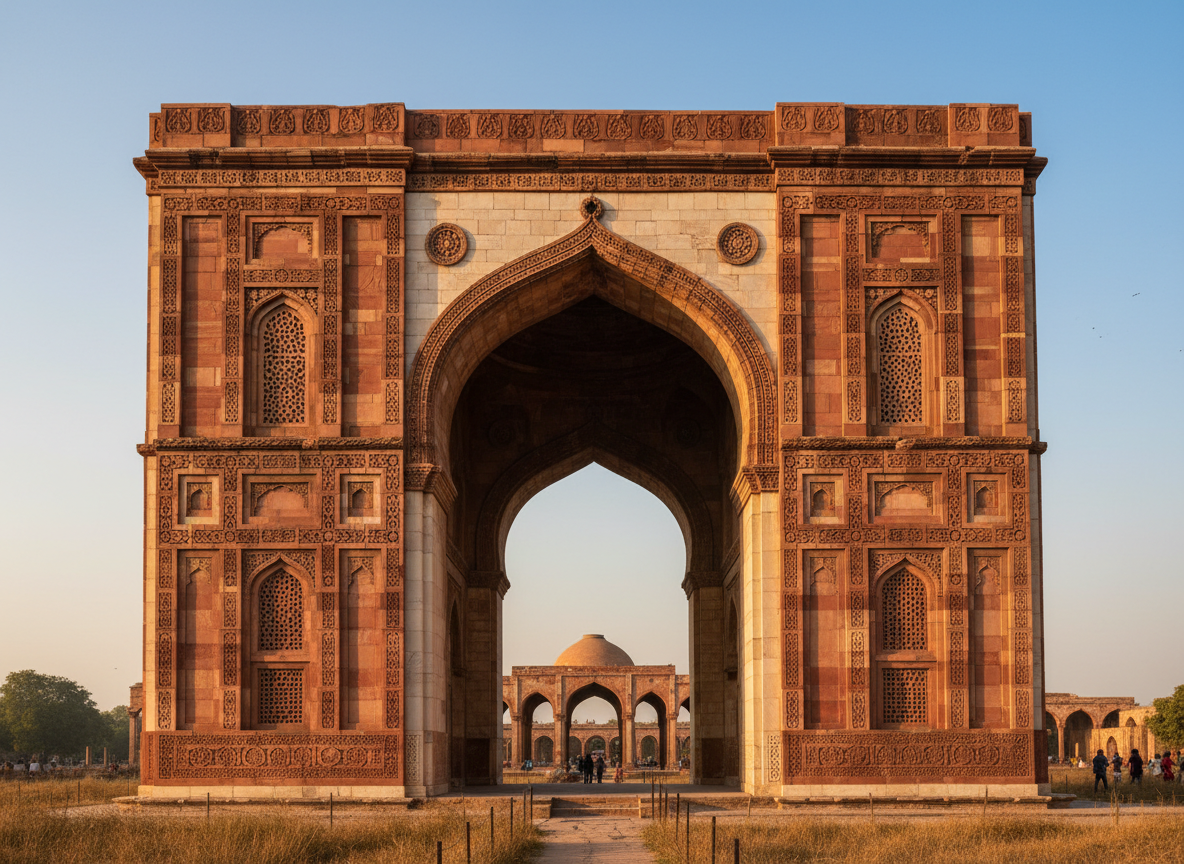
Alai Darwaza gateway at the Qutub Minar complex
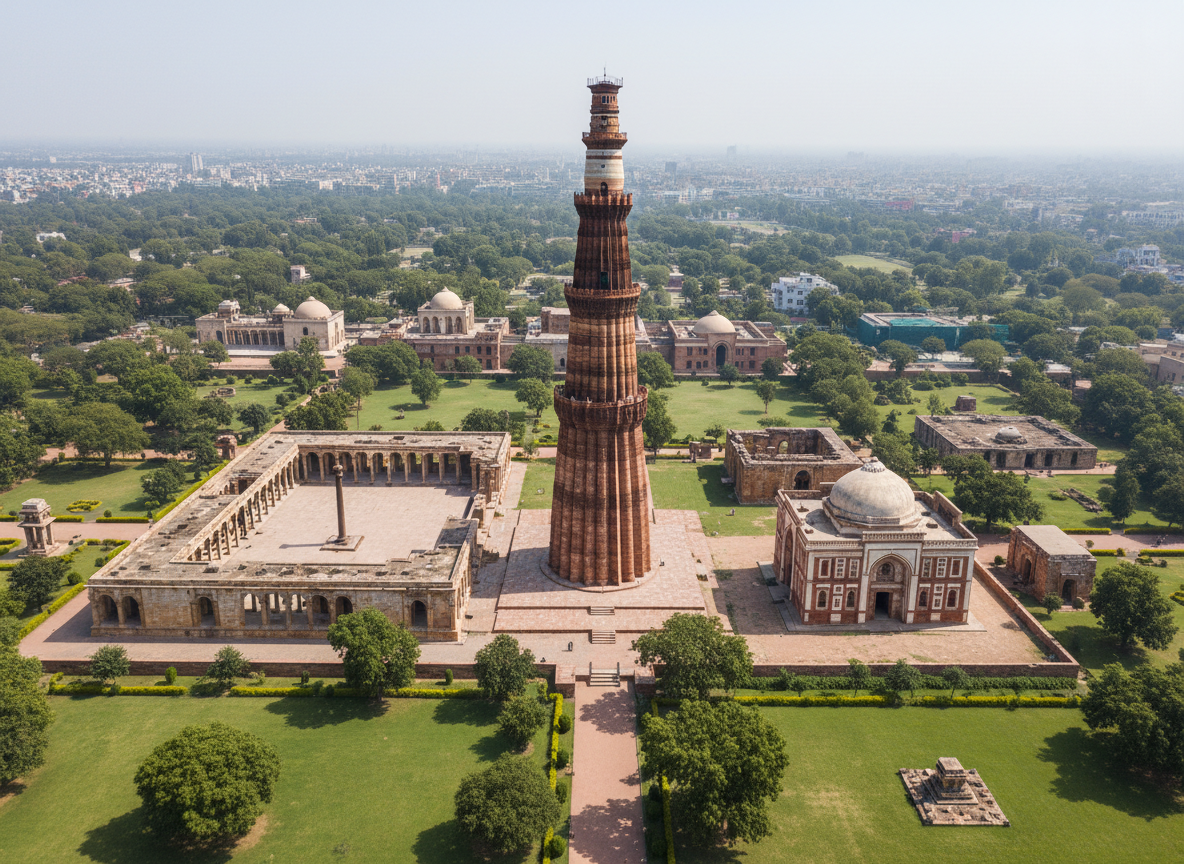
Aerial view of the Qutub Minar complex

INDO-ISLAMIC ARCHITECTURE

The Qutub Minar is the finest example of early Indo-Islamic architecture in India, blending Persian, Arabic, and Indian design elements. The tower has five distinct storeys, each separated by projecting balconies supported by elaborate stalactite (muqarnas) brackets. The first three storeys are built of red sandstone, while the fourth and fifth are of marble and sandstone. Each storey features different fluting patterns — alternating angular and rounded flutes — creating a visually stunning tapering effect that rises to a height of 72.5 metres.

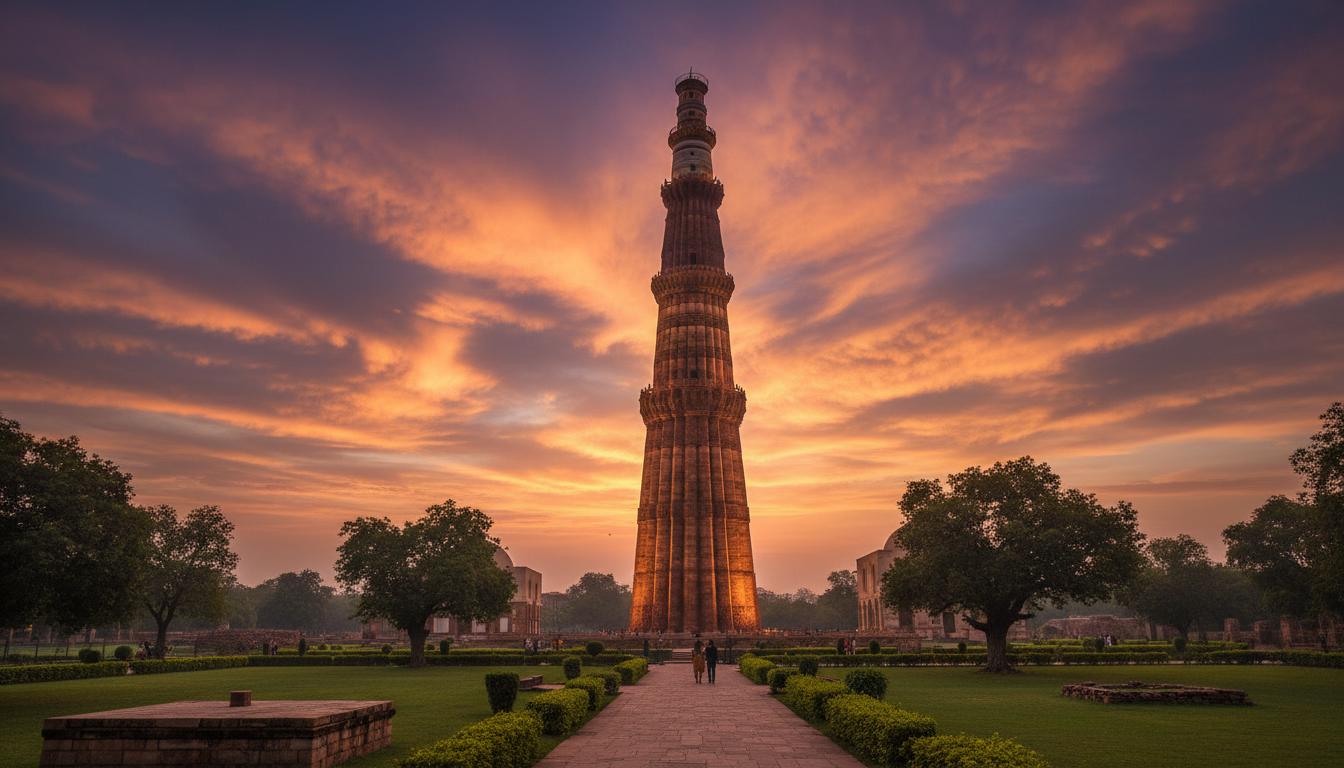
Qutub Minar at sunset

SYMBOL OF VICTORY & POWER

The Qutub Minar was built to celebrate the establishment of Muslim rule in Delhi and to serve as a tower of victory (Vijay Stambh). Qutb-ud-din Aibak, the first Sultan of Delhi, began its construction in 1193 after defeating the last Hindu kingdom in Delhi. The tower also served as a minaret for the adjacent Quwwat-ul-Islam Mosque — India's first mosque, built using materials from 27 demolished Hindu and Jain temples. Today, the complex attracts over 4 million visitors annually and remains one of Delhi's most iconic landmarks.

Our success path

History of the
Qutub Minar

From its foundation in 1193 to its recognition as a UNESCO World Heritage Site, the Qutub Minar has stood as a testament to architectural brilliance and the rich tapestry of Indian history for over eight centuries.

Qutub Minar construction began in 1193

1193

Qutb-ud-din Aibak, the first Sultan of the Delhi Sultanate, begins construction of the Qutub Minar to celebrate his victory over the Rajput king Prithviraj Chauhan. He completes only the first storey of the tower before his death in 1210.

Qutub Minar completed by Iltutmish in 1220

1220

Sultan Iltutmish, Aibak's son-in-law and successor, adds three more storeys to the Qutub Minar, bringing the tower to its near-final form. The tower now stands with four storeys, each adorned with intricate carvings and Quranic inscriptions.

Firoz Shah Tughlaq repairs Qutub Minar in 1368

1368

After the top storey is damaged by lightning, Sultan Firoz Shah Tughlaq repairs the tower and adds the fifth and final storey, constructed of white marble and red sandstone. He also builds the beautiful Alai Darwaza gateway to the complex.

Qutub Minar designated UNESCO World Heritage Site in 1993

1993

The Qutub Minar and its monuments are designated a UNESCO World Heritage Site, recognised as "an outstanding example of Indo-Islamic architecture." The complex is celebrated for its historical significance and architectural innovation spanning several centuries.

Qutub Minar today - one of India's most visited monuments

Today

The Qutub Minar stands as one of India's most visited monuments, attracting over 4 million visitors annually. The complex hosts the annual Qutub Festival celebrating Indian classical music and dance. It remains Delhi's tallest monument and a proud symbol of the city's rich medieval heritage.

Explore & experience

Things To Do At
The Qutub Minar

01

Photography Spots

Capture the Qutub Minar from stunning angles — the base looking up for dramatic perspective, through the arches of the ruined mosque, framed by the Alai Darwaza gateway, and panoramic shots from the surrounding gardens.

02

Iron Pillar Marvel

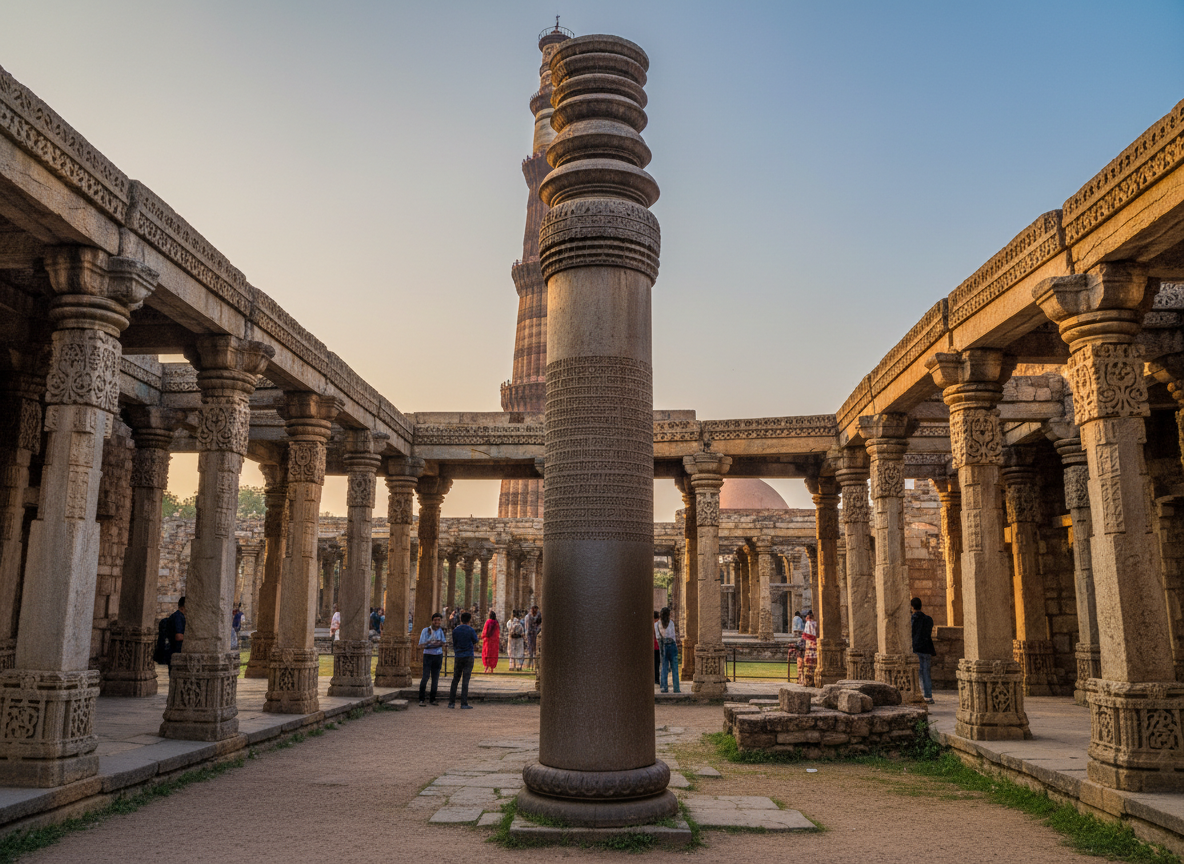
Marvel at the mysterious Iron Pillar of Delhi, a 7-metre tall column dating back to the 4th century that has remarkably resisted rust for over 1,600 years. Scientists still study its unique metallurgical composition.

03

Alai Darwaza Gateway

Explore the stunning Alai Darwaza, built in 1311 by Sultan Alauddin Khalji. This red sandstone and white marble gateway is considered one of the finest examples of early Islamic architecture in India, with exquisite lattice screens and horseshoe arches.

04

Quwwat-ul-Islam Mosque

Walk through the ruins of India's first mosque, built in 1192 using materials from 27 demolished Hindu and Jain temples. The beautifully carved pillars and the ornate arched screen with Arabic calligraphy are a photographer's delight.

05

Mehrauli Archaeological Park

Explore the adjacent Mehrauli Archaeological Park, home to over 100 historically significant monuments spanning from the 10th century to the British era. The park includes Balban's Tomb, Jamali Kamali Mosque, and the Rajon Ki Baoli stepwell.

06

Qutub Festival

If visiting in November-December, experience the annual Qutub Festival — a vibrant celebration of Indian classical music and dance held against the illuminated backdrop of the Qutub Minar. World-renowned artists perform in this magical setting.

Plan your trip

Visitor
Information

Opening Hours

  • Sunrise to Sunset (all days)
  • 7:00 AM - 5:00 PM (October - March)
  • 7:00 AM - 5:00 PM (April - September)
  • Open on all national holidays
  • Open 7 days a week

Entry Fees (2026)

  • Indian Citizens: ₹35
  • Foreign Tourists: ₹550
  • SAARC/BIMSTEC: ₹35
  • Video Camera: ₹25
  • Children (below 15): Free

Best Time to Visit

  • October - March: Best weather (15-25°C)
  • Early Morning: Fewer crowds, soft light
  • Avoid: April-June (extreme heat 40°C+)
  • Monsoon: July-Sept (lush green gardens)
  • Nov-Dec: Qutub Festival season

How to Reach

  • Metro: Qutab Minar Station (Yellow Line)
  • From Connaught Place: 15 km (30-45 min)
  • From Airport: 12 km (20-30 min)
  • From Agra: 230 km (3-4 hrs by road)
  • Local: Auto/Uber/Ola to Mehrauli

Book Your Qutub Minar Tour & Explore Delhi's Rich Medieval Heritage With Expert Local Guides

BOOK YOUR TOUR NOW