RED FORT

The Crown Jewel of Mughal Delhi

Old Delhi, Delhi UNESCO World Heritage Site Symbol of India's Sovereignty

A fortress of imperial grandeur

Discover The
Red Fort

The Red Fort, also known as Lal Qila, is a historic fort in the city of Delhi that served as the main residence of the Mughal Emperors for nearly 200 years, until 1857. Emperor Shah Jahan commissioned construction of the Red Fort on 12 May 1638, when he decided to shift his capital from Agra to Delhi. The fort's massive enclosing walls of red sandstone, standing 33 metres high, gave the fort its name.

The Red Fort complex is considered to represent the zenith of Mughal creativity, which brought together planning, architecture, and art in a refined synthesis. Every year on India's Independence Day (15 August), the Prime Minister hoists the national flag at the fort's main gate, the Lahori Gate, and delivers a nationally broadcast address from its ramparts — making it one of the most iconic symbols of Indian sovereignty.

PLAN YOUR VISIT
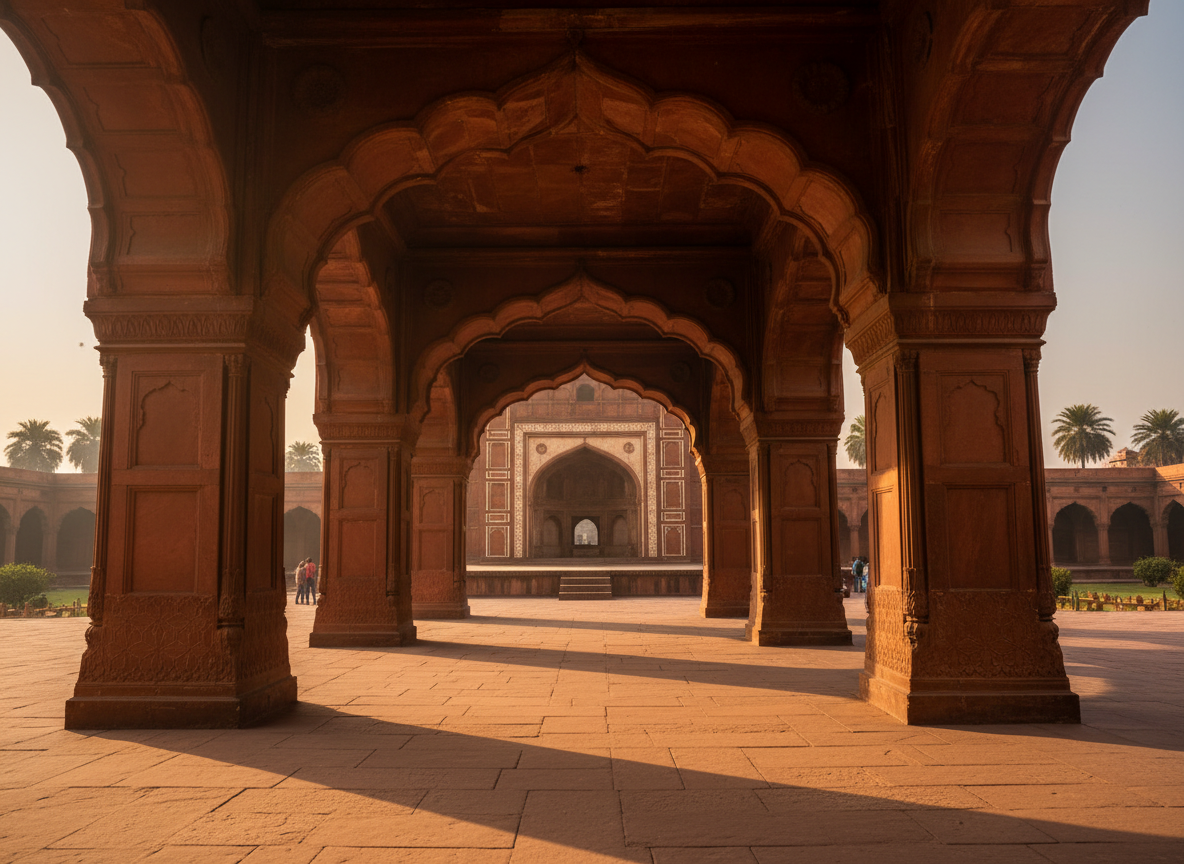
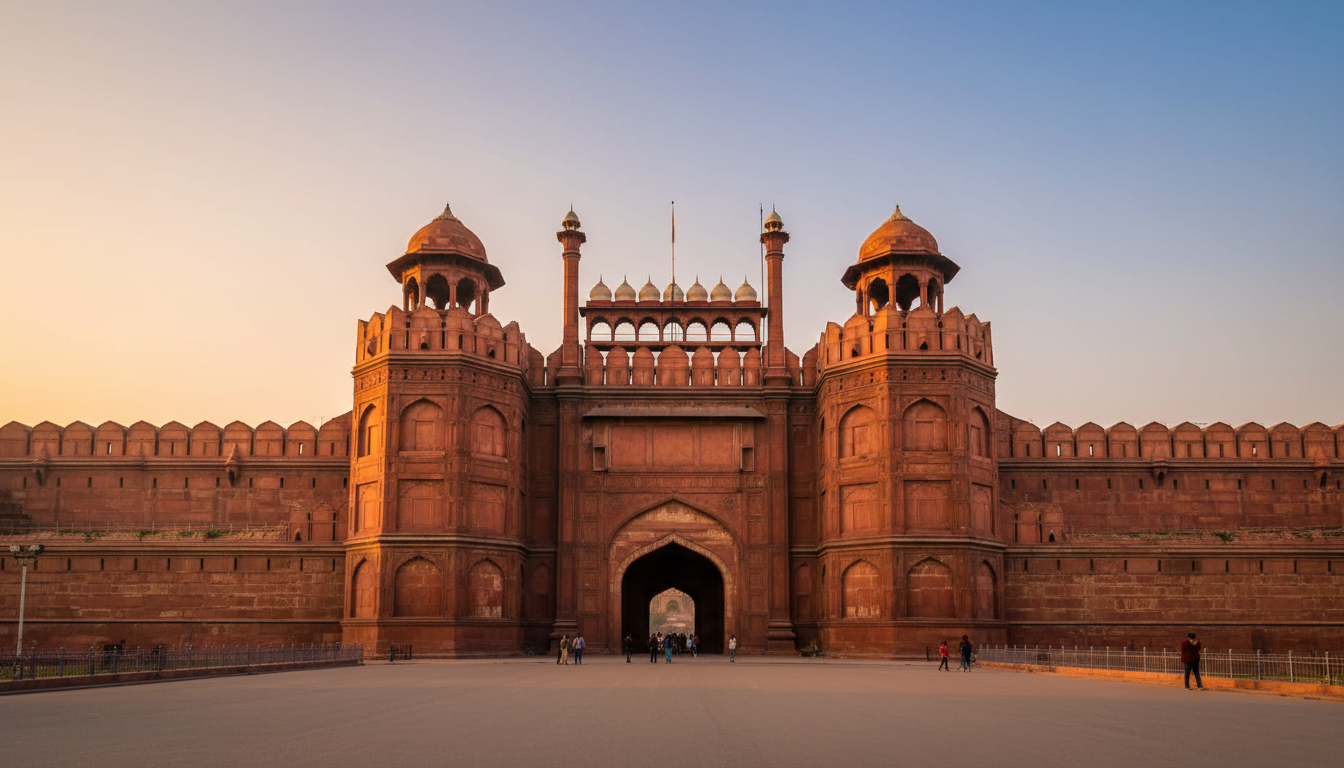
Diwan-i-Aam Hall of Public Audience at Red Fort Delhi
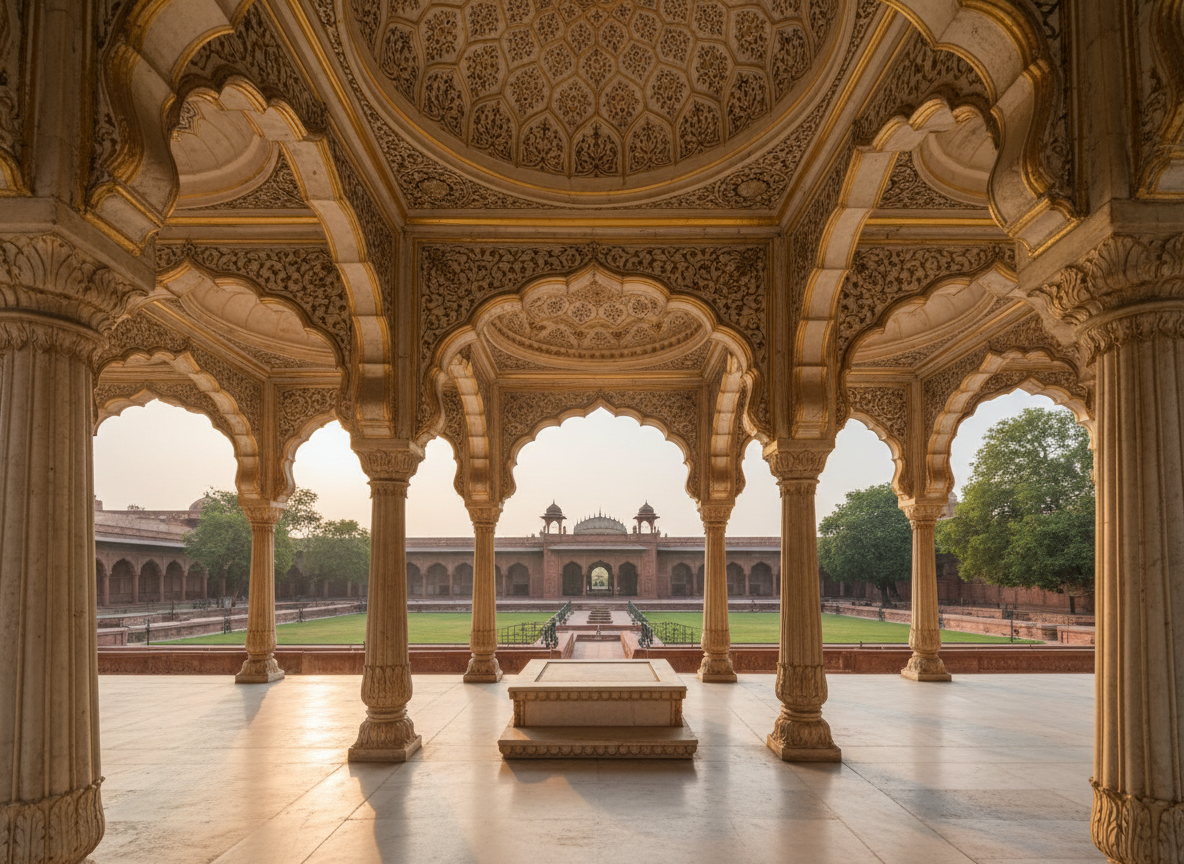
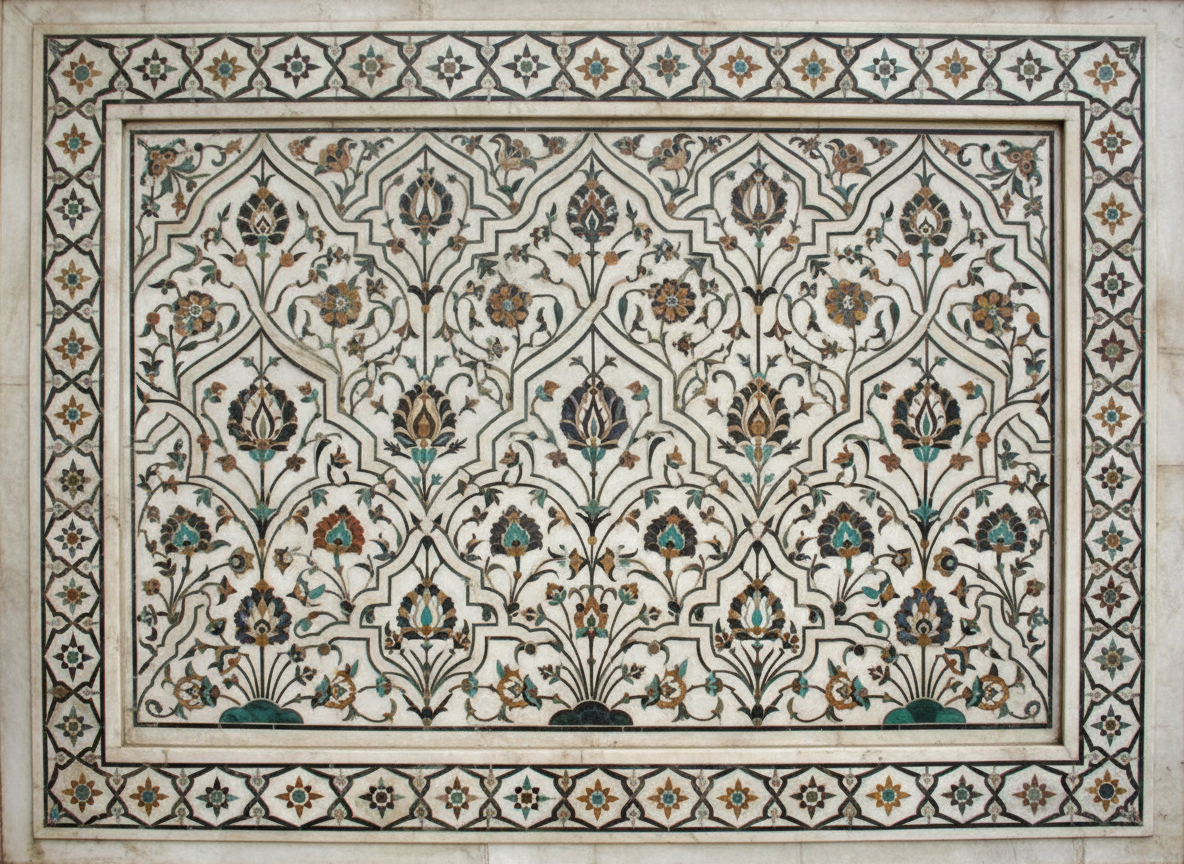
Intricate marble inlay and floral carvings at Red Fort
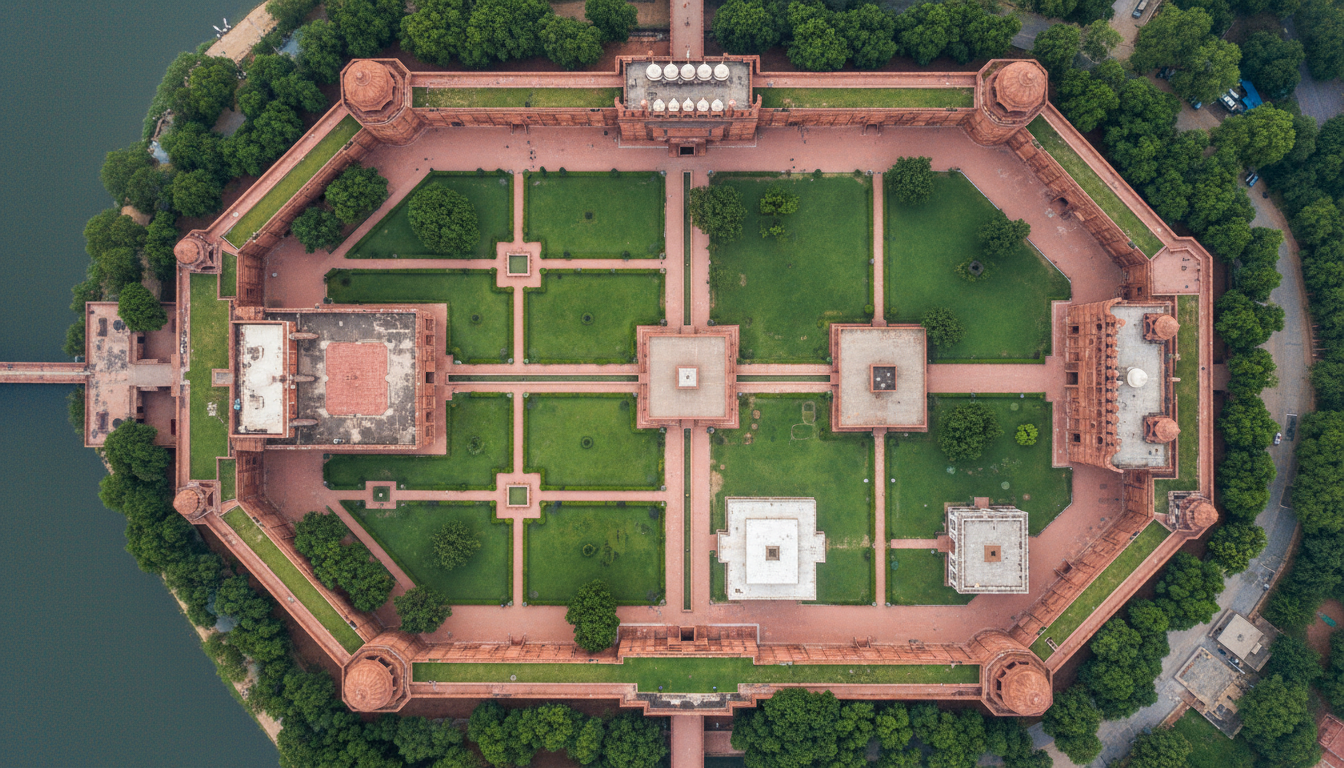
Aerial view of the Red Fort complex

MUGHAL ARCHITECTURE

The Red Fort is a masterpiece of Mughal architecture, blending Persian, Timurid, and Hindu traditions. The fort complex spans over 254 acres and is enclosed by 2.5 kilometres of massive red sandstone walls. Inside, the palace complex features exquisite marble pavilions, ornate halls, lush gardens designed in the Char Bagh style, and an elaborate water channel system known as the Nahr-i-Bihisht (Stream of Paradise). The Lahori Gate and Delhi Gate serve as the two main entrances to this magnificent fortress.

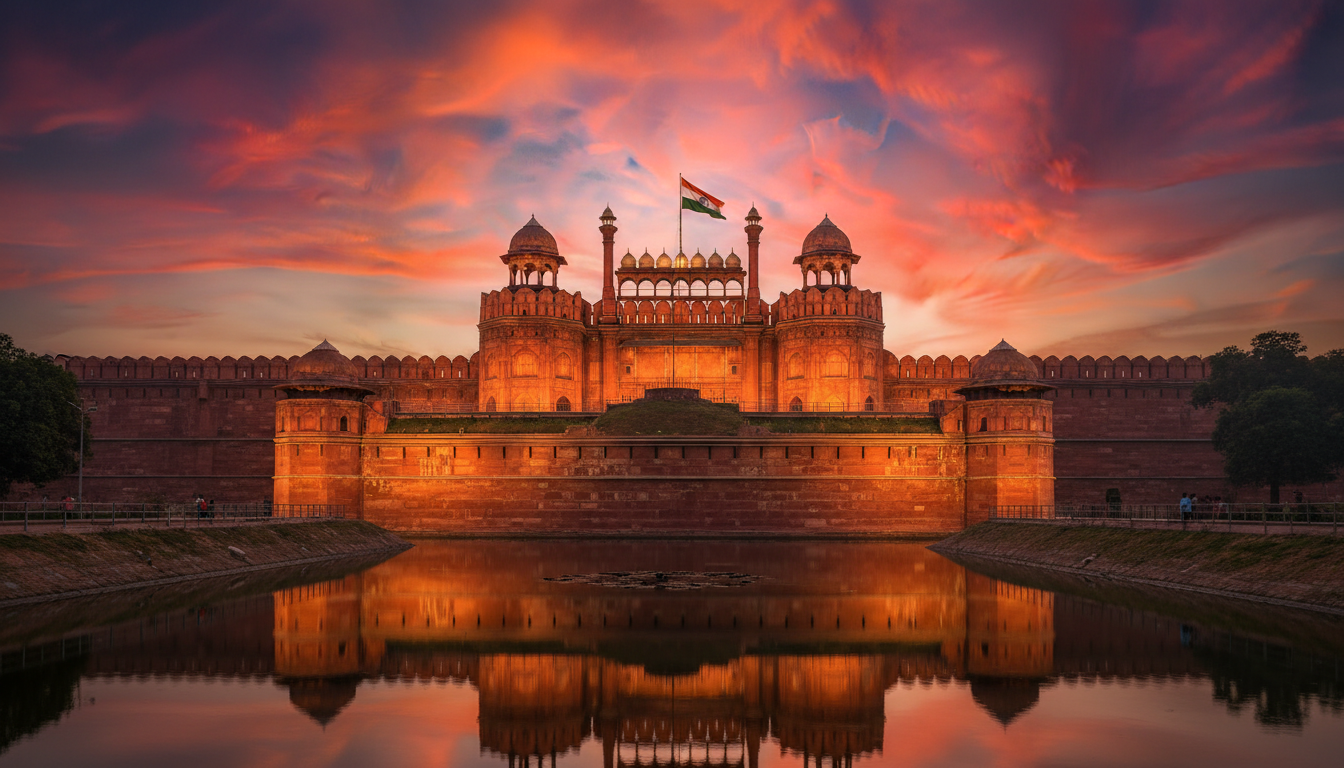
Red Fort at sunset

SYMBOL OF INDIA'S SOVEREIGNTY

The Red Fort holds immense national significance as the symbol of India's sovereignty and independence. Every year on 15 August, the Prime Minister of India hoists the national flag at the Lahori Gate and delivers a speech to the nation from its ramparts. This tradition began with India's first Prime Minister, Jawaharlal Nehru, on 15 August 1947. The fort witnessed the end of Mughal rule and the beginning of British colonial power, and later became the backdrop for India's triumphant independence — attracting over 3 million visitors annually.

Our success path

History of the
Red Fort

From its construction in 1639 to its recognition as a UNESCO World Heritage Site, the Red Fort has stood as a testament to Mughal grandeur and India's journey to independence for nearly four centuries.

Red Fort construction began in 1639

1639

Emperor Shah Jahan lays the foundation of the Red Fort on the banks of the river Yamuna. The construction begins under the supervision of architect Ustad Ahmad Lahori, the same architect who designed the Taj Mahal. The fort is designed as the centrepiece of Shahjahanabad, the new Mughal capital.

Red Fort completed in 1648

1648

The Red Fort is completed after nine years of construction. The fort's massive red sandstone walls rise 33 metres high, enclosing a complex of palaces, gardens, and pavilions. Shah Jahan moves his court from Agra to the newly built fort, marking the beginning of Delhi as the Mughal capital.

Red Fort during the decline of Mughal Empire

1739

Persian ruler Nadir Shah invades Delhi and plunders the Red Fort, carrying away immense treasures including the legendary Peacock Throne and the Koh-i-Noor diamond. This event marks the beginning of the decline of Mughal power and the fort's gradual deterioration over the following century.

Red Fort during Indian Independence in 1947

1947

On 15 August 1947, India's first Prime Minister Jawaharlal Nehru raises the Indian national flag above the Lahori Gate of the Red Fort, marking India's independence from British rule. This historic moment establishes the tradition of the Independence Day flag-hoisting ceremony that continues to this day.

Red Fort designated UNESCO World Heritage Site in 2007

2007

The Red Fort is designated a UNESCO World Heritage Site, recognised as an outstanding example of Mughal architecture and urban planning. The citation highlights its role as a symbol of India's rich cultural heritage. Today, it attracts over 3 million visitors annually and hosts the spectacular Sound and Light show every evening.

Explore & experience

Things To Do At
The Red Fort

01

Sound & Light Show

Experience the spectacular evening Sound and Light show that brings the history of the Red Fort to life. The show narrates the fort's rich history through dramatic lighting effects and powerful narration in Hindi and English.

02

Diwan-i-Aam & Diwan-i-Khas

Explore the magnificent Hall of Public Audience (Diwan-i-Aam) and the exquisite Hall of Private Audience (Diwan-i-Khas) with its famous inscription: "If there is paradise on earth, it is this, it is this, it is this."

03

Mughal Gardens

Stroll through the beautifully restored Hayat Bakhsh Bagh (Life-Bestowing Garden) and Mehtab Bagh (Moonlight Garden). These Char Bagh-style gardens feature fountains, water channels, and lush greenery that once delighted Mughal emperors.

04

Museum Galleries

Visit the fascinating museums inside the fort complex — the Indian War Memorial Museum, the Museum of Archaeology, and the Blood Paintings Gallery. These museums showcase Mughal-era artefacts, weapons, paintings, and textiles.

05

Chandni Chowk Exploration

Step outside the Lahori Gate into the vibrant Chandni Chowk — one of the oldest and busiest markets in India. Explore narrow lanes filled with street food, spices, jewellery, textiles, and experience the authentic flavour of Old Delhi.

06

Old Delhi Food Trail

Savour the legendary street food of Old Delhi — from Karim's iconic kebabs and nihari to Paranthe Wali Gali's stuffed parathas, jalebi from Old Famous Jalebi Wala, and refreshing lassi. A culinary journey through centuries of Mughlai cuisine.

Plan your trip

Visitor
Information

Opening Hours

  • 9:30 AM to 4:30 PM (except Mondays)
  • Sound & Light Show: 7:00 PM - 8:00 PM
  • Last entry: 30 min before closing
  • Museum timings: 10:00 AM - 5:00 PM
  • Closed on Mondays

Entry Fees (2026)

  • Indian Citizens: ₹35
  • Foreign Tourists: ₹500
  • Sound & Light Show: ₹80 (Hindi) / ₹80 (English)
  • Museum: ₹5 (additional)
  • Children (below 15): Free

Best Time to Visit

  • October - March: Best weather (10-25°C)
  • Morning: Less crowded, better photography
  • Avoid: April-June (extreme heat 40°C+)
  • Monsoon: July-Sept (humid but lush gardens)
  • 15 August: Independence Day celebrations

How to Reach

  • Metro: Lal Qila station (Violet Line)
  • From Agra: 233 km (3-4 hrs by road)
  • From Jaipur: 280 km (5-6 hrs by road)
  • Nearest Airport: IGI Airport (18 km)
  • Local: Auto/rickshaw/bus to Chandni Chowk

Book Your Red Fort Tour & Explore The Magnificent Mughal Fortress With Expert Local Guides

BOOK YOUR TOUR NOW