TAJ MAHAL

The Jewel of India's Golden Triangle

Agra, Uttar Pradesh UNESCO World Heritage Site New 7 Wonders of the World

A monument to eternal love

Discover The
Taj Mahal

The Taj Mahal is an ivory-white marble mausoleum on the right bank of the river Yamuna in Agra, India. It was commissioned in 1632 by the Mughal emperor Shah Jahan to house the tomb of his favourite wife, Mumtaz Mahal. The tomb is the centrepiece of a 17-hectare complex, which includes a mosque and a guest house, and is set in formal gardens bounded on three sides by a crenellated wall.

Described by Nobel laureate Rabindranath Tagore as "a teardrop on the cheek of time," the Taj Mahal is widely recognised as the jewel of Muslim art in India and one of the universally admired masterpieces of the world's heritage. It is regarded by many as the finest example of Mughal architecture, a style that combines elements of Indian, Persian, and Islamic architectural styles.

PLAN YOUR VISIT
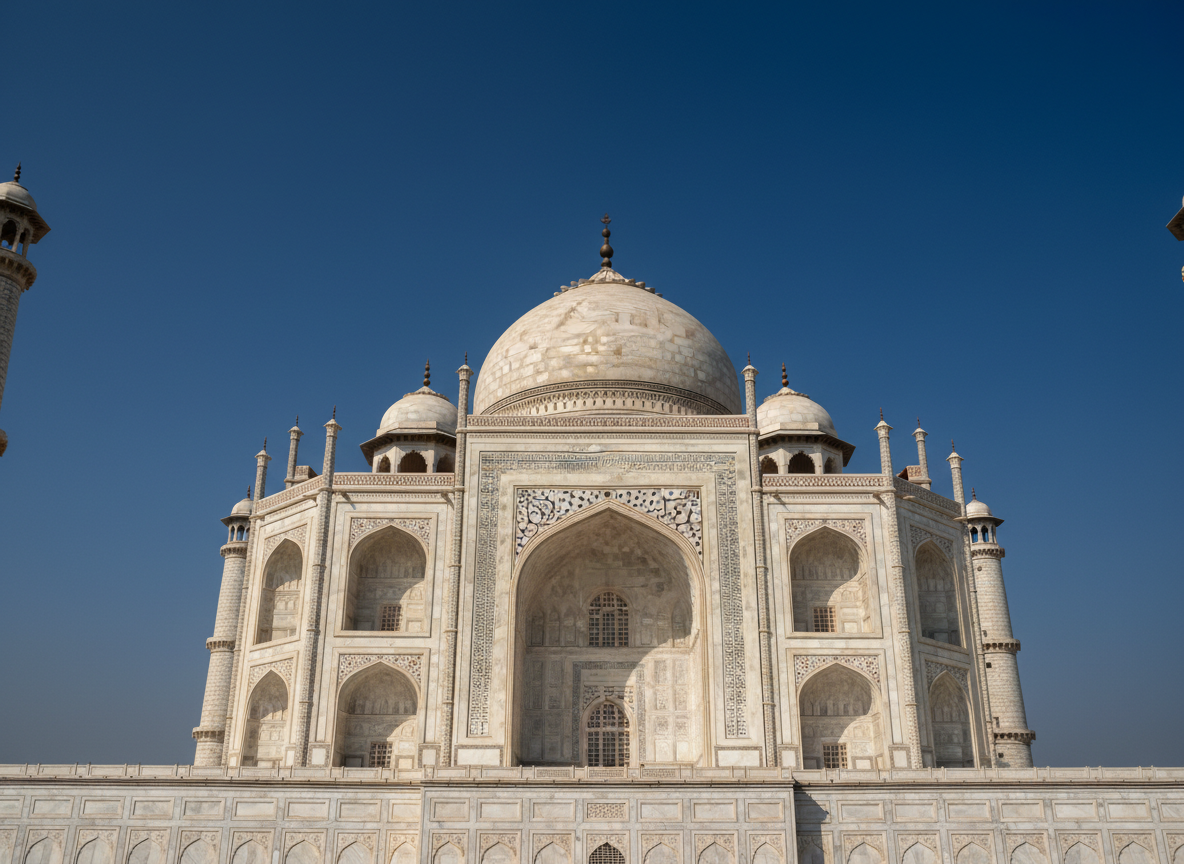
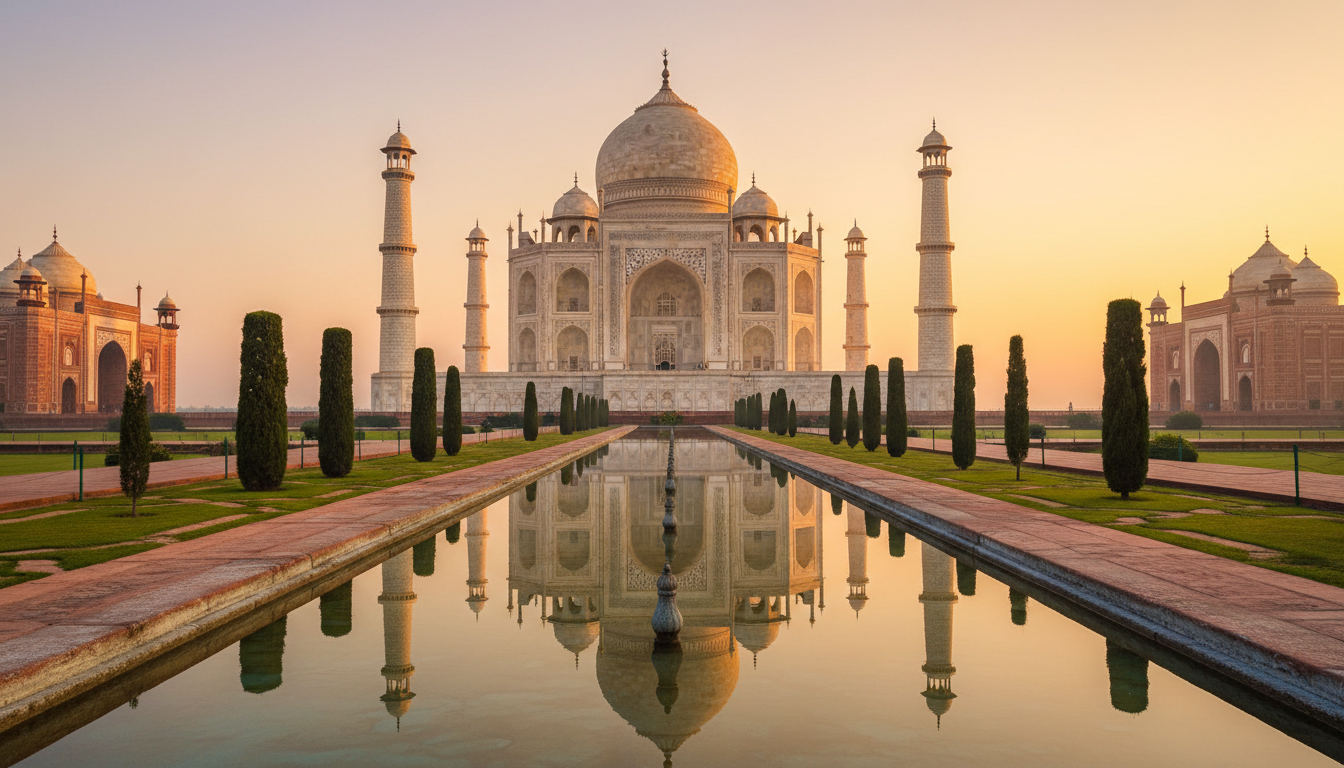
Taj Mahal dome and minarets against blue sky
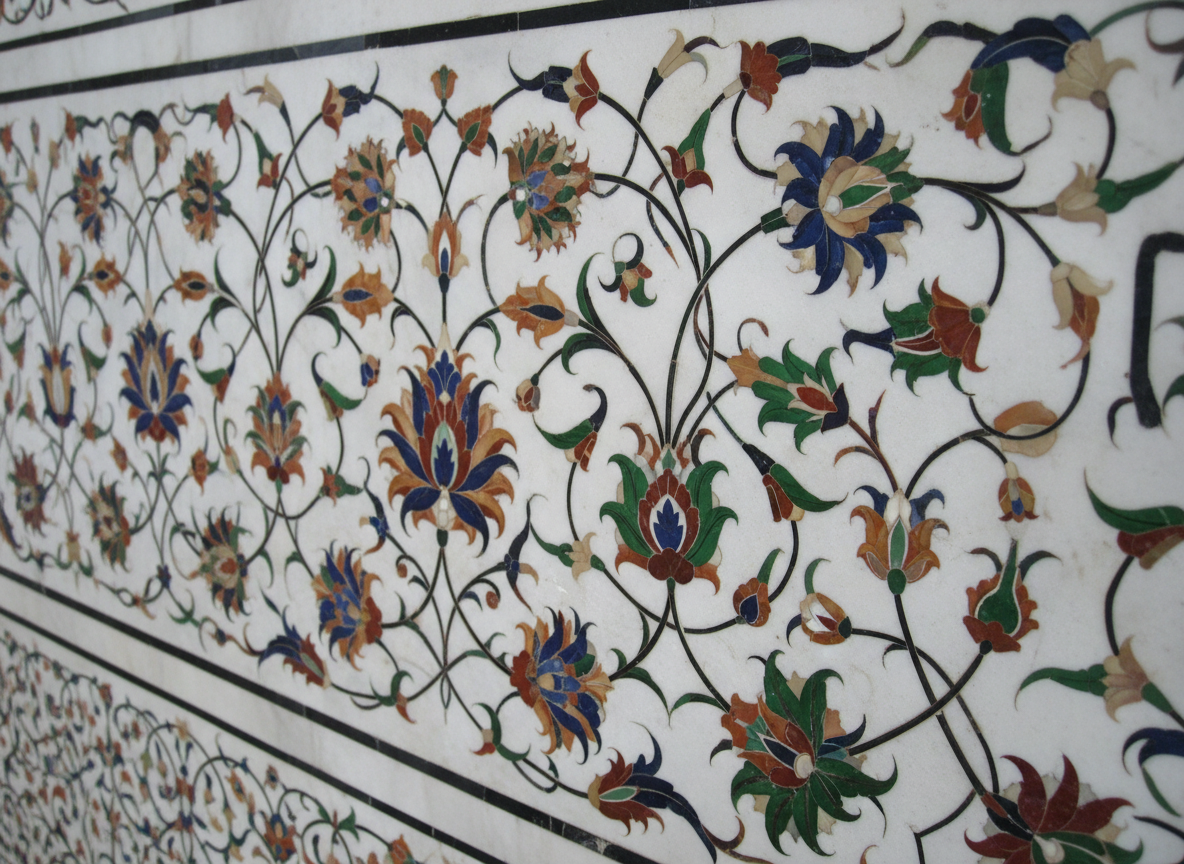
Intricate marble inlay work (pietra dura) on the Taj Mahal
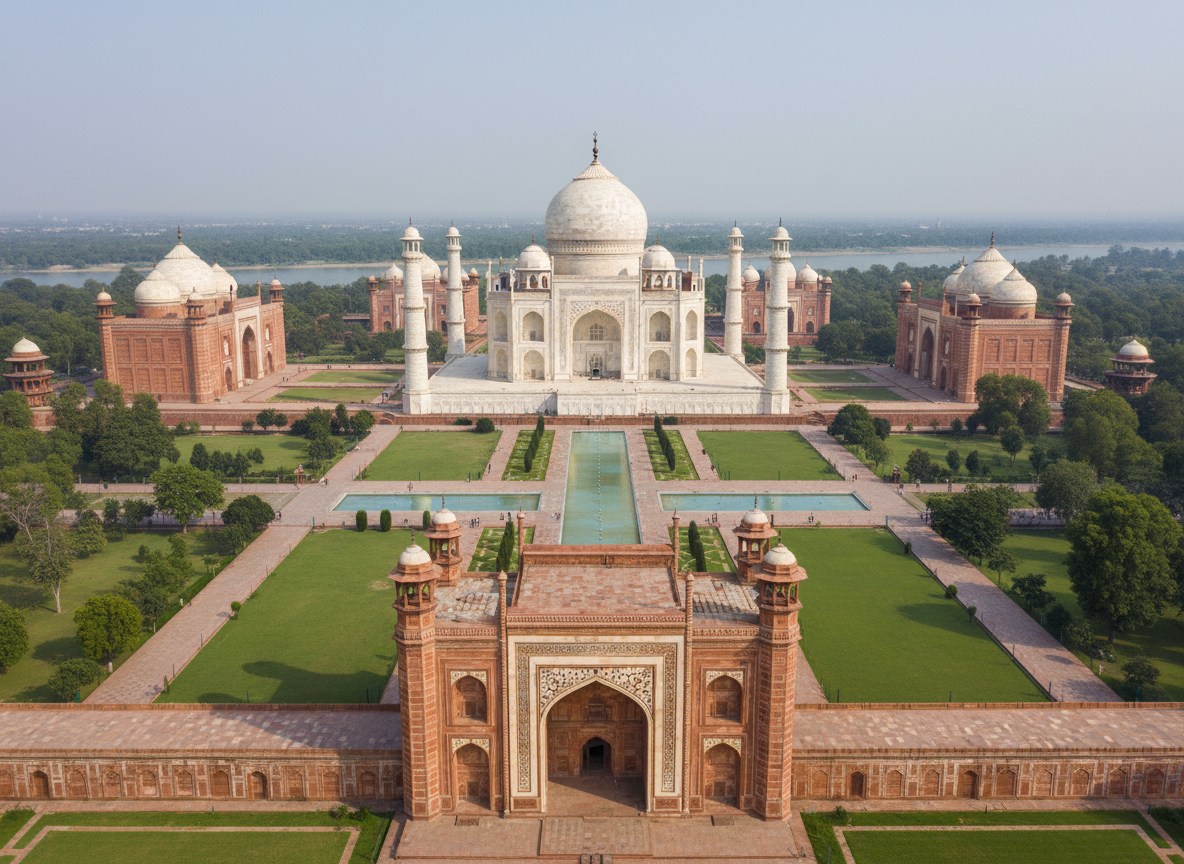
Aerial view of the Taj Mahal complex

MUGHAL ARCHITECTURE

The Taj Mahal is the finest example of Mughal architecture, a style that combines elements of Indian, Persian, and Islamic design. The entire complex spans 17 hectares and includes the main mausoleum, a mosque, a guest house (jawab), and stunning Char Bagh gardens divided by water channels. The white marble dome rises 73 metres and is flanked by four minarets, each standing 40 metres tall. Over 20,000 artisans from across India and Central Asia worked for 22 years to complete this masterpiece.

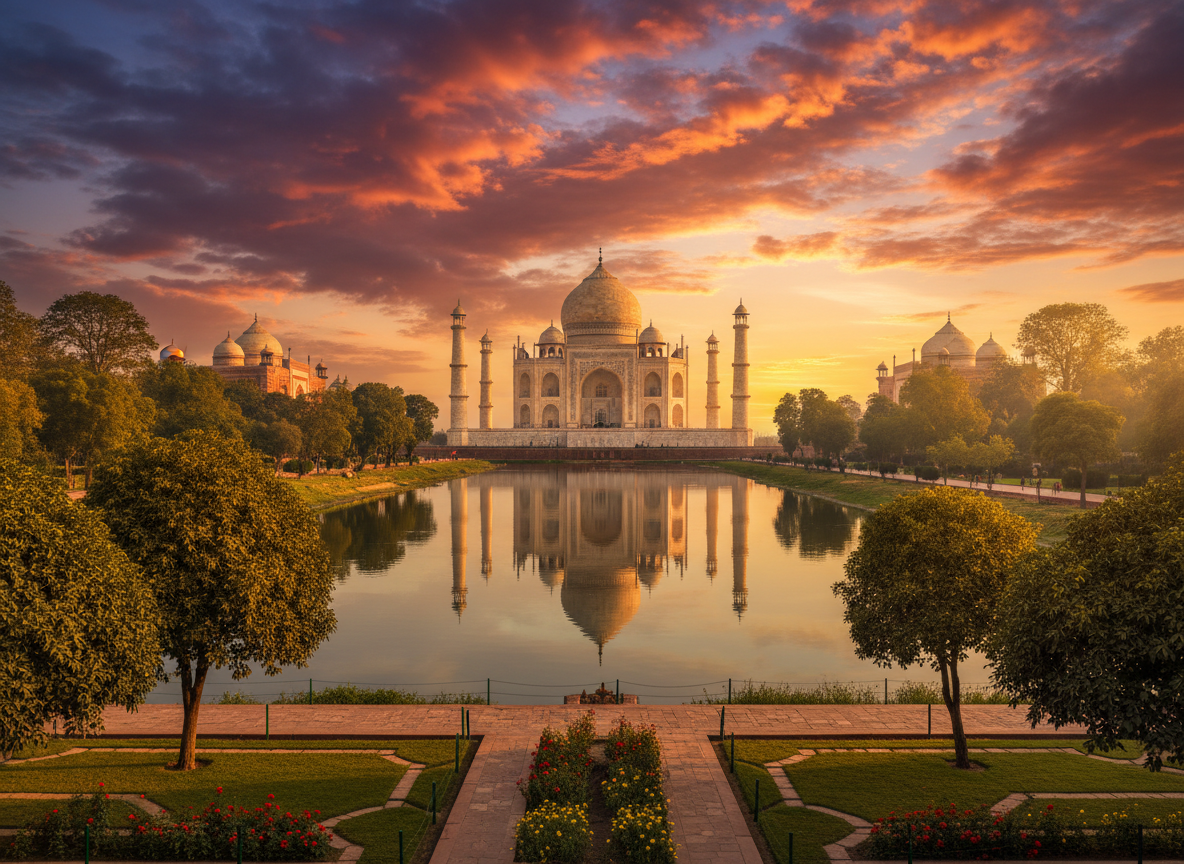
Taj Mahal at sunset from Mehtab Bagh

SYMBOL OF ETERNAL LOVE

Emperor Shah Jahan commissioned the Taj Mahal in 1632 as a mausoleum for his beloved wife Mumtaz Mahal, who died during the birth of their 14th child. The emperor was so grief-stricken that his hair is said to have turned grey overnight. The Taj Mahal stands as an enduring symbol of love that has inspired poets, artists, and travellers for nearly four centuries. Today, it attracts 7-8 million visitors annually, making it India's most visited monument and one of the most photographed buildings in the world.

Our success path

History of the
Taj Mahal

From its commission in 1632 to its recognition as a New Seven Wonder of the World, the Taj Mahal has stood as a testament to eternal love and architectural brilliance for nearly four centuries.

Taj Mahal construction began in 1632

1632

Emperor Shah Jahan commissions the construction of the Taj Mahal in memory of his beloved wife Mumtaz Mahal, who died in 1631. Over 20,000 artisans are recruited from across India and Central Asia.

Taj Mahal main structure completed in 1643

1643

The main mausoleum structure is completed after 11 years of construction. The iconic white marble dome, standing 73 metres high, becomes the centrepiece of the complex. The four minarets are also completed.

Full Taj Mahal complex completed in 1653

1653

The entire Taj Mahal complex is completed after 22 years of work. The total cost is estimated at 32 million rupees (approximately $827 million in today's value). The complex includes gardens, mosque, guest house, and the Great Gate.

Taj Mahal designated UNESCO World Heritage Site in 1983

1983

The Taj Mahal is designated a UNESCO World Heritage Site, described as "the jewel of Muslim art in India and one of the universally admired masterpieces of the world's heritage." Conservation efforts are intensified.

Taj Mahal named New Seven Wonders of the World in 2007

2007

The Taj Mahal is named one of the New Seven Wonders of the World following a global poll of over 100 million votes. Today, it attracts 7-8 million visitors annually and remains India's most iconic landmark.

Explore & experience

Things To Do At
The Taj Mahal

01

Photography Spots

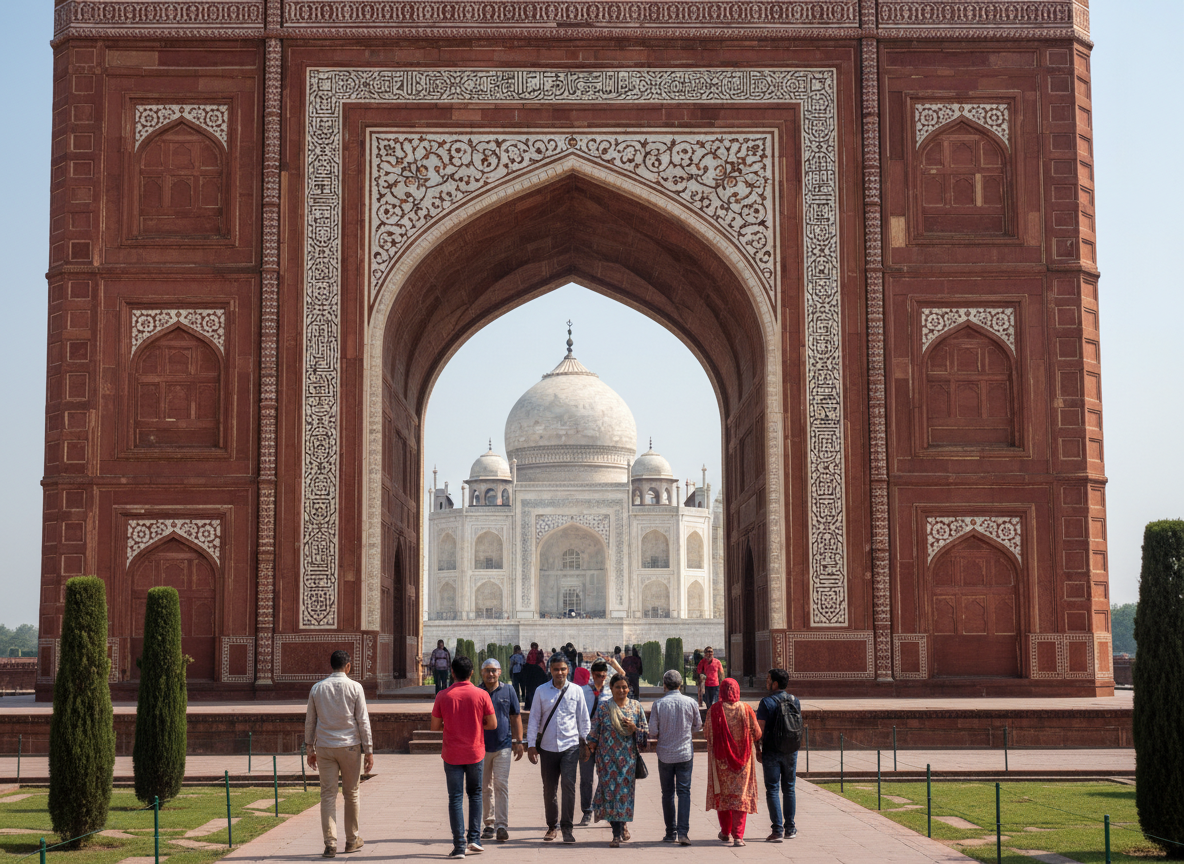
Capture the Taj Mahal from iconic viewpoints — the reflecting pool, Diana Bench, the Great Gate frame, and the riverside from Mehtab Bagh for stunning sunset shots.

02

Sunrise Visit

Experience the magical sunrise at the Taj Mahal when the white marble glows pink and gold. Gates open 30 minutes before sunrise — arrive early for the best experience.

03

Mehtab Bagh View

Visit Mehtab Bagh (Moonlight Garden) across the Yamuna River for a breathtaking panoramic view of the Taj Mahal at sunset. A perfect spot for photography without the crowds.

04

Agra Fort Visit

Just 2.5 km away, the magnificent Agra Fort offers a stunning view of the Taj Mahal from the Musamman Burj — the same octagonal tower where Shah Jahan spent his final years gazing at his creation.

05

Marble Inlay Shopping

Agra is famous for its marble inlay craft (pietra dura) — the same technique used in the Taj Mahal. Visit local workshops to see artisans at work and shop for beautiful marble souvenirs.

06

Mughlai Food Tour

Savour Agra's legendary Mughlai cuisine — from succulent kebabs and rich biryanis to the famous Agra Petha (sweet) and crispy Bedai. Don't miss the rooftop restaurants with Taj views.

Plan your trip

Visitor
Information

Opening Hours

  • Sunrise to Sunset (except Fridays)
  • Gates open 30 min before sunrise
  • Last entry: 30 min before sunset
  • Night viewing: 8:30 PM - 12:30 AM (Full moon ±2 days)
  • Closed on Fridays

Entry Fees (2026)

  • Indian Citizens: ₹50
  • Foreign Tourists: ₹1,100
  • SAARC/BIMSTEC: ₹540
  • Main Mausoleum: ₹200 (additional)
  • Children (below 15): Free

Best Time to Visit

  • October - March: Best weather (15-25°C)
  • Sunrise: Most magical lighting
  • Avoid: April-June (extreme heat 40°C+)
  • Monsoon: July-Sept (humid but fewer crowds)
  • Full Moon nights: Special night viewing

How to Reach

  • From Delhi: 230 km (3-4 hrs by road)
  • By Train: Gatimaan Express (1 hr 40 min)
  • From Jaipur: 240 km (4-5 hrs by road)
  • Nearest Airport: Agra Airport (Kheria)
  • Local: Auto/e-rickshaw to East/West Gate

Book Your Taj Mahal Tour & Experience The Wonder Of The World With Expert Local Guides

BOOK YOUR TOUR NOW