HUMAYUN'S TOMB

The First Garden-Tomb on the Indian Subcontinent

New Delhi, India UNESCO World Heritage Site Precursor to the Taj Mahal

A masterpiece of Mughal architecture

Discover
Humayun's Tomb

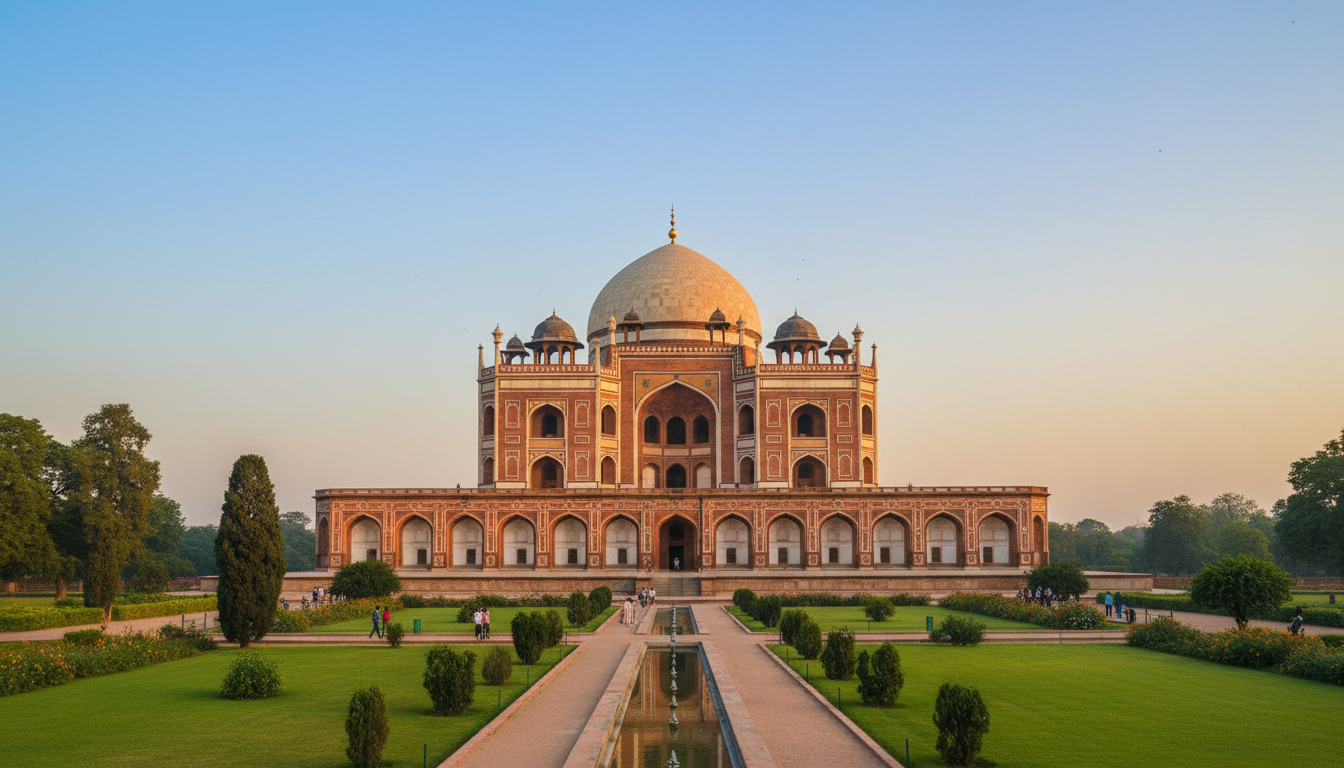
Humayun's Tomb is the tomb of the Mughal Emperor Humayun in Delhi, India. The tomb was commissioned by Humayun's first wife and chief consort, Empress Bega Begum (also known as Haji Begum), in 1569-70, and designed by Mirak Mirza Ghiyas and his son, Sayyid Muhammad. It was the first garden-tomb on the Indian subcontinent and is located in Nizamuddin East, Delhi, close to the Dina-panah Citadel.

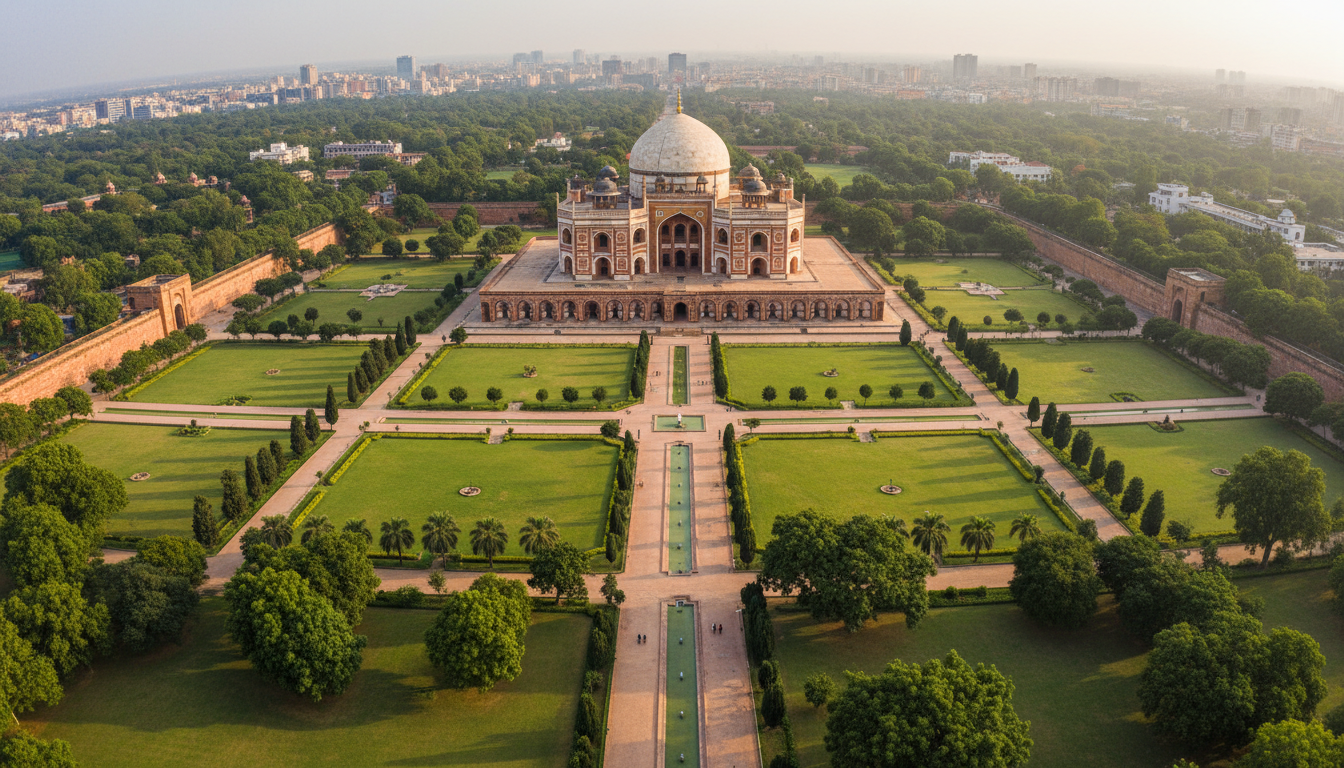
The tomb is an outstanding example of Persian influence in Indian architecture. It inspired several major architectural innovations, culminating in the construction of the Taj Mahal. The complex spans 27 hectares and includes numerous smaller monuments, pathways, and the stunning Char Bagh (four-fold) gardens that became a defining feature of Mughal architecture.

PLAN YOUR VISIT
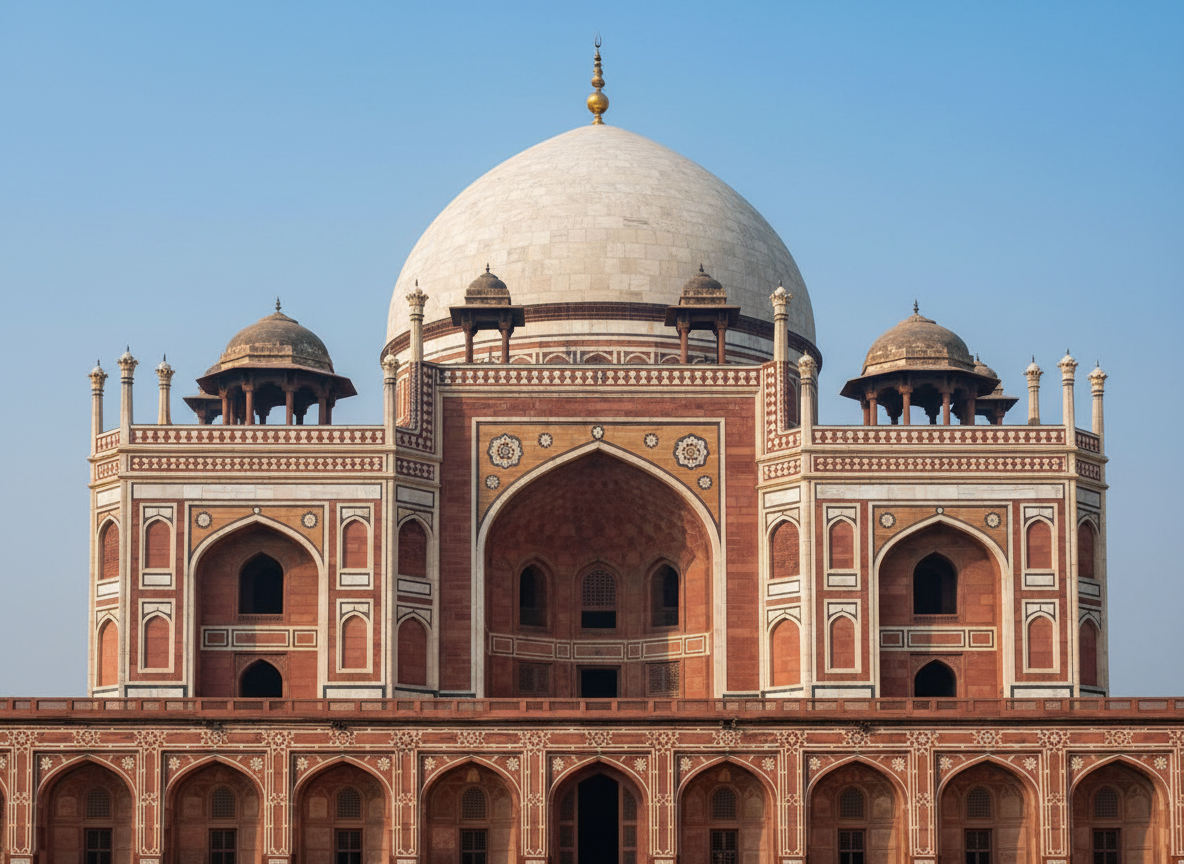
Humayun's Tomb dome and arched entrance with intricate geometric patterns
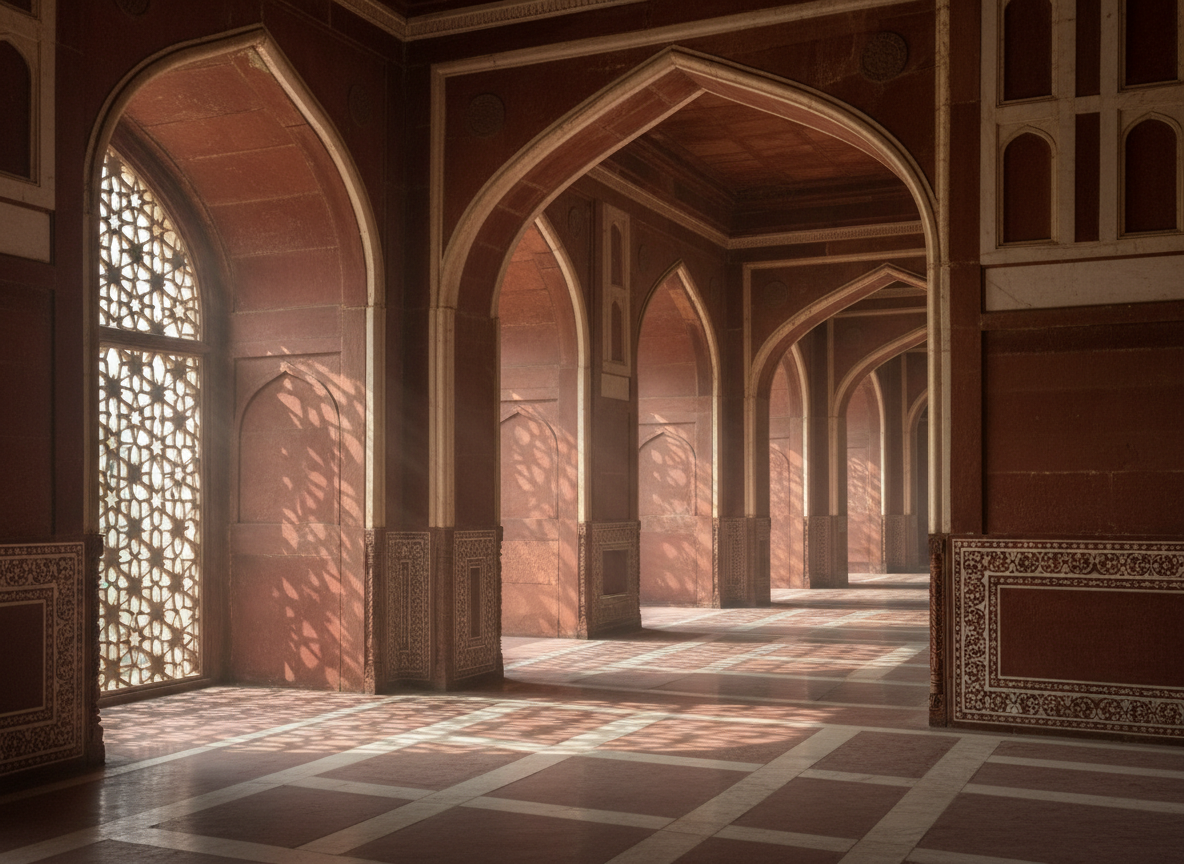
Interior corridor of Humayun's Tomb with ornate arched doorways
Aerial view of Humayun's Tomb complex

PERSIAN-MUGHAL ARCHITECTURE

Humayun's Tomb is a landmark in Mughal architecture, blending Persian and Indian design traditions. The double dome, the first of its kind in India, rises 42.5 metres and is clad in white marble while the body of the structure is built from red sandstone. The tomb sits on a massive platform with arched cells, and the entire complex is laid out in the classic Char Bagh style — a quadrilateral garden divided into four parts by water channels and walkways. Over 150 graves of Mughal royalty lie within the complex.

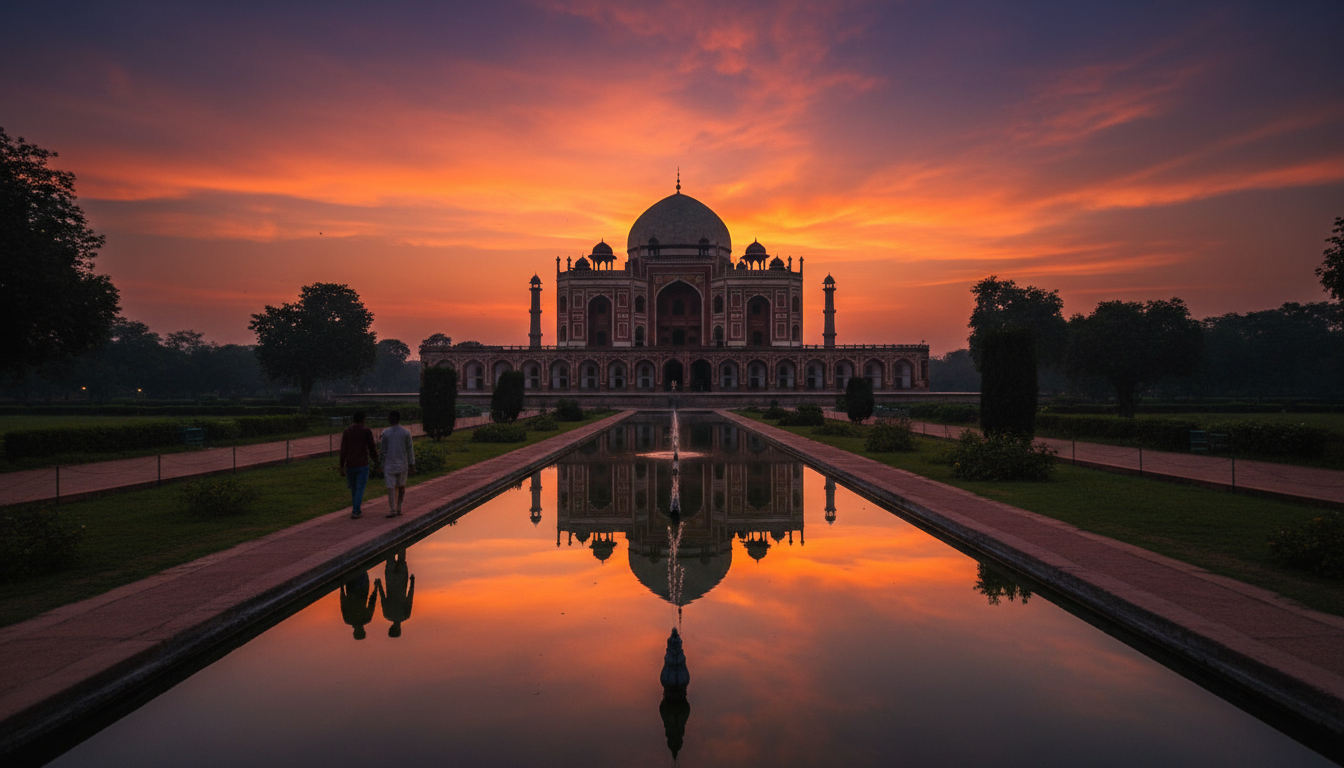
Humayun's Tomb at sunset

PRECURSOR TO THE TAJ MAHAL

Built nearly a century before the Taj Mahal, Humayun's Tomb is widely regarded as the architectural predecessor that inspired Shah Jahan's masterpiece. The garden-tomb concept, the use of a central dome flanked by symmetrical structures, and the integration of Persian garden design all found their ultimate expression in the Taj Mahal. Empress Bega Begum's devotion to her husband's memory set the precedent for monumental Mughal funerary architecture that would define the empire for centuries.

Through the ages

History of
Humayun's Tomb

From its commission in 1565 to its UNESCO recognition in 1993, Humayun's Tomb has stood as a testament to Mughal architectural brilliance and the devotion of Empress Bega Begum for over four centuries.

Humayun's Tomb construction began in 1565

1565

Empress Bega Begum commissions the construction of Humayun's Tomb, nine years after Emperor Humayun's death in 1556. Persian architects Mirak Mirza Ghiyas and his son Sayyid Muhammad are appointed to design the monument.

Humayun's Tomb completed in 1572

1572

The tomb is completed after seven years of construction at a cost of 1.5 million rupees. The structure introduces the double dome and Char Bagh garden layout to Indian architecture, setting new standards for Mughal monuments.

Humayun's Tomb during the Mughal era

1857

During the Indian Rebellion of 1857, the last Mughal Emperor Bahadur Shah Zafar took refuge at Humayun's Tomb before being captured by the British. The complex witnessed one of the most dramatic moments in Indian history.

Humayun's Tomb UNESCO designation 1993

1993

Humayun's Tomb is designated a UNESCO World Heritage Site, recognised as the first substantial example of Mughal architecture in India. The Aga Khan Trust for Culture begins a comprehensive restoration project in partnership with ASI.

Humayun's Tomb restored gardens today

2003

The Aga Khan Trust completes the restoration of the Char Bagh gardens, restoring the original water channels, pathways, and plantings. The project wins the UNESCO Asia-Pacific Heritage Award and becomes a model for heritage conservation in India.

Explore & experience

Things To Do At
Humayun's Tomb

01

Photography Spots

Capture stunning shots from the main gateway framing the tomb, the reflecting water channels, and the symmetrical Char Bagh gardens. The sunset hour offers magical golden light on the red sandstone.

02

Explore Char Bagh Gardens

Stroll through the beautifully restored Mughal Char Bagh gardens — a quadrilateral layout divided into four squares by water channels and walkways, spanning 27 hectares of serene greenery.

03

Visit Nearby Monuments

The complex houses several other notable tombs including Isa Khan's Tomb (1547), Bu Halima's Garden, the Arab Serai, and the Barber's Tomb — each with unique architectural features worth exploring.

04

Nizamuddin Dargah Visit

Just a short walk away, visit the revered Dargah of Hazrat Nizamuddin Auliya — one of the most famous Sufi shrines in India. Experience mesmerising Qawwali performances held every Thursday evening.

05

Architectural Study

Study the intricate red sandstone and white marble inlay work, the geometric jali (lattice) screens, and the innovative double dome structure that influenced Mughal architecture for centuries to come.

06

Nizamuddin Food Walk

Explore the vibrant Nizamuddin Basti neighbourhood for authentic Mughlai street food — from succulent kebabs and nihari to kulfi and jalebi. A food walk here is a journey through centuries of culinary tradition.

Plan your trip

Visitor
Information

Opening Hours

  • Sunrise to Sunset (all days)
  • Typically 6:00 AM - 6:00 PM
  • Open all days of the week
  • Best to visit early morning or late afternoon
  • No weekly closure

Entry Fees (2026)

  • Indian Citizens: ₹40
  • Foreign Tourists: ₹600
  • SAARC/BIMSTEC: ₹600
  • Video Camera: ₹25
  • Children (below 15): Free

Best Time to Visit

  • October - March: Best weather (15-25°C)
  • Early Morning: Fewer crowds, soft light
  • Avoid: April-June (extreme heat 40°C+)
  • Monsoon: July-Sept (lush gardens)
  • Sunset: Golden light on red sandstone

How to Reach

  • Metro: JLN Stadium (Violet Line)
  • From Connaught Place: 8 km (20 min)
  • From Airport: 18 km (40 min)
  • Nearest Railway: Hazrat Nizamuddin
  • Local: Auto/Uber/Ola available

Book Your Delhi Heritage Tour & Explore The Magnificent Humayun's Tomb With Expert Local Guides

BOOK YOUR TOUR NOW