INDIA GATE

The Soul of New Delhi's Golden Triangle

New Delhi, India National War Memorial Iconic Delhi Landmark

A tribute to the brave

Discover
India Gate

India Gate is a war memorial located astride the Kartavya Path (formerly Rajpath), on the eastern edge of the "ceremonial axis" of New Delhi. It stands as a memorial to 70,000 soldiers of the British Indian Army who died in the period 1914–1921 in the First World War and the Third Anglo-Afghan War. The names of 13,300 servicemen, including some soldiers and officers from the United Kingdom, are inscribed on the gate.

Designed by Sir Edwin Lutyens, India Gate was built in 1931 and stands 42 metres tall. It evokes the architectural style of a triumphal arch, similar to the Arc de Triomphe in Paris. The monument has become one of the most recognisable landmarks of Delhi and a symbol of India's national pride. The eternal flame beneath the arch, known as the Amar Jawan Jyoti, burns day and night to honour the unknown soldiers who sacrificed their lives for the nation.

PLAN YOUR VISIT
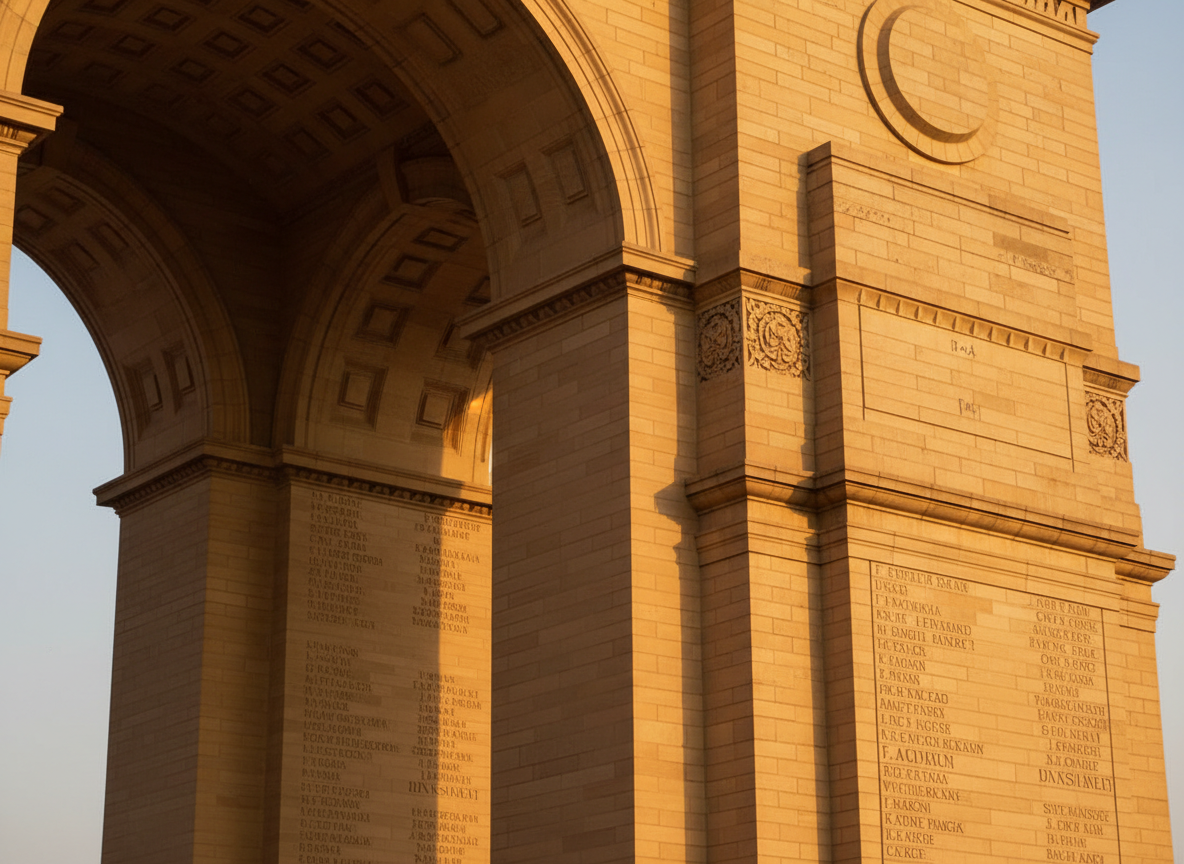
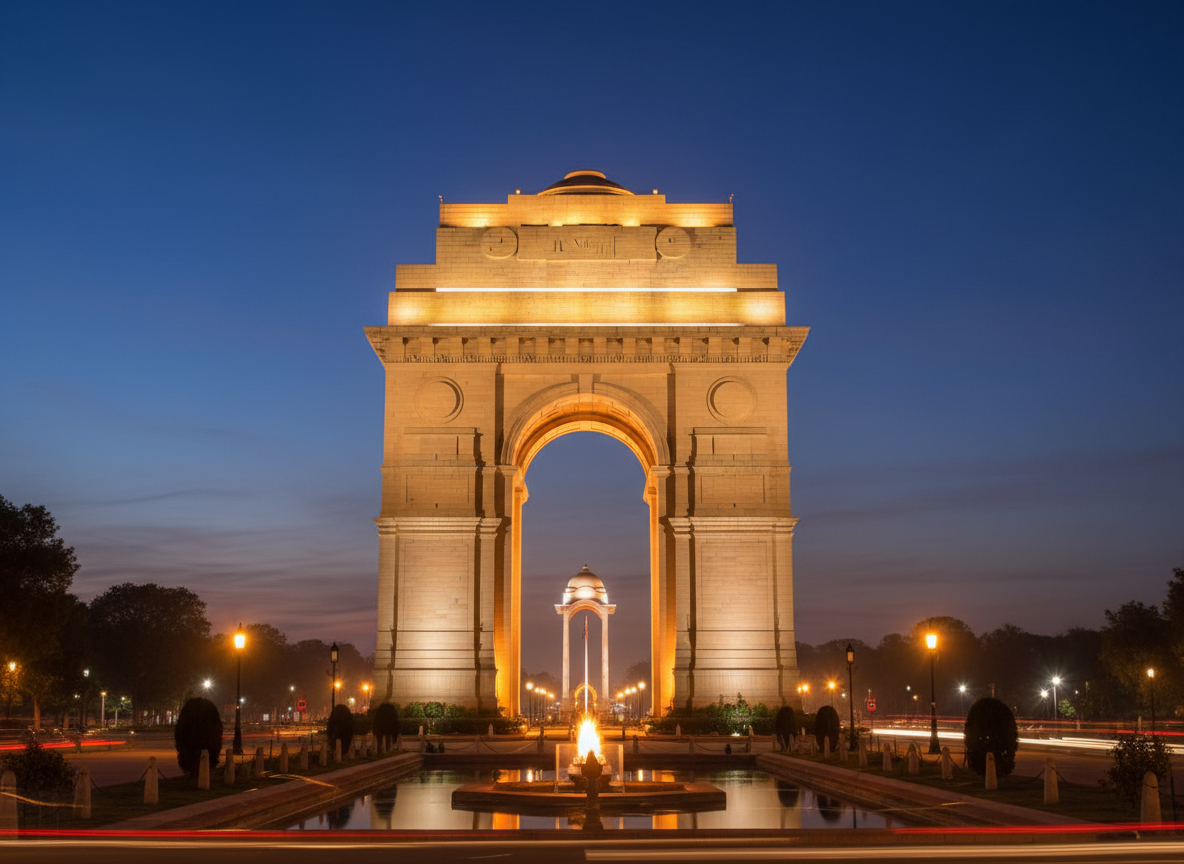
India Gate architectural details and inscriptions
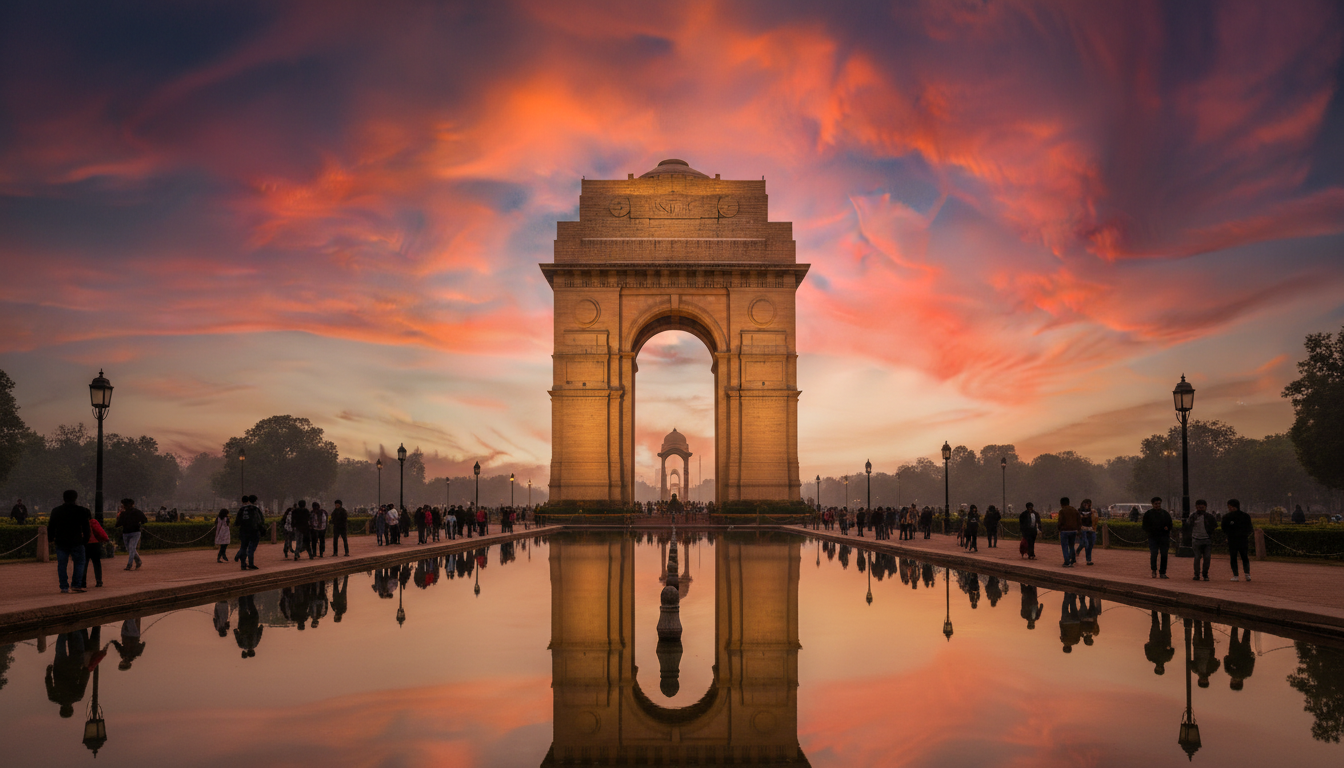
India Gate illuminated at night with Amar Jawan Jyoti
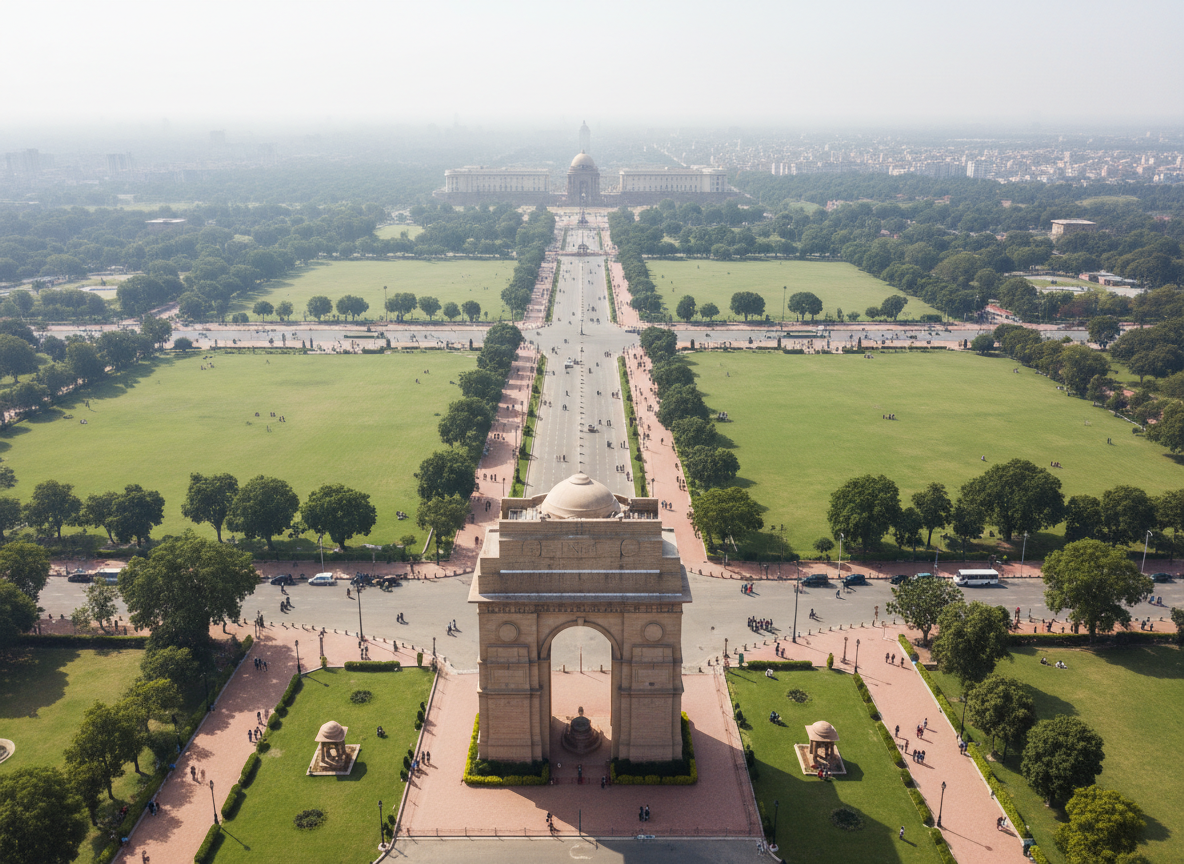
Aerial view of India Gate and Kartavya Path

LUTYENS' MASTERPIECE

Designed by Sir Edwin Lutyens, the principal architect of New Delhi, India Gate is a masterpiece of colonial-era architecture. Standing 42 metres tall and 9.1 metres wide, the arch is built from red and pale sandstone and granite. The structure draws inspiration from the Arc de Triomphe in Paris and the Gateway of India in Mumbai. It forms the centrepiece of the grand Kartavya Path boulevard, stretching from Rashtrapati Bhavan to India Gate, creating one of the most magnificent ceremonial avenues in the world.

India Gate canopy and surrounding gardens

SYMBOL OF NATIONAL PRIDE

India Gate is far more than a war memorial — it is a symbol of India's national pride and unity. Every year on Republic Day (26th January), the grand parade marches along Kartavya Path past India Gate, watched by millions. The Amar Jawan Jyoti (Flame of the Immortal Soldier), inaugurated in 1972, burned beneath the arch for 50 years before being merged with the National War Memorial flame in 2022. Today, India Gate attracts over 10 million visitors annually, making it Delhi's most visited landmark.

Our success path

History of
India Gate

From its foundation stone laid in 1921 to its status as India's most iconic national landmark, India Gate has stood as a solemn tribute to the brave soldiers who sacrificed their lives for the nation.

India Gate foundation stone laid in 1921

1921

The Duke of Connaught lays the foundation stone of the All India War Memorial (later known as India Gate) on 10 February 1921. Sir Edwin Lutyens, the chief architect of New Delhi, designs the monument to honour the 70,000 Indian soldiers who died in World War I.

India Gate inaugurated in 1931

1931

India Gate is inaugurated by Lord Irwin, the Viceroy of India, on 12 February 1931 after 10 years of construction. The 42-metre tall arch, built from red and pale sandstone, is inscribed with the names of 13,300 soldiers who made the ultimate sacrifice.

Amar Jawan Jyoti inaugurated in 1972

1972

The Amar Jawan Jyoti (Flame of the Immortal Soldier) is inaugurated beneath the India Gate arch on 26 January 1972 by Prime Minister Indira Gandhi, following India's victory in the 1971 Bangladesh Liberation War. The eternal flame honours India's unknown soldiers.

National War Memorial inaugurated in 2019

2019

The National War Memorial is inaugurated near India Gate on 25 February 2019 by Prime Minister Narendra Modi. The memorial honours all soldiers who have laid down their lives in armed conflicts since Independence, complementing India Gate's tribute to World War I heroes.

Kartavya Path renovation completed in 2022

2022

Rajpath is renamed Kartavya Path (Path of Duty) and undergoes a grand renovation. The Amar Jawan Jyoti flame is merged with the National War Memorial flame. A 28-foot statue of Netaji Subhas Chandra Bose is installed under the canopy near India Gate, completing the transformation of the ceremonial boulevard.

Explore & experience

Things To Do At
India Gate

01

Evening Photography

Capture India Gate beautifully illuminated against the evening sky. The golden hour and post-sunset blue hour offer the most dramatic lighting for photography, with the monument glowing warmly against the Delhi skyline.

02

Kartavya Path Stroll

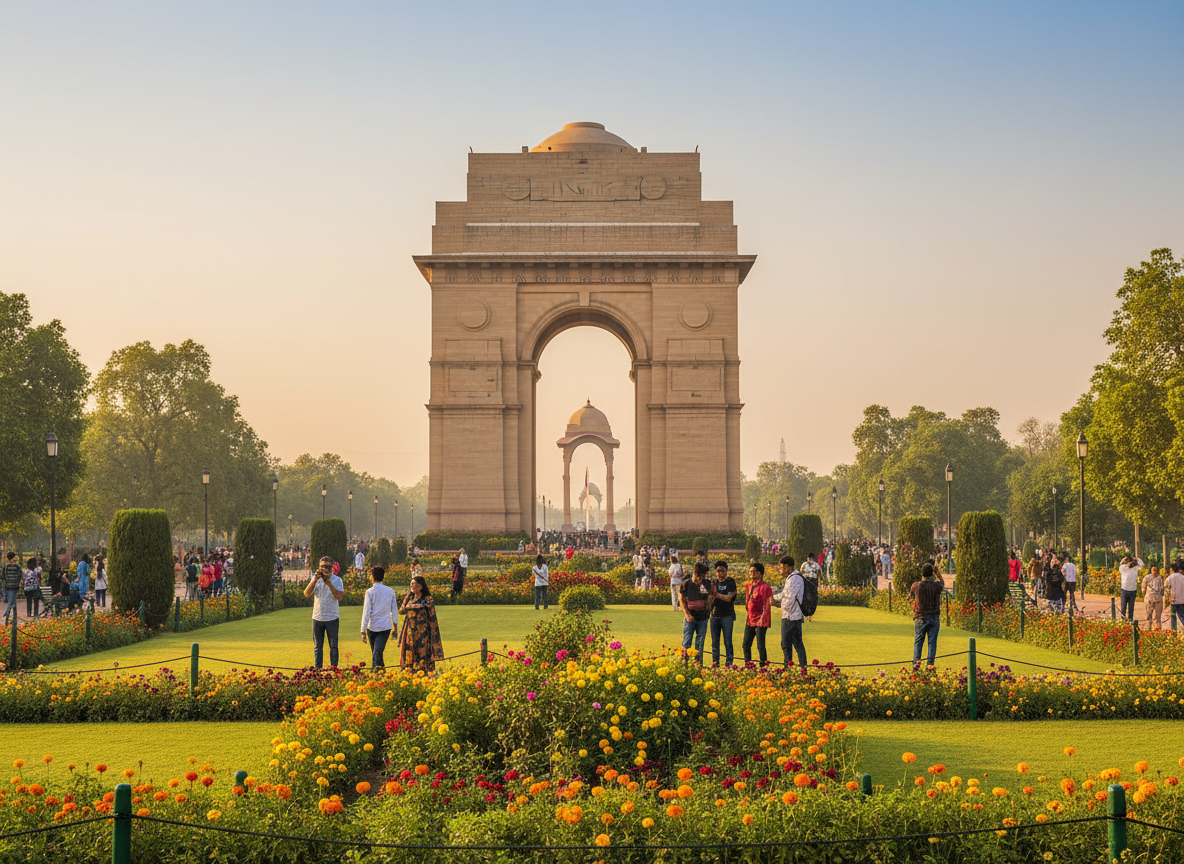
Take a leisurely walk along the grand Kartavya Path boulevard stretching from Rashtrapati Bhavan to India Gate. The beautifully landscaped lawns, fountains, and tree-lined avenue make for a perfect evening promenade.

03

National War Memorial

Visit the National War Memorial located just 400 metres from India Gate. The circular memorial honours over 26,000 soldiers who sacrificed their lives since Independence, with names inscribed on granite tablets arranged in concentric circles.

04

Boating at India Gate

Enjoy boating in the ornamental water channels and ponds surrounding India Gate. The beautifully maintained water features reflect the monument, creating stunning photo opportunities especially during the golden hour.

05

Street Food Experience

Savour Delhi's famous street food around India Gate — from crispy golgappas and chaat to kulfi and ice cream from the iconic vendors. The area comes alive in the evenings with food stalls and a festive atmosphere.

06

Picnic on the Lawns

Enjoy a relaxing picnic on the expansive green lawns surrounding India Gate. Families and friends gather here especially on weekends and holidays, making it one of Delhi's most beloved recreational spots with a vibrant, festive atmosphere.

Plan your trip

Visitor
Information

Opening Hours

  • Open 24 hours (monument viewing)
  • Best time: Evening 5 PM - 10 PM
  • Illumination: Sunset to 11:30 PM
  • National War Memorial: 9 AM - 6:30 PM
  • Open all days including holidays

Entry Fees (2026)

  • India Gate: Free entry
  • National War Memorial: Free
  • Parking: ₹60 (car), ₹30 (two-wheeler)
  • Boating: ₹50 - ₹100 per person
  • No tickets required

Best Time to Visit

  • October - March: Best weather (10-25°C)
  • Evening: Most atmospheric (illuminated)
  • Republic Day: 26 Jan (grand parade)
  • Avoid: April-June (extreme heat 40°C+)
  • Monsoon: July-Sept (lush green lawns)

How to Reach

  • Metro: Central Secretariat (Yellow/Violet line)
  • Distance from Metro: 1.5 km walk
  • From Airport: 18 km (40-60 min)
  • From Old Delhi: 7 km (20-30 min)
  • Local: Auto/cab/e-rickshaw available

Book Your Delhi Tour & Experience The Majestic India Gate With Expert Local Guides

BOOK YOUR TOUR NOW