Where Ancient Astronomy Meets Architectural Genius
A monument to celestial science
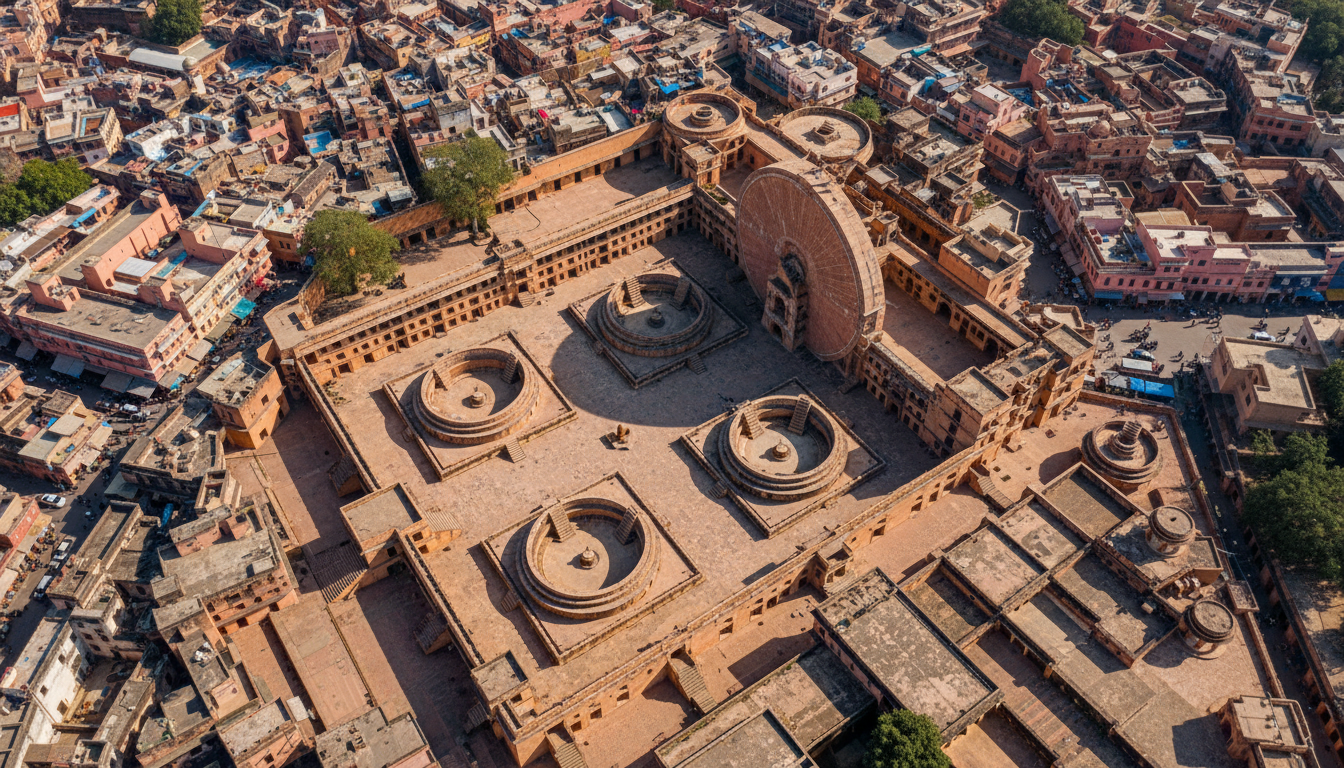
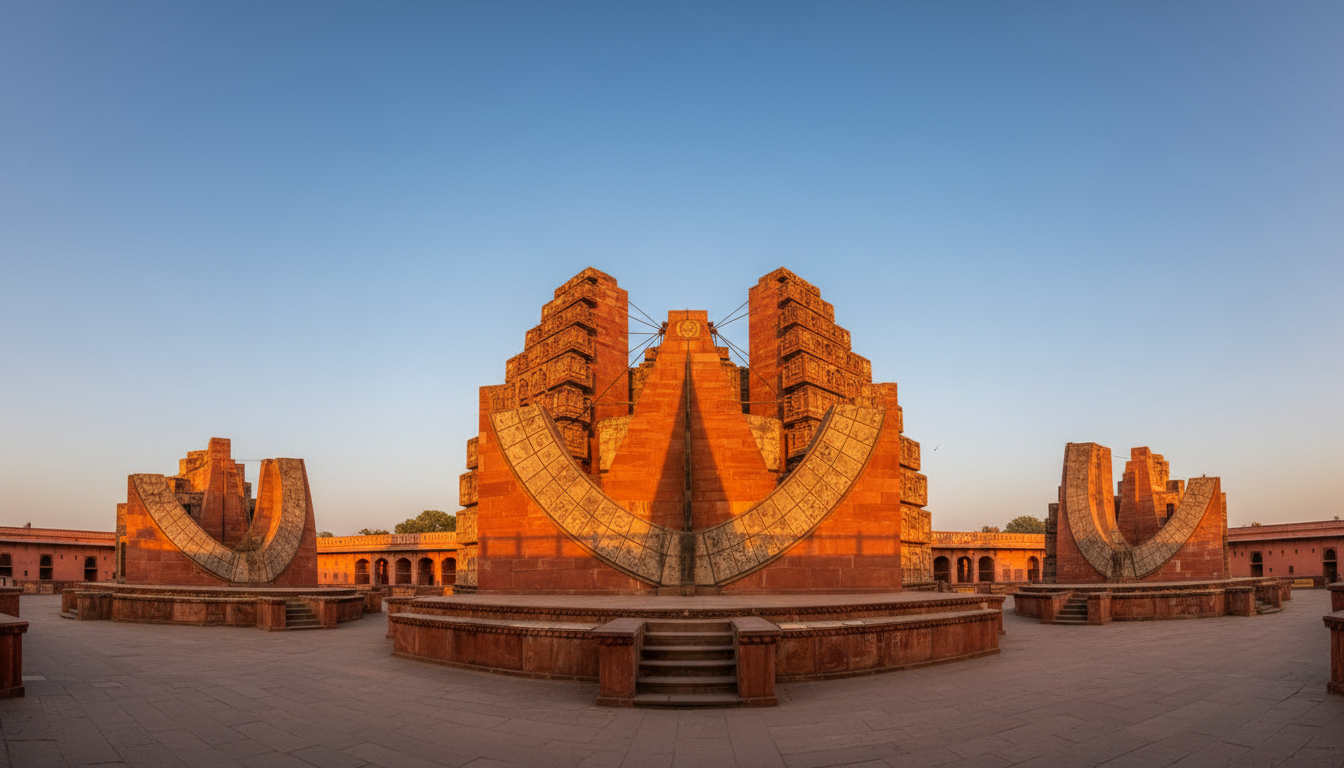
Jantar Mantar is a collection of nineteen architectural astronomical instruments built by the Rajput king Maharaja Sawai Jai Singh II, the founder of Jaipur. The monument was completed in 1734 and is the largest and best preserved of five observatories built by Jai Singh II in different cities across India. It houses the world's largest stone sundial — the Samrat Yantra — which stands 27 metres tall.
The name "Jantar Mantar" is derived from the Sanskrit words "yantra" (instrument) and "mantra" (formula). Each instrument serves a specific astronomical purpose, from tracking stars and predicting eclipses to measuring time with remarkable accuracy. The observatory reflects the astronomical skills and cosmological concepts of the court of a scholarly prince at the end of the Mughal period.
PLAN YOUR VISIT
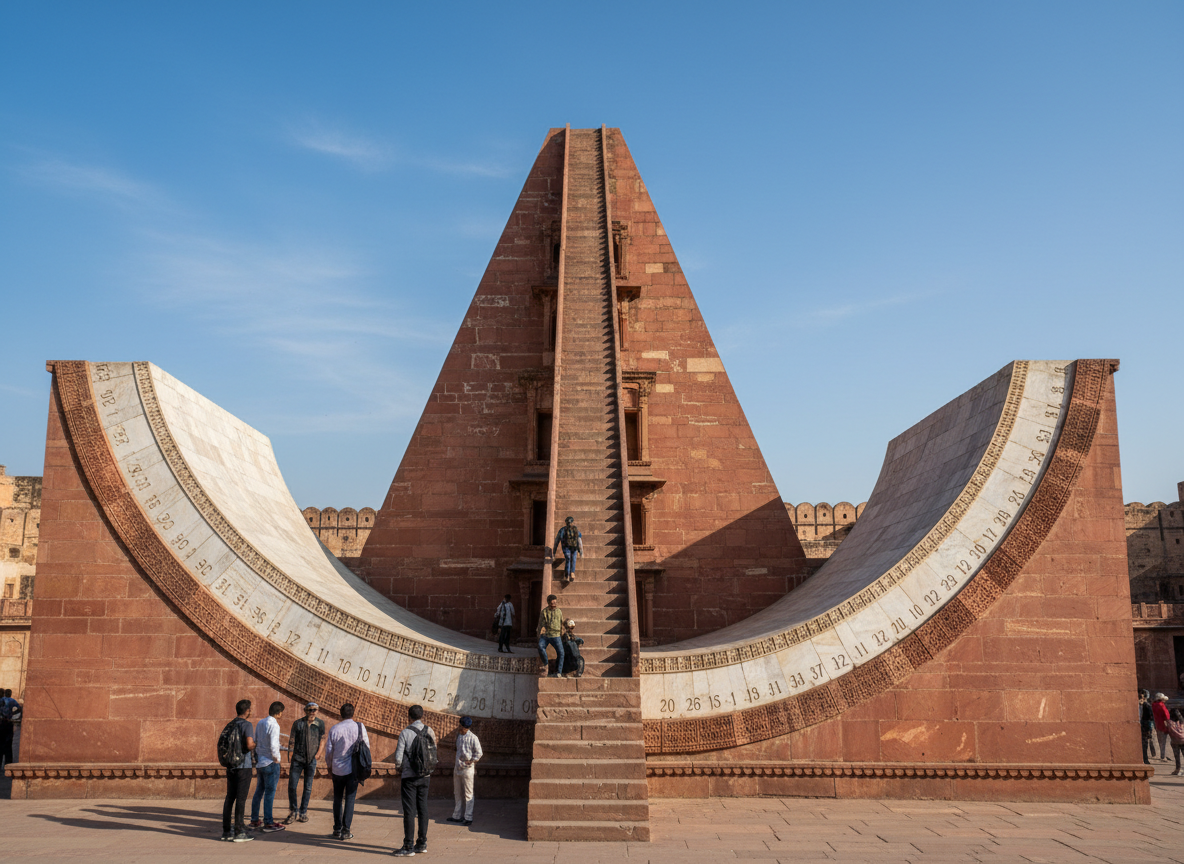
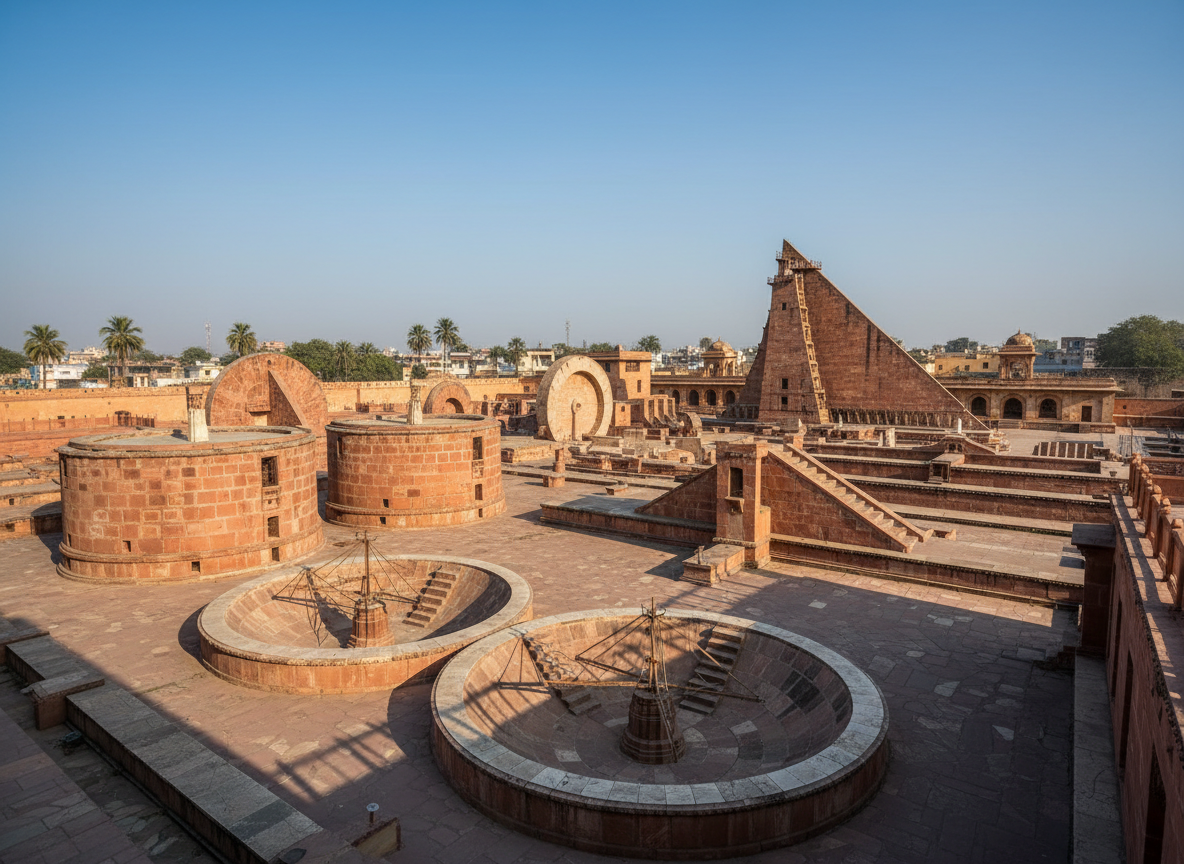
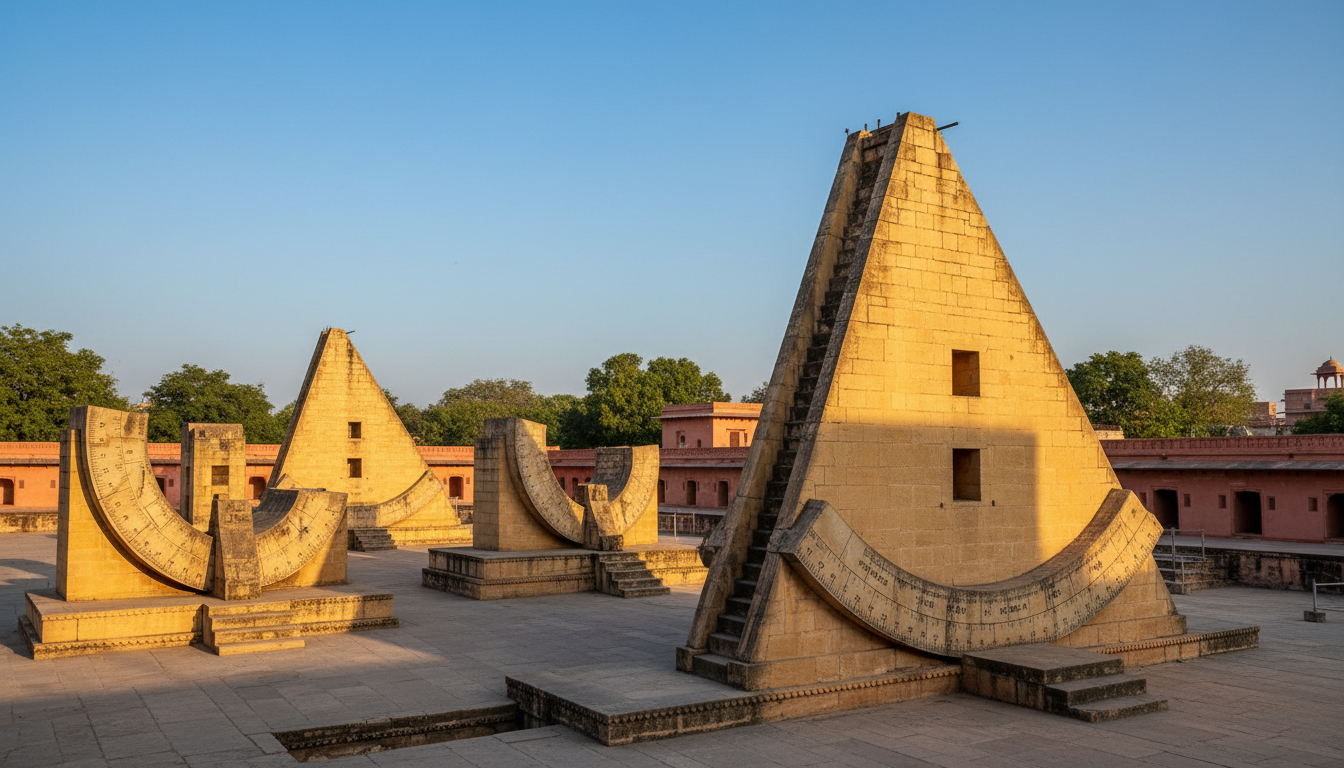
The observatory contains 19 astronomical instruments of remarkable size and precision. The Samrat Yantra (Supreme Instrument) is the world's largest stone sundial at 27 metres tall, capable of telling time to an accuracy of about two seconds. Other notable instruments include the Jai Prakash Yantra (hemispherical sundial), the Ram Yantra (cylindrical structure for measuring altitudes), and the Rashivalaya Yantra (12 instruments representing the zodiac signs).
Maharaja Sawai Jai Singh II was a scholar-king with a deep passion for astronomy and mathematics. Dissatisfied with the inaccuracy of existing brass instruments, he commissioned massive stone and marble instruments that could provide far greater precision. He built five observatories across India — in Jaipur, Delhi, Ujjain, Mathura, and Varanasi — with Jaipur being the largest and most comprehensive. His work bridged Islamic, Hindu, and European astronomical traditions.
Through the ages
From its construction in 1724 to its UNESCO recognition in 2010, Jantar Mantar represents the pinnacle of ancient astronomical observation and the scientific vision of Maharaja Sawai Jai Singh II.
Explore & experience
Learn to tell time using the world's largest stone sundial. The Samrat Yantra stands 27 metres tall and can tell local time to an accuracy of about 2 seconds. A guide can demonstrate how the shadow moves across the calibrated scales.
The massive geometric stone structures create extraordinary photographic compositions. The interplay of light and shadow on the curved and angular instruments changes throughout the day, offering unique shots at every hour.
The Rashivalaya Yantra consists of 12 individual instruments, each representing a zodiac sign. Find your zodiac instrument and learn how it was used to measure celestial coordinates of stars and planets.
Adjacent to Jantar Mantar, the magnificent City Palace complex offers a glimpse into royal Rajput life. Explore the Chandra Mahal, Mubarak Mahal, and the stunning Peacock Gate — all within walking distance.
Hire a knowledgeable guide to understand the scientific principles behind each instrument. Learn how Jai Singh II used these tools to predict eclipses, track planetary movements, and compile astronomical tables.
After your visit, explore the nearby Johari Bazaar and Tripolia Bazaar for traditional Rajasthani jewellery, textiles, and handicrafts. Savour local delicacies like dal baati churma, ghewar, and lassi at nearby eateries.
Plan your trip
Capture the beauty